

Your shipping cost is not decided by the courier. It is decided at the packing table, three steps earlier, when someone chooses a carton. Sellers learning how to manage weight-wise packing and shipping charges usually discover that most of their freight overspend was created in-house, not billed unfairly.
India’s ecommerce market is set to reach roughly ₹19.7 trillion, close to $226 billion, this year at around 12.4% growth. Bulky categories- appliances, kitchenware, furniture, pet food, luggage, home decor- carry that growth at far thinner margins, because freight scales with size while price rarely does.
This playbook is organised around money rather than process. It opens with the top 10 places your shipping spend leaks, then works through the controls that seal each one.
The Top 10 Places Bulky-SKU Sellers Lose Money on Shipping
Freight overspend rarely comes from one bad decision. It accumulates across ten small ones, most of which never appear on any report.
Read this list against your last month of dispatches and mark every leak you recognise.
1. Volumetric weight exceeds actual weight without anyone noticing. A large, light carton bills on dimensions, not the scale reading. Pet food, cushions, and home decor lose money here constantly.
2. Cartons chosen by convenience rather than by fit. Packers grab whatever sits nearest, which pushes shipments into a higher slab for no product reason.
3. Slab boundaries crossed by grams. A consignment at 5.1 kg bills at the 6 kg slab. That fractional excess repeats across thousands of orders annually.
4. Void fill inflating dimensions. Excess filler makes an oversized carton feel safer while making it structurally more expensive.
5. One default courier used for every weight band. Carriers price differently across weight slabs and lanes, so a single partner is almost never optimal across your full range.
6. Manual courier assignment during peak hours. Under pressure, staff picks the familiar option rather than the cheapest serviceable one.
7. Undeliverable shipments discovered after dispatch. A carrier that cannot service the destination sends the consignment back at your cost.
8. Multi-item orders shipped as separate parcels. Two boxes to one address cost more than one consolidated carton in most rate cards.
9. In-transit damage on bulky, fragile SKUs. Every breakage becomes a replacement shipment plus a reverse leg, and reverse logistics consumes 25–30% of order value on low-ticket Indian shipments.
10. Weight discrepancies never reconciled against invoices. Courier billing weights drift above your recorded weights, and nobody checks.
Base.com addresses several of these directly through PIN-code-based courier routing with weight-based pricing per package and automatic failover when a partner cannot service an address.
Volumetric Weight: The Number That Actually Bills You
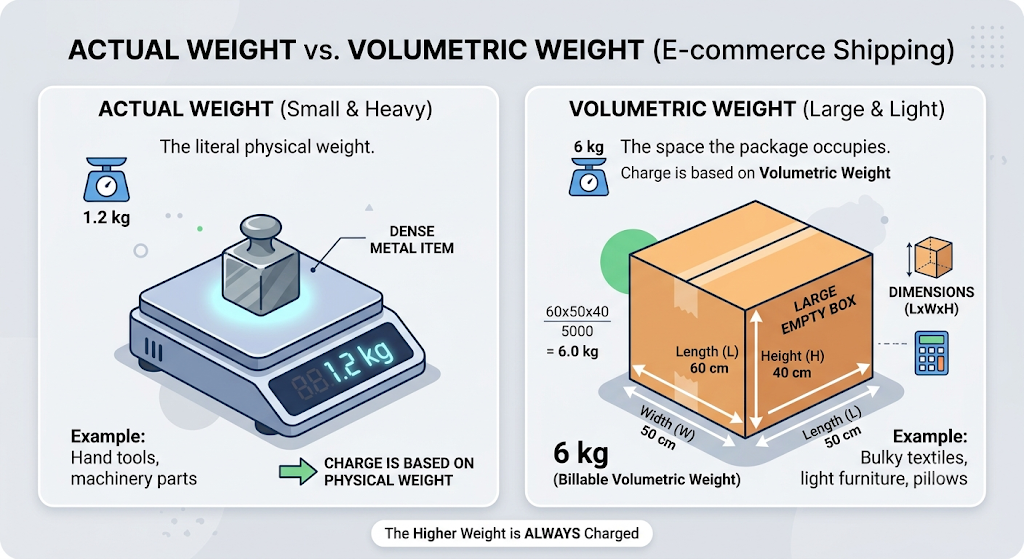
Most sellers price their logistics around the weighing scale. Couriers price around the larger of two numbers, and that second number is usually the one you pay.
Volumetric weight converts a parcel’s dimensions into a billable weight using the carrier’s divisor. When that figure exceeds actual weight, it becomes the chargeable weight, and for bulky-but-light SKUs it almost always does.
The implication is uncomfortable but useful. Your packaging decisions, not your products, determine a large share of freight cost. A cushion set weighing 1.2 kg can bill at 6 kg purely because of carton dimensions, and no negotiation with the courier will fix that.
Sellers working out how to manage weight-wise packing and shipping charges should therefore audit cartons before renegotiating rate cards. Rate improvements deliver percentage gains; dimension fixes deliver step changes.
Rationalising Your Carton Range Before Anything Else
Carton rationalisation is the highest-return, lowest-cost intervention available to bulky-SKU sellers. It requires no software and pays back immediately.
Work through these six steps across your catalogue and packing stations.
1. Measure and Record Dimensions for Every Packed SKU
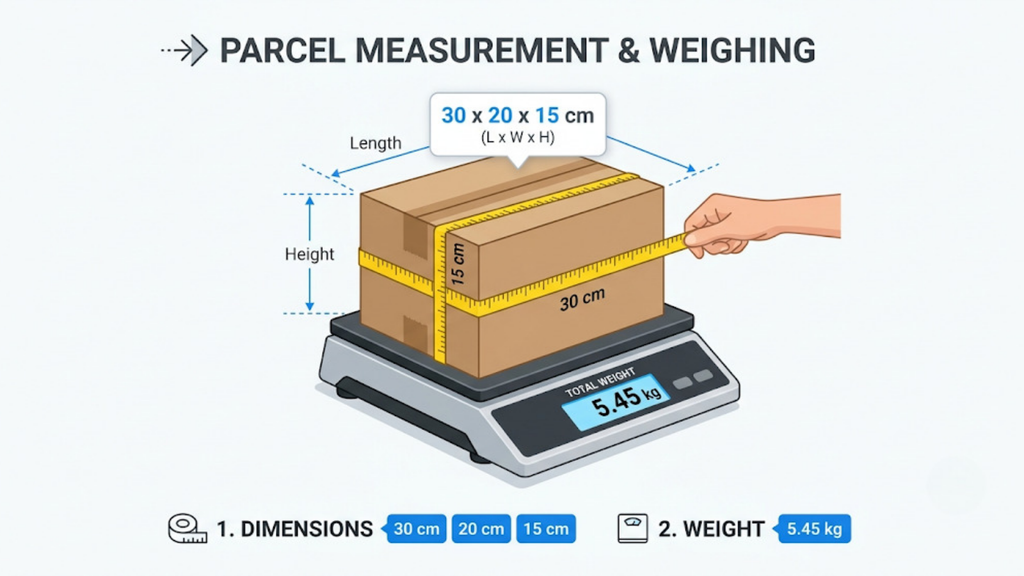
Record dimensions post-packing, not product dimensions from the catalogue. The packed parcel is what gets billed.
Store those dimensions against the SKU so every downstream calculation uses real numbers. Base.com holds weight and dimension data at product level, feeding both packing rules and courier pricing.
2. Calculate Both Weights for Each SKU and Compare
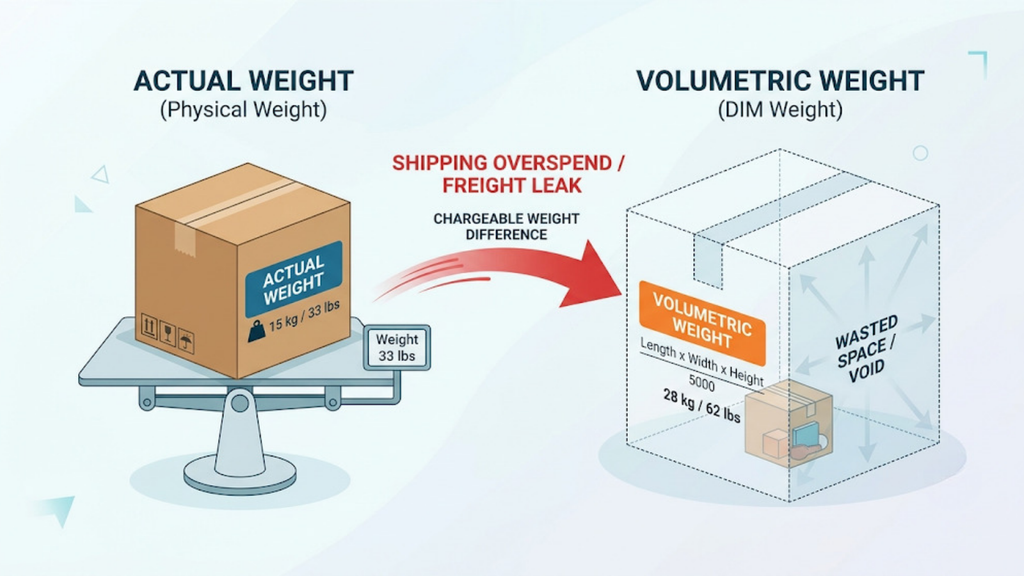
Run actual weight and volumetric weight side by side for your top 200 SKUs by volume. The gap between them is your overspend per shipment.
SKUs where volumetric exceeds actual by more than 30% deserve immediate carton review. That subset usually accounts for most of the leak.
3. Reduce Your Carton Range to a Tight, Deliberate Set

Most sellers hold too many box sizes and still lack the right ones. Aim for a small range where each size maps to defined SKU groups.
Fewer, better-chosen cartons speed up packing and reduce slab crossings simultaneously. Packers stop deliberating and start executing.
4. Map Every SKU to a Default Carton
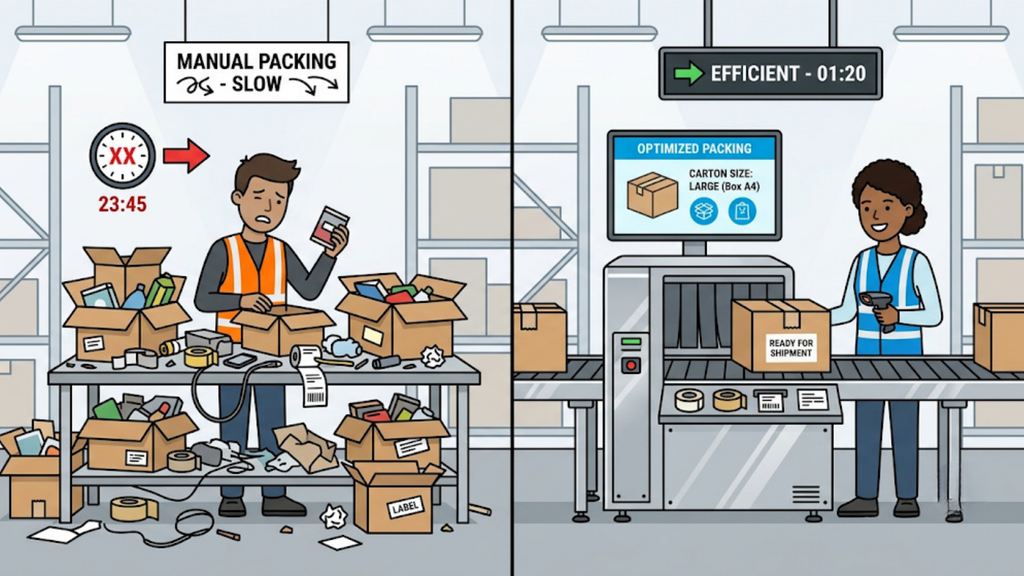
Ambiguity at the packing table costs money on every order. Each SKU should carry a recommended carton reference.
Base.com applies weight-based and category-specific pick-and-pack rules, including different handling for bulky kitchenware, appliance cartons, and multi-item packing. The decision moves from packer judgement to system instruction.
5. Replace Void Fill With Correctly Sized Boxes

Filler protects products but inflates dimensions. A smaller box with minimal filler usually protects better than a large box packed loose.
This matters most for fragile handcrafted and glass-packaged items, where movement inside the carton causes the damage. Fit beats padding.
6. Define Consolidation Rules for Multi-Item Orders
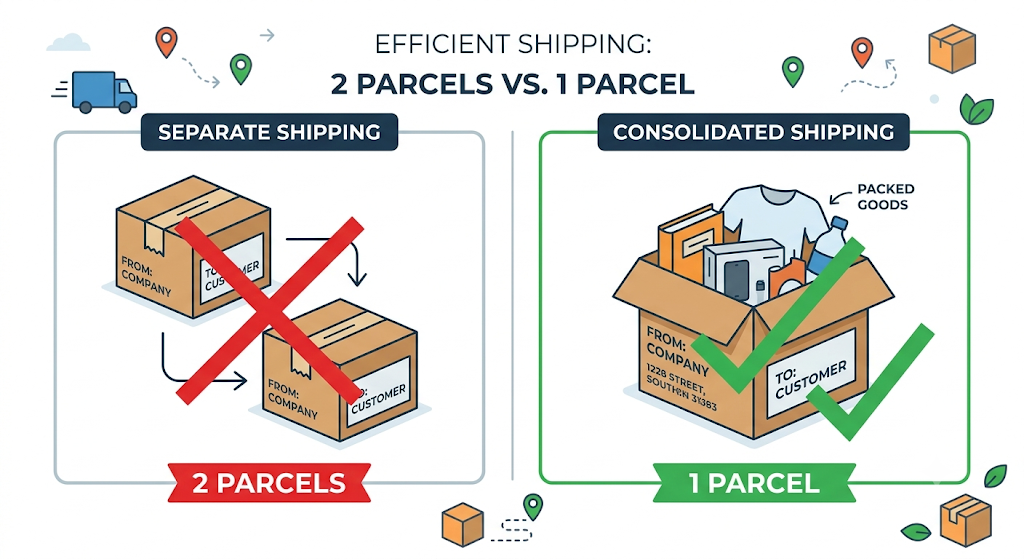
Multi-item orders should default to a single carton wherever the combined dimensions permit. Splitting should be an exception with a reason.
Base.com supports careful multi-item packing designed to prevent in-transit damage while keeping consignments consolidated. One parcel costs less and fails less often than two.
How Do You Set Courier Rules That Respect Weight Slabs?
Carrier selection is an arithmetic problem disguised as a relationship decision. Once cartons are rationalised, routing rules become the next largest lever.
Apply these five rules in order, since sequence changes the outcome.
1. Filter by Serviceability Before Comparing Price

A cheaper carrier that cannot deliver to the PIN code costs infinitely more. Serviceability filters the candidate list first, always.
Base.com assigns couriers by destination PIN code and fails over automatically to the next partner when one cannot service an order. Undeliverable dispatches stop at selection rather than at the customer’s doorstep.
2. Compare Rates at the Actual Chargeable Weight
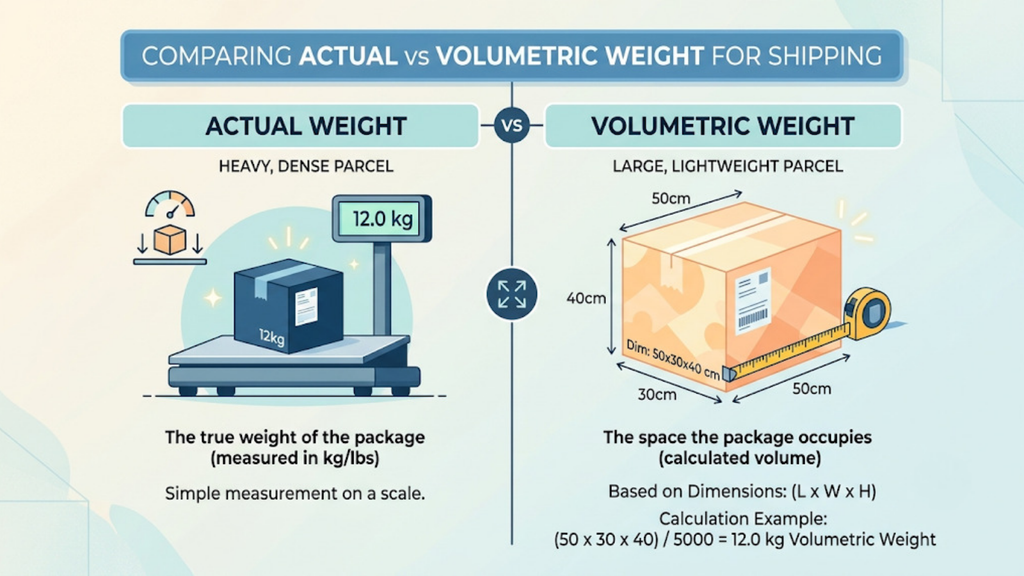
Rate comparison at nominal weight produces wrong answers for bulky parcels. Compare at the higher of actual and volumetric weight.
Base.com calculates weight-based pricing per package, so the comparison reflects what you will actually be billed. Integration with shipping aggregators supports weight-based pricing parameters across partners.
3. Apply Carrier Preference by Weight Band, Not Globally
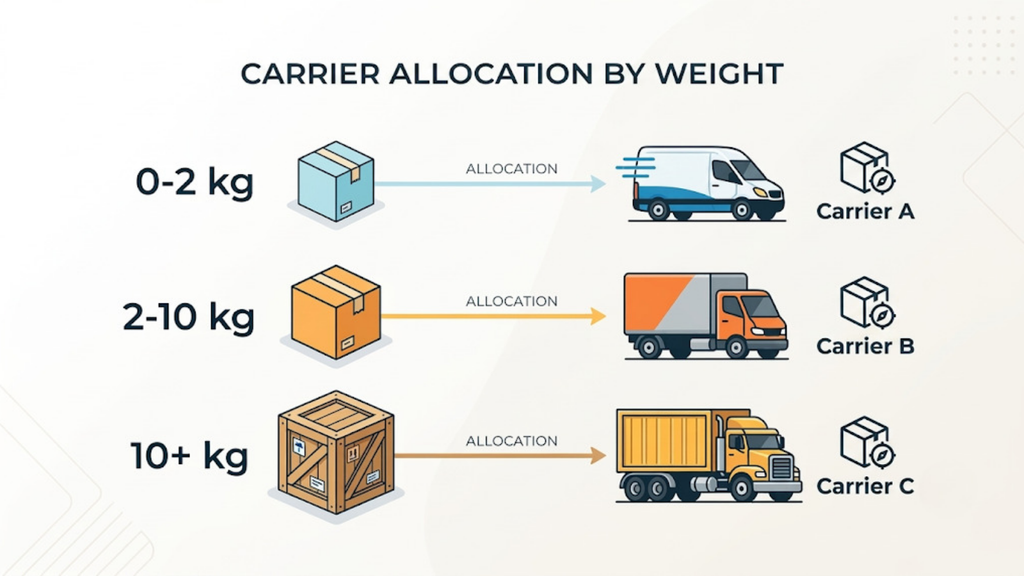
Carriers rarely win across every slab. One partner may be strongest below 2 kg while another dominates the 10 kg-plus band.
Assign preferences band by band rather than choosing a single default. Teams handling how to manage weight-wise packing and shipping charges typically find three or four partners to cover their full range efficiently.
4. Weight Heavy Consignments Toward Carriers That Handle Them
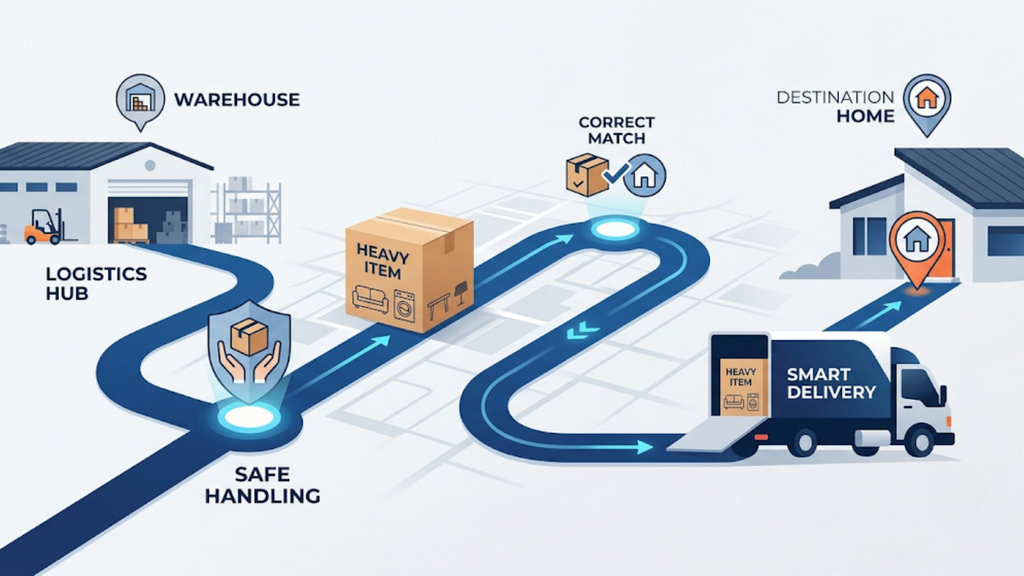
Heavier items need carriers equipped for the address, not merely willing to accept the booking. Appliance and furniture cartons fail with ill-suited last-mile partners.
Base.com routes heavier items through couriers that can genuinely service the delivery address, which reduces both failed deliveries and handling damage.
5. Build Failover Into the Rule, Not Into a Person
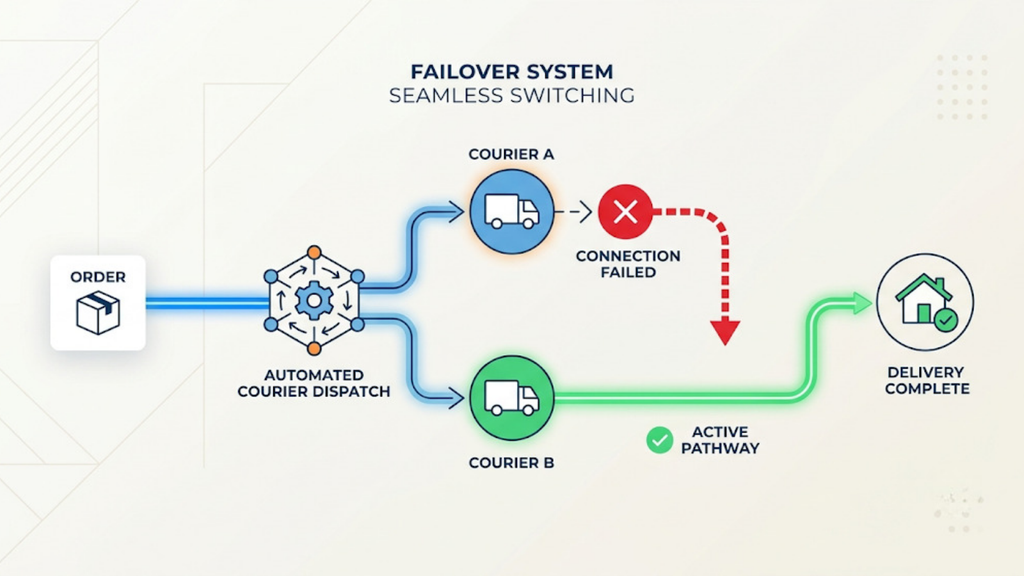
Serviceability gaps appear daily, and manual workarounds consume the time automation was meant to save. Failover must be automatic.
Base.com moves to the next courier in sequence when the first cannot service an order, so dispatch continues without intervention.
Manual Packing Decisions Versus System-Enforced Rules
The gap between these two approaches shows up in freight invoices rather than in daily operations. Mapping each leak to its control makes the difference concrete.
Score your current process against the table below, then count the rows that already cost you money.
| Cost driver | Manual approach | System-enforced approach | Typical impact |
| Carton selection | Packer chooses by convenience | SKU-mapped default carton | Slab crossings on avoidable orders |
| Volumetric weight | Rarely calculated | Recorded per SKU, checked at packing | Silent overbilling on light bulky items |
| Slab boundaries | Discovered on the invoice | Flagged before dispatch | Fractional excess billed repeatedly |
| Courier selection | Familiar partner by habit | PIN-code and weight-band rules | Higher rate paid on every band |
| Serviceability | Checked after failure | Filtered before assignment | RTOs on undeliverable addresses |
| Multi-item orders | Split by packer judgement | Consolidation rules applied | Two parcels billed instead of one |
| Fragile handling | Extra filler added ad hoc | Category-specific packing rules | Damage plus reverse freight |
| Weight recording | Estimated or skipped | Captured per package | No basis for invoice disputes |
| Rate reconciliation | Seldom performed | Reported per shipment | Billing drift never recovered |
| Peak-season packing | Speed over accuracy | Rules hold under pressure | Costliest errors in busiest weeks |
Rows sitting in the left column form your fix list. Address carton and courier rows first, since they carry the largest per-order value.
Where Base.com Fits in Weight-Driven Fulfilment
Most platforms treat shipping as label generation. Bulky-SKU sellers need weight and dimensions embedded in the fulfilment logic itself.
Check each shortlisted platform against these capabilities.
- Weight-based pick and pack: Base.com applies packing rules by weight and category, handling appliance cartons differently from small parcels.
- PIN-code courier routing: Base.com selects the carrier by destination PIN code so heavier items go through couriers that can service that address.
- Weight-based pricing per package: Base.com calculates cost per consignment rather than applying a flat assumption.
- Automatic courier failover: Base.com moves to the next partner in sequence when a courier cannot service an order.
- Aggregator integration: Base.com works with shipping aggregators using weight-based pricing parameters across partners.
- Multi-item packing controls: Base.com supports careful consolidated packing designed to prevent in-transit damage.
- Category-specific handling: Base.com differentiates bulky kitchenware, fragile handcrafted goods, and delicate packaging within the same workflow.
- Bin-level picking for bulky SKUs: Base.com assigns shelf coordinates such as H2-37 so heavy items are located without repeated handling.
- Returns and damage capture: Base.com scans returns into condition-level statuses, making damage patterns visible by SKU and lane.
- Scheduled shipping reports: Base.com delivers cron-based reports in customisable formats, so freight cost per order stays measurable.
These capabilities compound. Carton rules without courier rules leave money on the table, and both without reporting means improvements go unverified.
Building the Reporting Loop That Keeps Savings Permanent
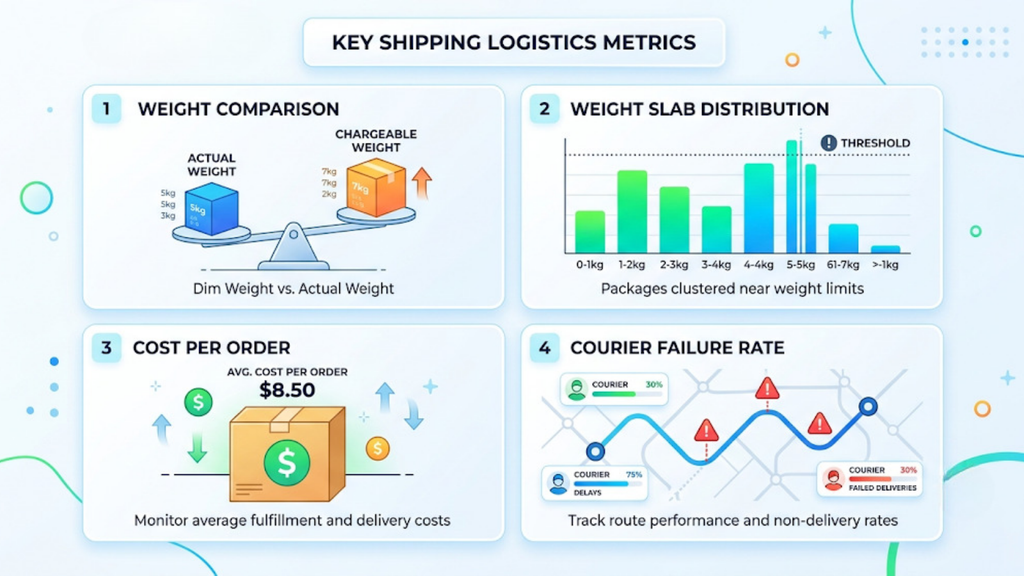
Shipping optimization decays without measurement. Rules drift, new SKUs arrive without dimensions, and packers revert under pressure.
Track four numbers monthly, and the savings hold. First, average chargeable weight versus average actual weight, which exposes dimension creep. Second, slab distribution across your dispatches, where clustering just above a boundary signals carton problems.
Third, cost per delivered order by category, since this is the only figure that reflects RTOs and damage alongside freight. Fourth, courier-wise failure rates by lane, which tell you when a carrier preference needs revisiting.
Base.com’s scheduled reporting delivers these without manual assembly. Sellers serious about how to manage weight-wise packing and shipping charges review them monthly rather than quarterly, because a dimension problem left running for a quarter costs considerably more than the review takes.
Fix the Carton First, Then the Carrier, Then the Report
Bulky-SKU sellers usually begin with rate negotiation because it feels like the commercial lever. It is the smallest one available, and it arrives after the expensive decisions have already been made at the packing table.
Work in the opposite order. Rationalise cartons, map SKUs to boxes, set weight-band courier rules with automatic failover, then measure chargeable weight monthly so the gains hold.
If you want a clear plan for how to manage weight-wise packing and shipping charges across your exact SKU dimensions, weight bands and delivery geography, book a Base.com operations review and get the rules mapped to your own dispatch data.