

Order management is the process of capturing, tracking, and fulfilling every customer order from the moment it is placed until it is delivered or returned. It covers order validation, inventory allocation, warehouse routing, invoicing, delivery tracking, and returns handling, all from one connected system. For Indian sellers running multiple channels, order management software best for sellers in India needs to add COD verification, GST-compliant invoicing, and marketplace-specific SLA tracking on top of these basics.
That is the direct answer. The rest of this guide breaks down how the order management process actually works stage by stage, why it looks different for Indian sellers than anywhere else, and what separates order management software best for sellers in India from a generic global tool.
What Is Order Management?
Order management is the operational thread connecting a customer’s click to a package at their door. Every order that enters your business passes through the same sequence: capture, validation, allocation, fulfilment, and post-delivery follow-up.
Without a system directing this sequence, each stage depends on someone manually checking a different dashboard, a marketplace seller panel, a courier portal, or a spreadsheet. That works when order volume is low. It breaks down fast once a seller crosses a few hundred orders a day.
India’s ecommerce market has crossed $226 billion, and D2C brands are growing at a 40% CAGR. Growth at that pace multiplies order volume and channel count simultaneously, and order management is the layer that has to absorb that growth without falling apart.
An order management system, often shortened to OMS, is the software that runs this process automatically. It is distinct from inventory or warehouse software, though the three work together closely, which this guide covers in detail further down.
The Order Management Process: From Click to Delivery
Every order passes through eight distinct stages. Understanding each one shows exactly where things go wrong without proper software in place.
1. Order Capture
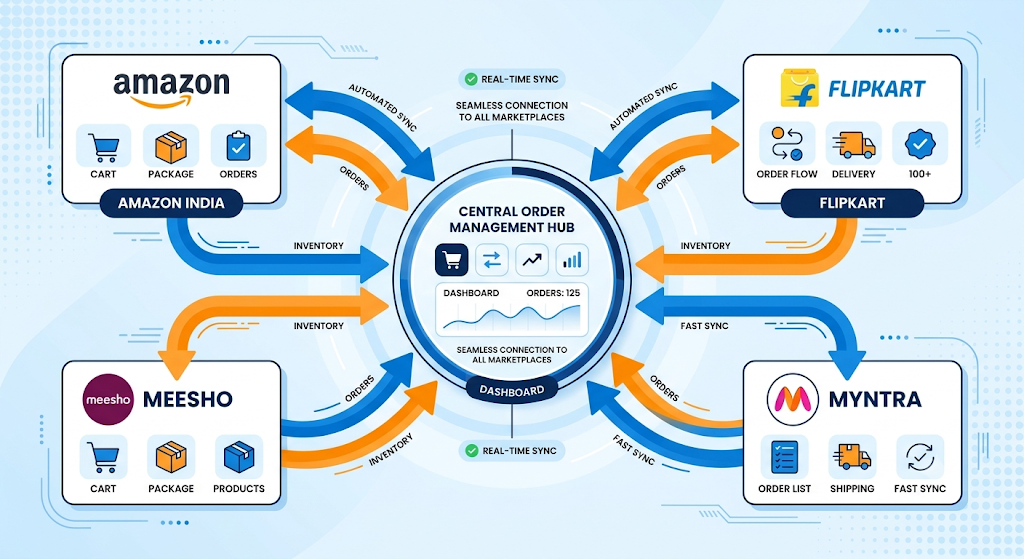
An order enters the system the moment a customer completes checkout, whether on your own website, Amazon, Flipkart, Meesho, or Myntra. Order management software best for sellers in India needs to pull orders from every one of these channels automatically, on a short sync interval, typically every 15-30 minutes.
2. Order Validation
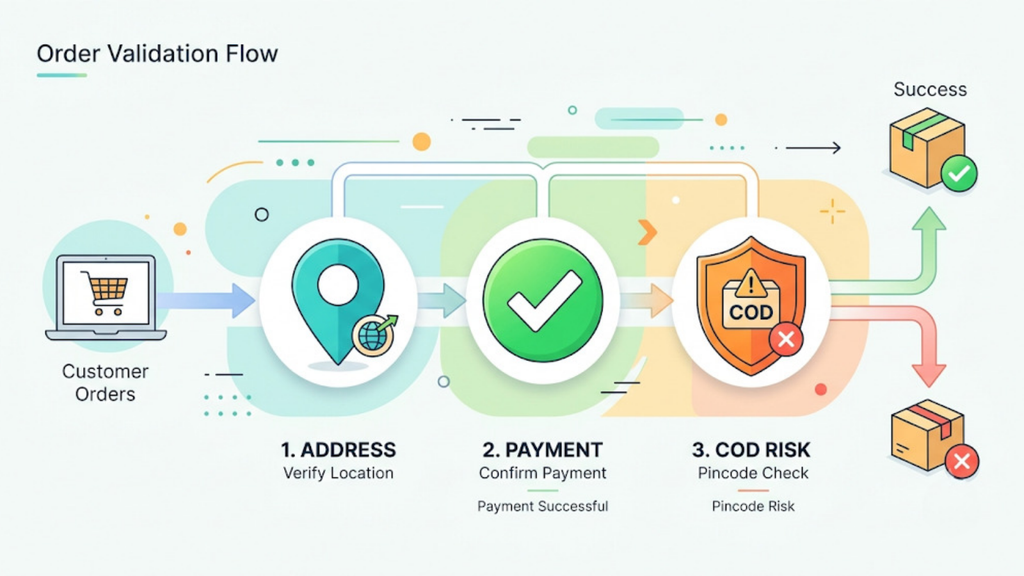
Before fulfilment begins, the order needs validation: is the address complete, is the payment confirmed, and for COD orders specifically, does this pincode carry a known return risk? Skipping this step is one of the most common sources of downstream RTO cost, and it is exactly the gap that order management software best for sellers in India is designed to close.
3. Inventory Allocation

The system checks whether stock is actually available at a warehouse capable of fulfilling the order within its SLA window. This has to happen in real time, since the same SKU is often selling simultaneously across four or more channels.
4. Order Routing
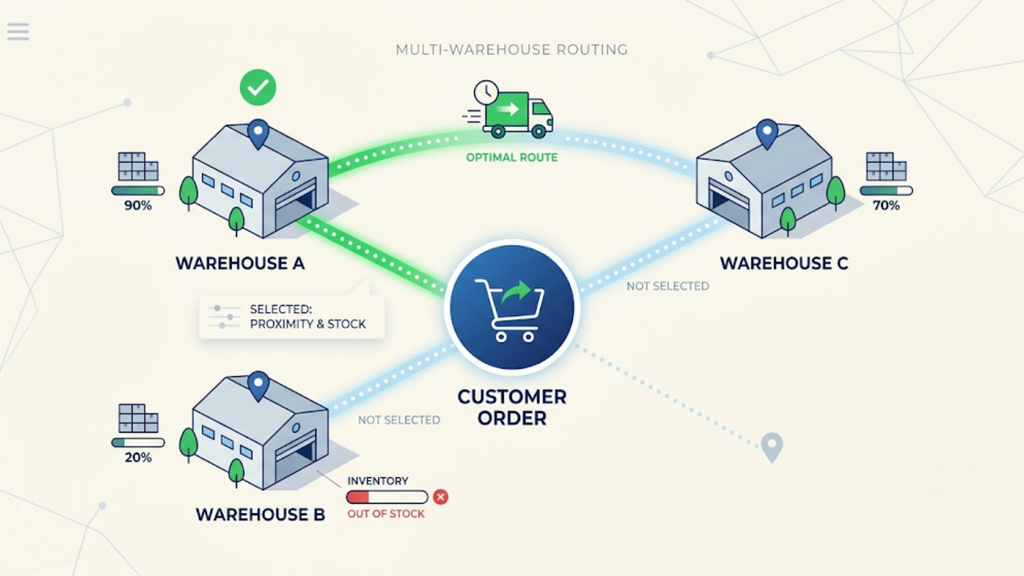
For sellers with more than one warehouse, the order gets routed to the location best positioned to fulfil it, based on stock availability, delivery pincode proximity, and courier cut-off times.
5. Picking, Packing, and Dispatch

This stage sits at the intersection of order management and warehouse management. The OMS hands off a confirmed, allocated order to the warehouse floor, where it gets picked, scanned, packed, and labelled for the correct courier.
6. Invoicing and GST Compliance
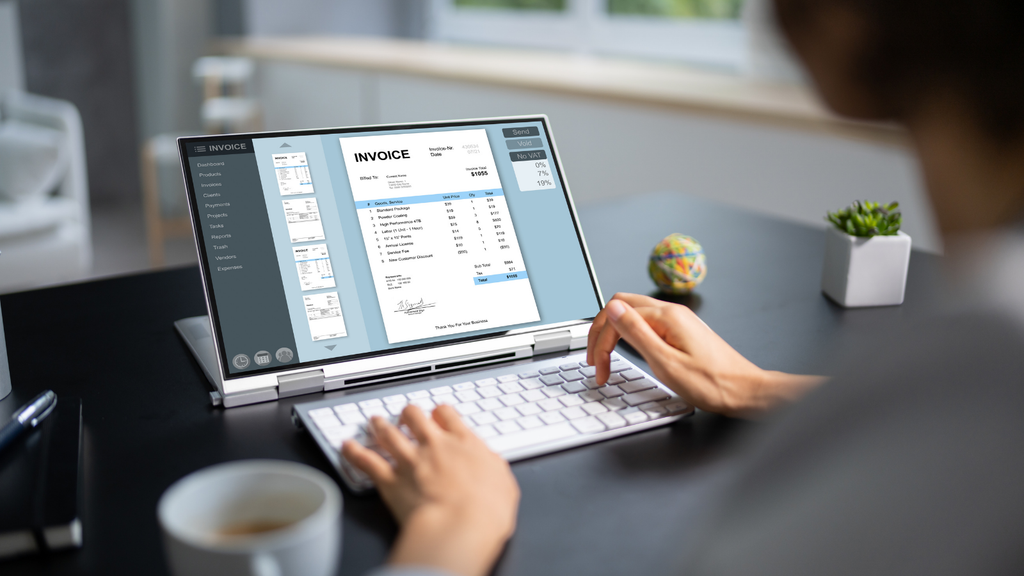
Every dispatched order needs a GST-compliant invoice generated automatically, with the correct tax treatment applied based on the buyer’s location and the seller’s registration. Manual invoice generation at volume is one of the most common compliance failure points for growing Indian sellers, which is why GST logic is a non-negotiable requirement for order management software best for sellers in India.
7. Delivery Tracking and Customer Communication
Once dispatched, the order needs live tracking synced back to the customer and to the marketplace it originated from. COD orders in particular benefit from delivery-day confirmation nudges, since COD return rates run at 25-30% nationally and unconfirmed deliveries drive a meaningful share of that number.
8. Returns, Refunds, and Exchange Management
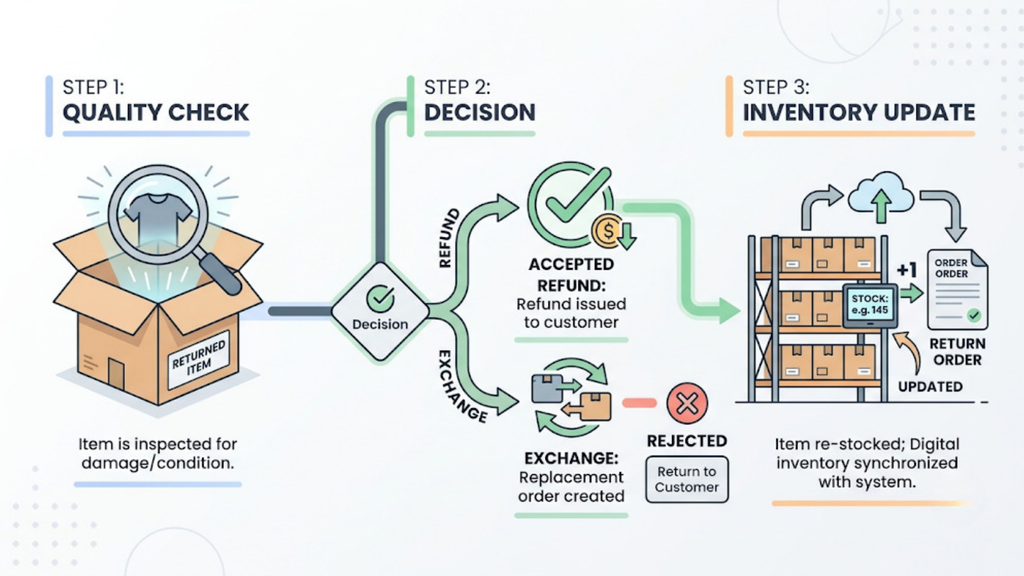
A returned order needs to trigger a quality check, a refund or exchange decision, and an inventory update, all reconciled against the original order record. Skipping this step is why stock counts drift from reality within weeks at any meaningful order volume.
OMS vs. WMS vs. Inventory Management System: How They Fit Together
These three terms get used interchangeably, and that confusion causes real buying mistakes. Each governs a different layer of the same order lifecycle.
| Layer | What It Answers | Primary Focus |
| Order Management System (OMS) | Where is this order in its lifecycle, and what needs to happen next | Order capture, validation, routing, invoicing, customer communication |
| Warehouse Management System (WMS) | How does this order physically move through the warehouse | Picking, packing, slotting, dispatch, labor assignment |
| Inventory Management System | What stock exists, and where | Stock counts, reorder points, multi-location visibility |
A seller evaluating order management software best for sellers in India should understand that the strongest platforms combine all three layers on one shared data set. A disconnected OMS that cannot see live warehouse or inventory data will confirm orders it cannot actually fulfil.
Why Order Management Looks Different for Indian Sellers
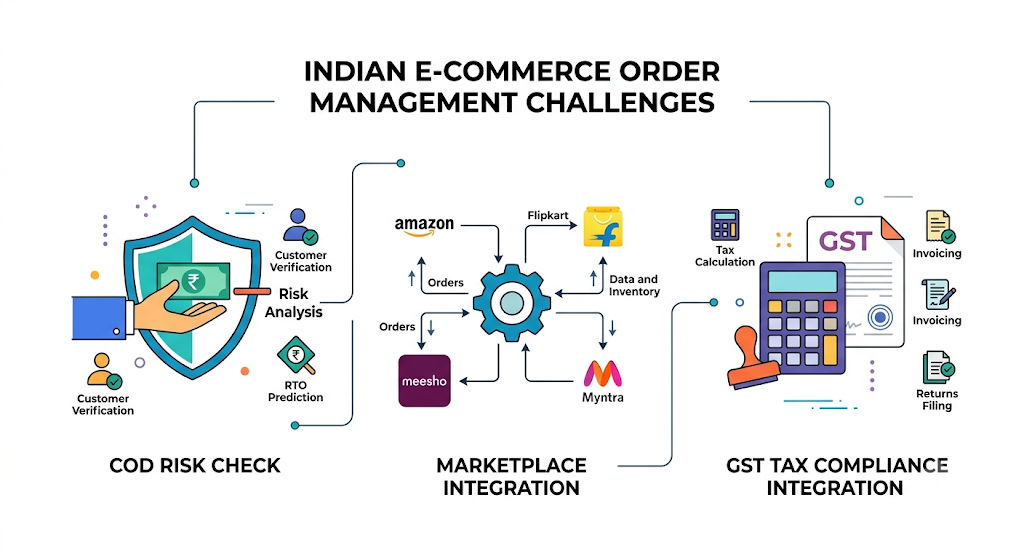
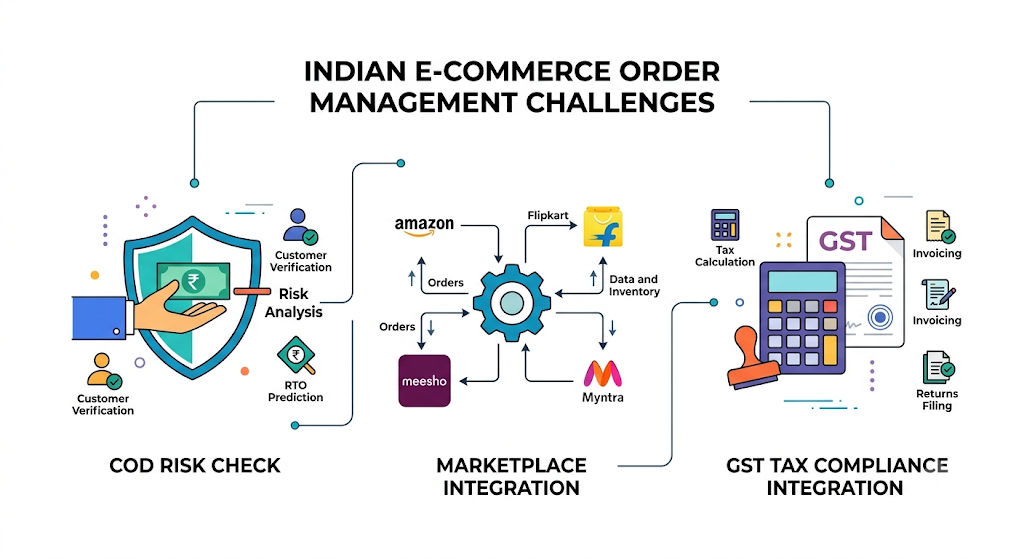
Order management principles built for Western ecommerce do not transfer cleanly to India. Three structural differences matter most.
- COD dominates order validation. Cash on delivery accounts for 55-65% of ecommerce orders in Tier 2 and Tier 3 cities, the fastest-growing zones for Indian D2C brands. Order management software best for sellers in India has to score COD risk at the pincode level before an order is confirmed for dispatch, not treat every order as equally reliable.
- Channel fragmentation is standard, not exceptional. A typical Indian seller manages orders across their own website plus Amazon, Flipkart, Meesho, and Myntra simultaneously. Each platform has its own order feed format, its own SLA window, and its own penalty structure for late dispatch or cancellation.
- GST compliance is baked into every single order. Every invoice needs correct tax treatment based on buyer location and registration type. A global OMS built for a single-tax-jurisdiction market has no native logic for this, and retrofitting it after the fact is expensive and error-prone.
This is why order management software best for sellers in India has to be built around COD, multi-marketplace complexity, and GST from the first line of code, not adapted for these requirements later.
Exception Handling: Where Most Order Management Breaks Down
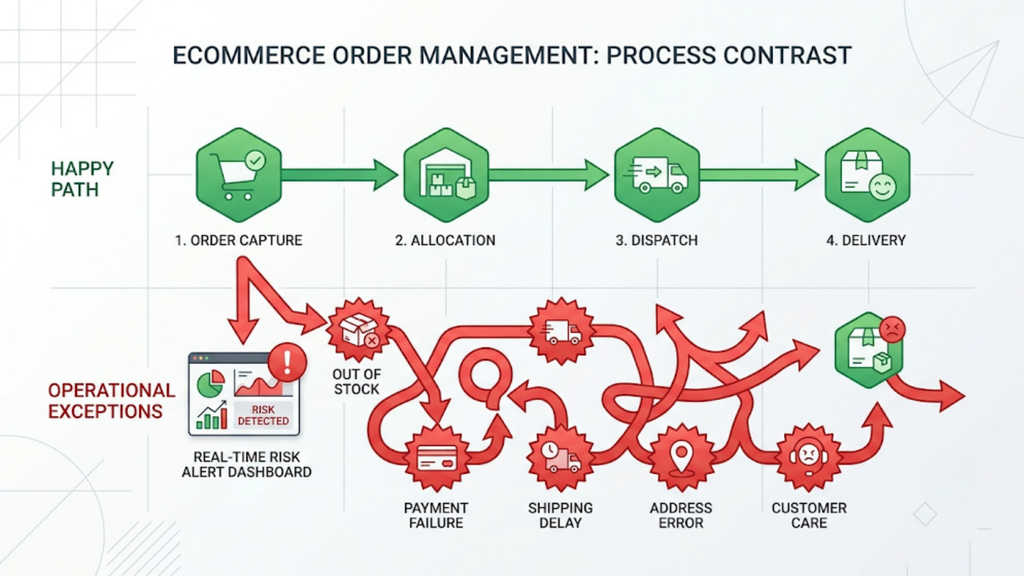
Every order lifecycle has a happy path: capture, allocation, dispatch, delivery, with no interruptions. Real ecommerce operations spend most of their time on the exceptions, not the happy path.
A pincode goes serviceable-to-unserviceable overnight. A courier misses a pickup window. A customer changes an address after dispatch. A marketplace flags an order for a compliance check. None of these are rare. At scale, they are routine, daily occurrences.
Order management software best for sellers in India needs to surface these exceptions the moment they occur, not after a customer complaint or a marketplace penalty notification. A live dashboard showing orders at risk of missing SLA, orders stuck in a failed courier handoff, or orders awaiting manual COD confirmation lets a small operations team handle exceptions proactively instead of reactively.
Without this visibility, exception handling defaults to firefighting: someone discovers a problem only once it has already cost a dispatch delay or a failed delivery. With it, the same team can resolve issues before they become customer-facing failures. This is one of the clearest differences between order management software best for sellers in India that is genuinely built for operational depth and a generic tool that only automates the happy path.
How Order Management Connects to Customer Experience
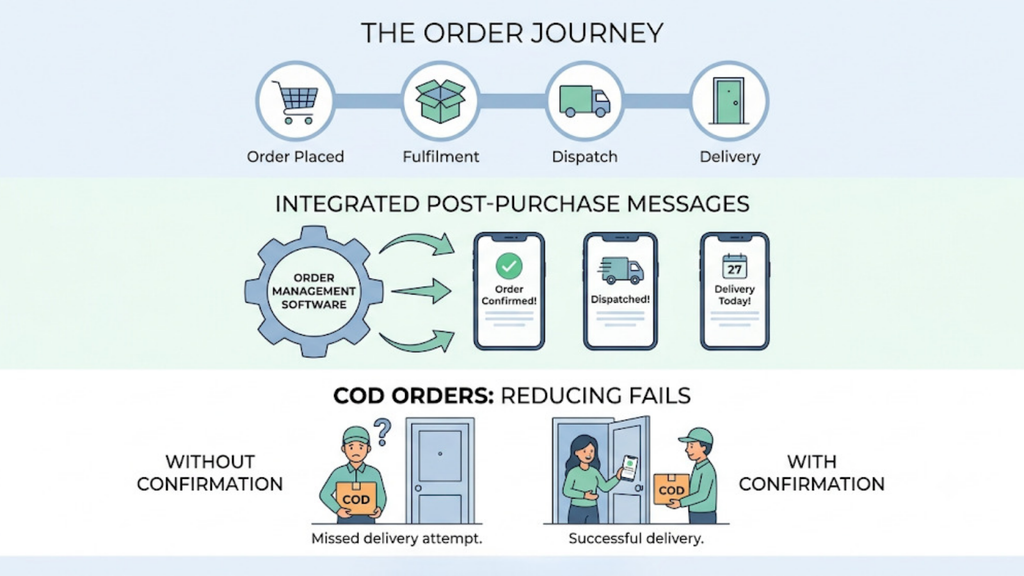
Order management is largely invisible to the customer when it works, and highly visible when it fails. A customer does not see the backend allocation logic, but they immediately notice a wrong item, a delayed shipment, or a refund that takes three weeks to process.
Post-purchase communication is part of the order management layer, not a separate marketing function. Order confirmation messages, dispatch notifications, delivery-day reminders, and return status updates all originate from the same order record that drives fulfilment.
For COD orders specifically, a simple delivery-day confirmation message reduces failed delivery attempts meaningfully, since a share of COD returns stem from a customer being unavailable or having forgotten the order entirely, not genuine product dissatisfaction. This is a clear example of order management software best for sellers in India treating customer communication as an integrated feature, not an afterthought, which directly reduces the return volume the business has to absorb downstream.
Common Order Management Failures That Cost Indian Sellers Money
A handful of failure patterns show up repeatedly across Indian D2C and marketplace sellers.
- Overselling across channels. Without one shared inventory view, the same unit sells on two platforms within minutes of each other, damaging seller performance metrics on both, a failure that order management software best for sellers in India is specifically built to prevent.
- Manual order pulling. Logging into four or five seller portals every morning to check new orders wastes hours and delays dispatch on time-sensitive SLA orders.
- No COD risk scoring before confirmation. Confirming every COD order without a pincode-level check means outbound freight is spent on orders with a high probability of failed delivery.
- Disconnected returns processing. A refund issued without a matching inventory update leaves stock counts wrong until the next manual reconciliation.
- Missed GST invoice accuracy. A mispicked item costs an Indian seller between Rs. 200 and Rs. 600 once reverse logistics and customer service are accounted for, and invoicing errors add a compliance cost on top of that.
What to Look for in order management software best for sellers in India
Use this checklist to evaluate any platform against your actual daily operations, not a generic demo script.
| Evaluation Criteria | What to Check |
| Marketplace order capture | Native, API-based sync with Amazon, Flipkart, Meesho, Myntra, and your own website |
| COD risk scoring | Pincode-level RTO risk flagged before order confirmation |
| Real-time inventory visibility | Live stock check across every warehouse before allocation |
| Multi-warehouse routing | Automatic routing based on stock, proximity, and SLA feasibility |
| GST-compliant invoicing | Automatic, correct tax treatment on every generated invoice |
| Returns and refunds workflow | Automated quality check and inventory reabsorption on return receipt |
| WMS and inventory integration | Shared live data across order, warehouse, and inventory layers |
| Implementation timeline | Days to a few weeks, not months |
Sellers evaluating order management software best for sellers in India should walk through this table against their real channel mix and order volume, not a vendor’s feature slide.
Order Management Metrics Worth Tracking Weekly
A handful of metrics tell you whether your order management process is actually working, rather than just running.
- Order-to-dispatch time. The gap between order confirmation and physical dispatch. Rising numbers here usually point to allocation or warehouse handoff problems, not a picking speed issue.
- COD confirmation rate. The share of COD orders confirmed by the customer before dispatch. A declining rate signals a need for better pre-dispatch communication.
- First-attempt delivery success rate. How often a shipment delivers on the first courier attempt. This is the clearest downstream signal of order management quality, since address validation and COD confirmation both feed into it.
- Return-to-restock time. How long it takes a returned item to become available for resale again. A widening gap here means the order and inventory layers are not talking to each other quickly enough.
- SLA compliance rate by channel. Amazon, Flipkart, Meesho, and Myntra each track dispatch SLA independently, and a seller needs channel-level visibility, not just a blended average, to catch a problem on one specific platform.
Tracking these five metrics consistently is often the single biggest differentiator between sellers who treat order management as a strategic function and those who treat it as back-office administration.
Order management software best for sellers in India should surface these metrics on a live dashboard, not a report generated once a month after the numbers have already caused damage.
How Base.com Approaches Order Management
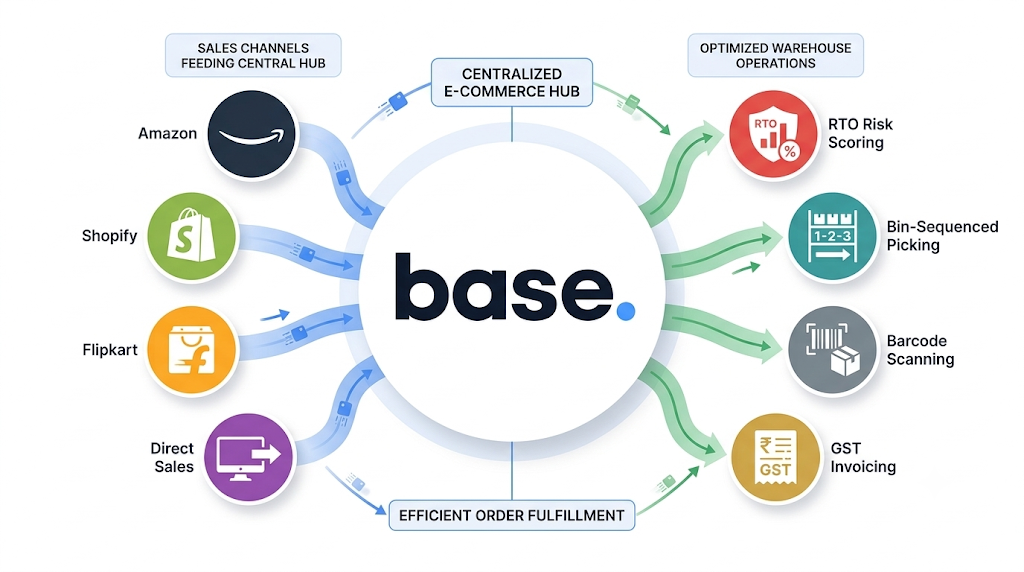
Base.com is an order and warehouse management platform built specifically for Indian D2C, marketplace, and B2B sellers, treating order management as the connective layer across every other operational system, not a standalone tool.
Base.com pulls orders from Amazon, Flipkart, Meesho, Myntra, Shopify, and direct SAP-linked distribution into a single queue, tagged automatically by SLA deadline and channel priority. COD orders are scored for pincode-level RTO risk before confirmation, not after a failed delivery attempt has already cost outbound freight.
Once an order is validated and allocated, Base.com hands it directly to the warehouse layer, generating bin-sequenced pick instructions and enforcing scan confirmation at packing, so the order and warehouse data never fall out of sync. GST-compliant invoices generate automatically at dispatch, with correct tax treatment applied based on buyer location and registration.
On the returns side, Base.com triggers an automated quality check the moment a return is logged by the courier, updating both the order record and the inventory count simultaneously. For sellers running SAP alongside their ecommerce operations, Base.com connects natively, so order data never lives in a second, disconnected system.
This is what order management software best for sellers in India looks like when it is built around the full lifecycle, capture through returns, rather than solving only the order-capture piece and leaving the rest to manual coordination. It is also the clearest way to separate genuine order management software best for sellers in India from a thin order-capture tool wearing an OMS label.
The Real Cost of Poor Order Management
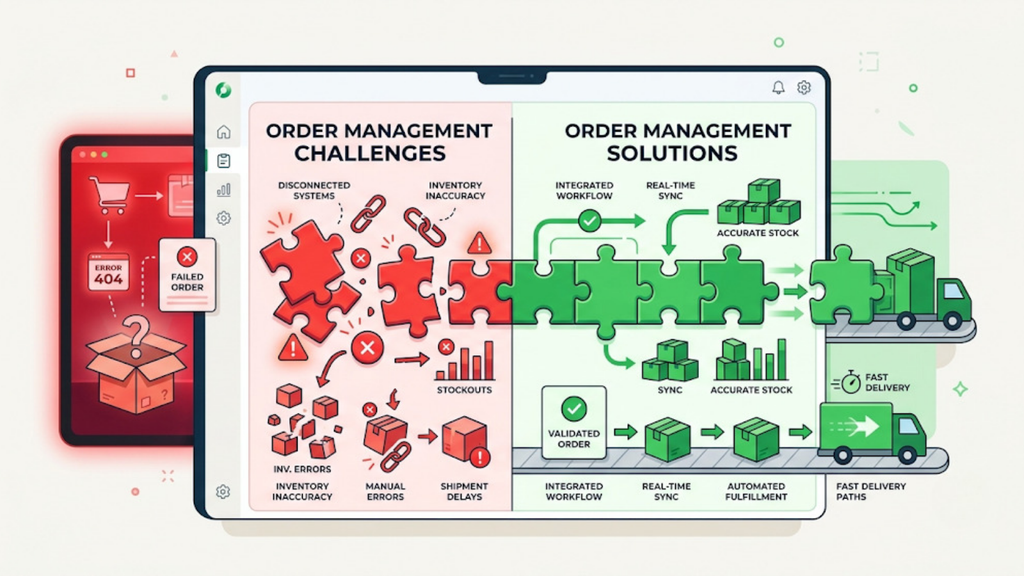
Poor order management rarely shows up as one dramatic failure. It accumulates through dozens of small breakdowns every week.
Manual, disconnected order processes slow operations by up to 35% compared to automated alternatives. Businesses relying on manual order processing incur roughly 30% higher operational costs than those running an integrated system.
At 500 daily orders and a 2% error rate stemming from disconnected order and warehouse data, that is 10 incorrect shipments a day and roughly Rs. 1.2 lakh a month in pure correction cost. Every one of those errors also carries a customer service cost that rarely gets tracked separately.
Overselling due to poor order-inventory sync carries a second, less visible cost: marketplace penalties. A single oversold SKU on Amazon or Flipkart can trigger account-level performance flags that reduce visibility across an entire catalogue, not just the affected listing, a risk that order management software best for sellers in India is designed to eliminate at the source.
Getting Started: Implementation Timeline
Moving from manual or fragmented order processing to a proper OMS does not require a multi-month rollout. Sellers evaluating order management software best for sellers in India can realistically expect full deployment within a few weeks.
- Week 1: Channel and SKU mapping. Confirm every marketplace account is API-enabled and consolidate your SKU master so the same product code is used across every channel.
- Week 1: COD and courier configuration. Set pincode-level risk thresholds and connect courier accounts for label generation and tracking sync.
- Week 2: Warehouse and inventory integration. Connect the OMS to live warehouse and inventory data so allocation reflects actual stock, not a delayed snapshot.
- Week 2-3: Parallel run. Operate the new system alongside existing manual processes briefly to validate accuracy before full cutover.
- Week 3 onward: Live monitoring. Track order accuracy, dispatch TAT, and COD confirmation rates weekly for the first month.
Brands that follow this sequence typically see order management software best for sellers in India fully operational within two to three weeks, with measurable accuracy improvement from the first week of go-live.