

Order management challenges in ecommerce cost more than most sellers realize until they measure it directly. About 46% of businesses face fulfillment problems because their systems are scattered across disconnected tools, and 67% of customers now expect real-time order tracking as a baseline.
Automated order management cuts processing time by 40% and pushes inventory accuracy above 90%, compared to manual processes. India’s ecommerce logistics sector handles roughly 12-14 million shipments a day, and that number spikes sharply during major sale events, which is exactly when order management challenges in ecommerce become most expensive to ignore.
The twenty challenges below are not ranked by severity, since which ones hurt most depends heavily on channel mix, order volume, and category. A single-warehouse D2C brand and a multi-location FMCG distributor experience order management challenges in ecommerce very differently, even though the underlying categories overlap significantly.
Challenge 1: Overselling Across Multiple Marketplaces
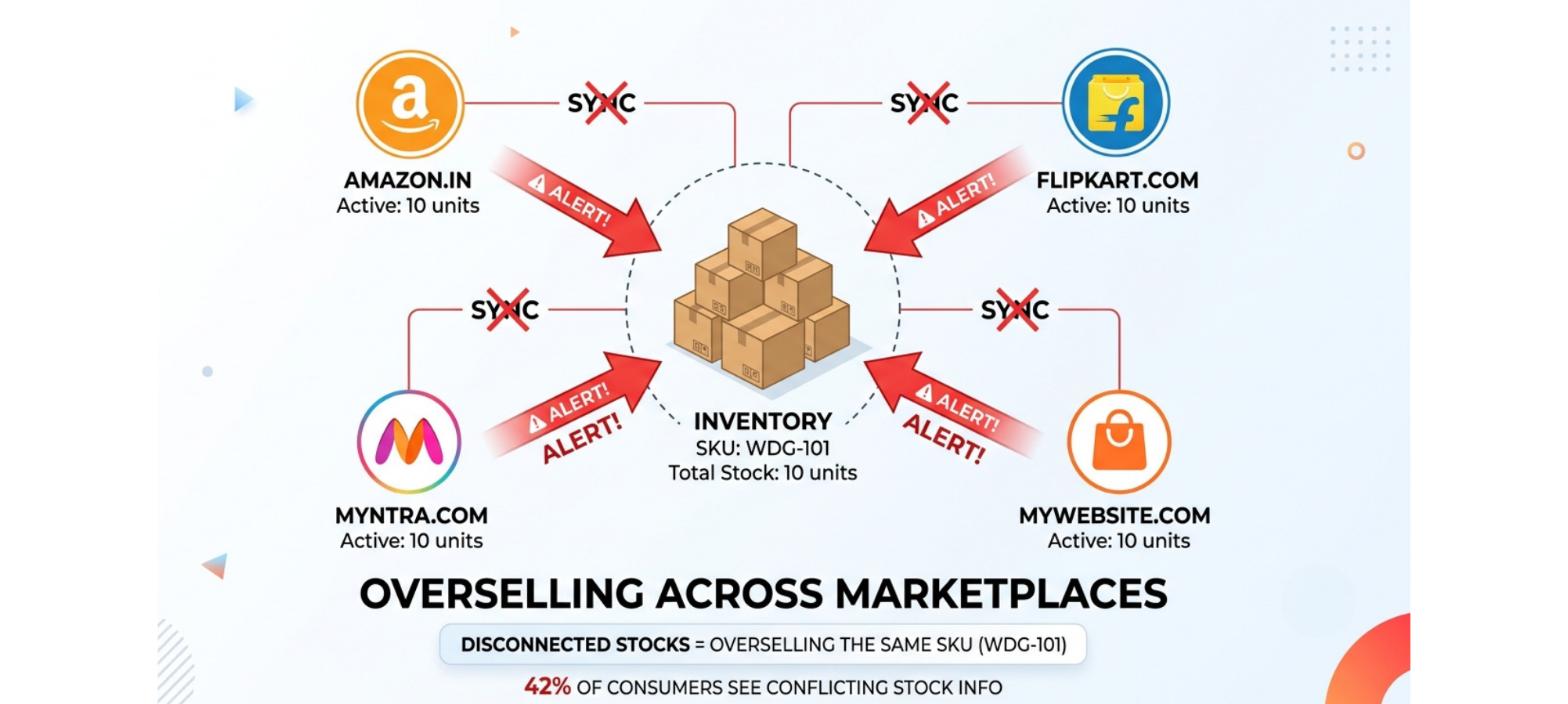
Selling on Amazon, Flipkart, Myntra, and your own website without synced stock data leads to overselling the same SKU across channels. This is one of the most common order management challenges in ecommerce, since disconnected channels lead 42% of consumers to see conflicting stock information.
How to Solve It
Sync inventory across every channel in real time rather than on a delayed batch schedule. Base.com’s real-time sync module updates stock across every connected warehouse and marketplace the moment an order is placed, cancelled, or returned, closing the gap that causes oversells during flash sales specifically.
Challenge 2: Manual Order Entry Errors

Manual retyping of orders introduces pincode, SKU, and address errors that delay dispatch. Among order management challenges in ecommerce, this one compounds quietly, since even a 2% error rate produces daily mistakes at meaningful order volume.
How to Solve It
Automate order capture so orders flow from the marketplace or storefront directly into the fulfillment queue with validated data, removing the manual re-entry step entirely.
Challenge 3: Disconnected Inventory Across Channels
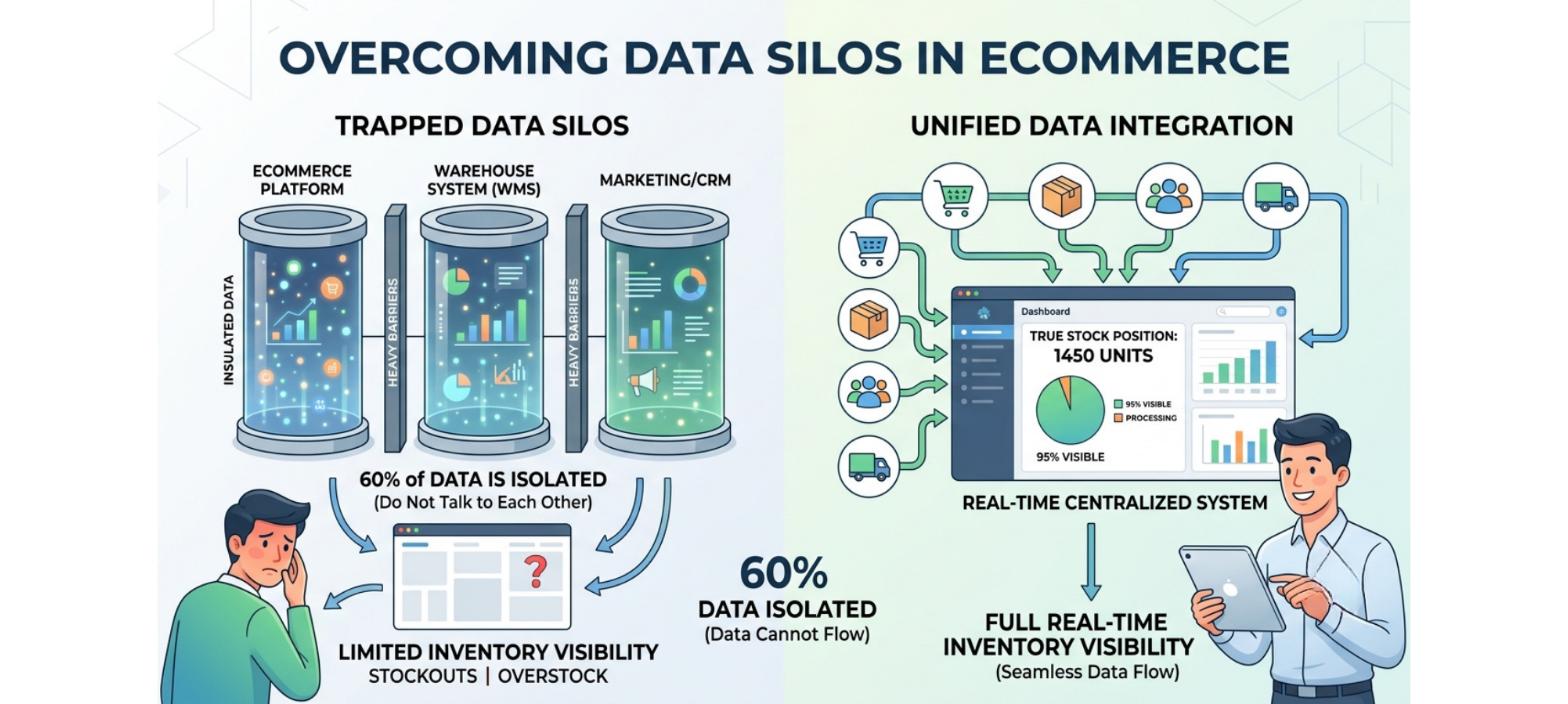
Data silos are one of the most cited order management challenges in ecommerce, with 60% of organizational data typically trapped in isolated systems that do not talk to each other. This limits visibility into the true stock position at any given moment.
How to Solve It
Consolidate order and inventory data from every channel into one centralized system, so operations, finance, and warehouse teams all work from the same live numbers. This single change often resolves several downstream order management challenges in ecommerce at once, since most of them trace back to disconnected data in some form.
Challenge 4: High RTO and COD Return Rates
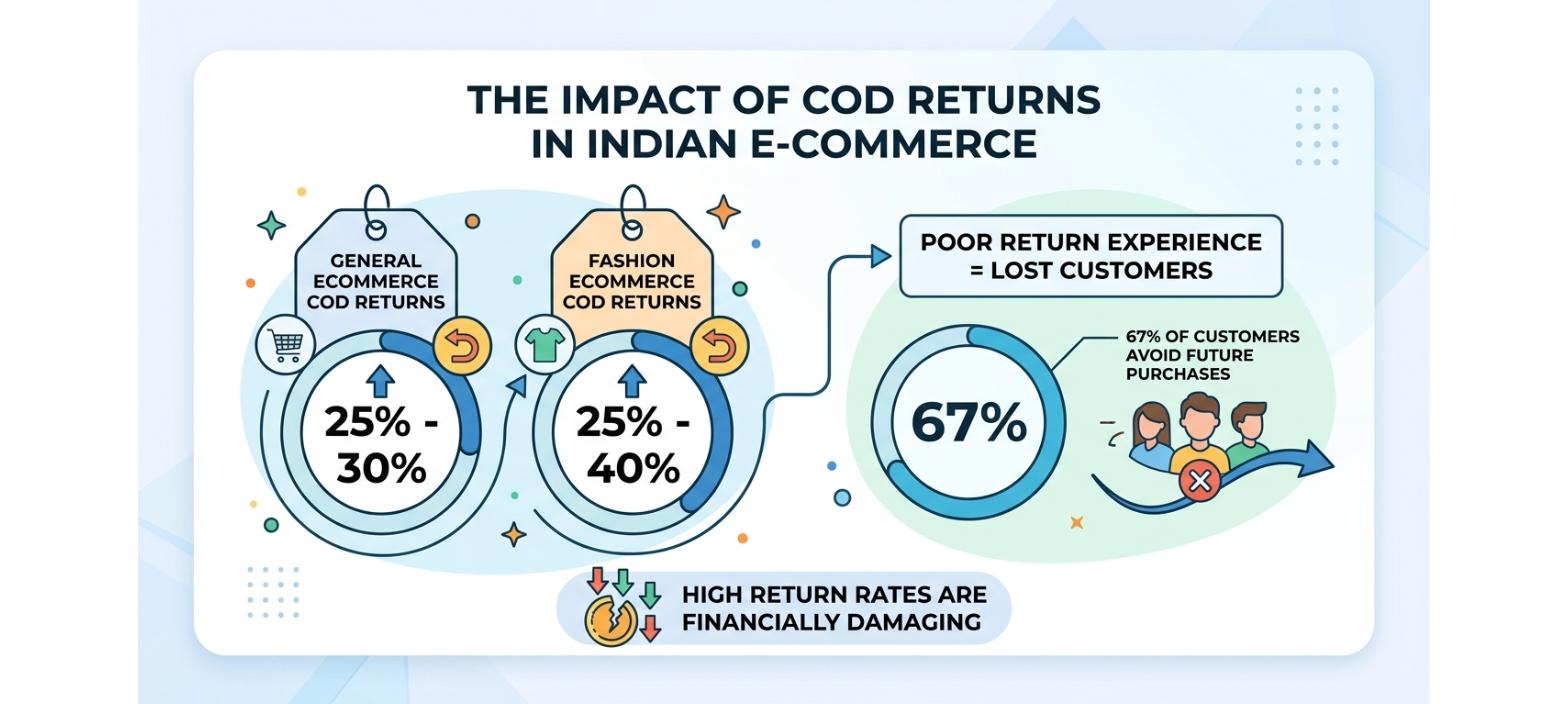
COD return rates in Indian ecommerce run between 25% and 30%, and in fashion, the return rate climbs to 25-40%. This is one of the most financially damaging order management challenges in ecommerce, since 67% of customers avoid future purchases after a poor return experience.
How to Solve It
Score every COD order for return risk before dispatch using pincode history and courier performance, flagging high-risk orders for confirmation calls or prepaid conversion nudges. Preventing even a small percentage of these returns compounds meaningfully across a full month of order volume.
Challenge 5: Delayed Order Confirmation and Dispatch
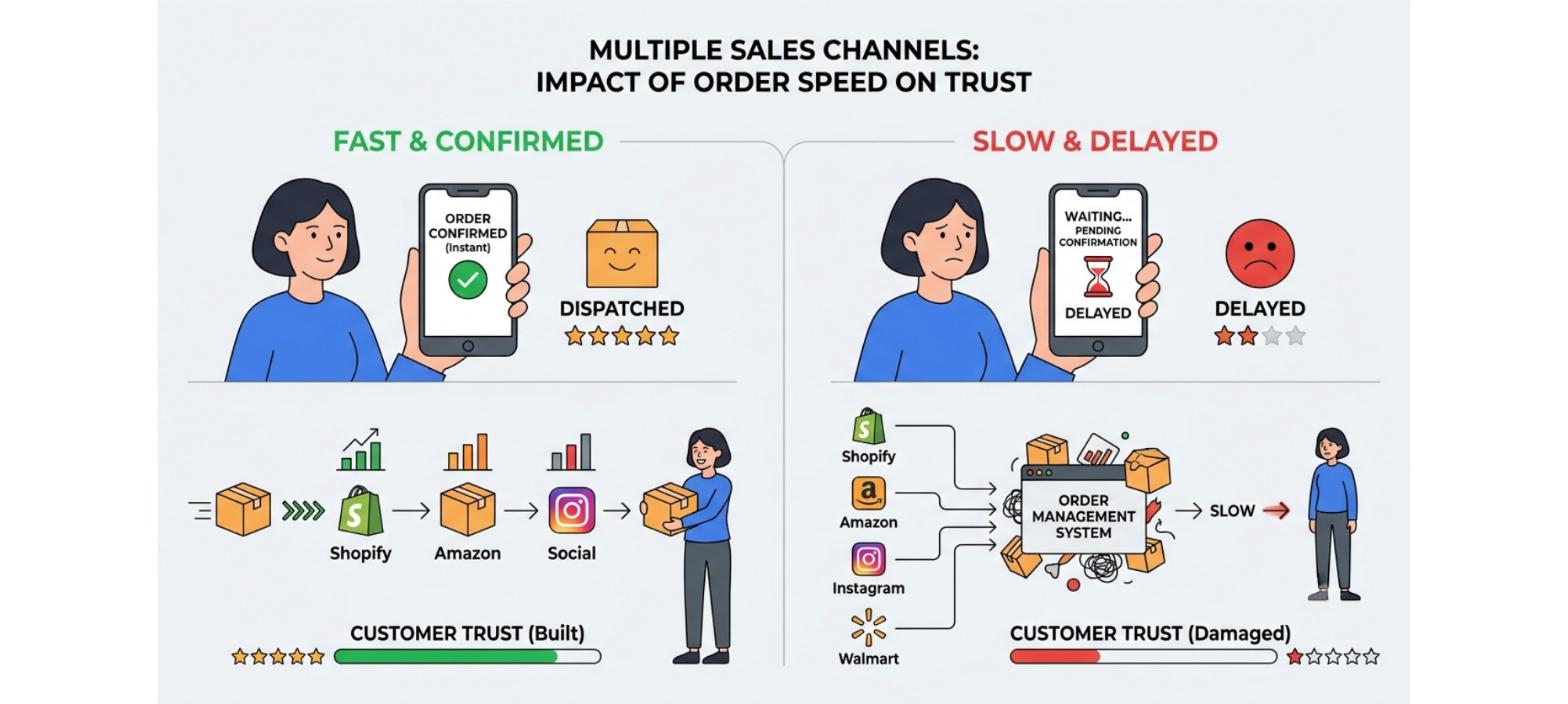
Slow order confirmation and dispatch directly damage customer trust, since delivery expectations have shifted dramatically with the rise of quick commerce. This is one of the order management challenges in ecommerce that compounds with every additional sales channel.
How to Solve It
Automate order routing to the nearest warehouse with confirmed stock, removing the manual warehouse call that typically slows dispatch decisions.
Challenge 6: Lack of Real-Time Order and Shipment Visibility
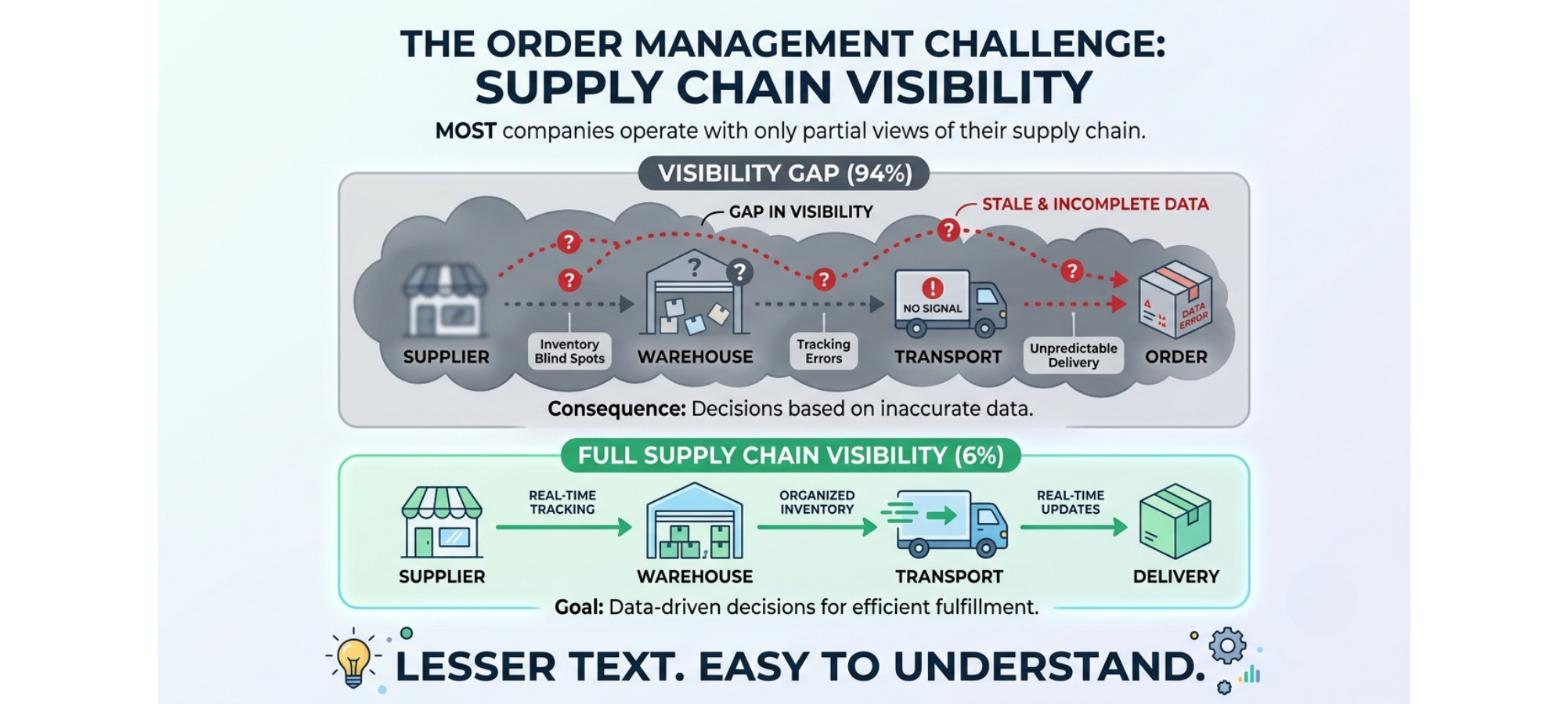
Only about 6% of companies report having full supply chain visibility, which makes this one of the more foundational order management challenges in ecommerce. Without it, every other process runs on stale or incomplete data.
How to Solve It
Implement a centralized dashboard that tracks every order from placement through delivery in real time, rather than relying on periodic manual status checks. Extending this same visibility to customer-facing tracking pages reduces support load as a direct side effect.
Challenge 7: High Cart Abandonment Due to Shipping Uncertainty
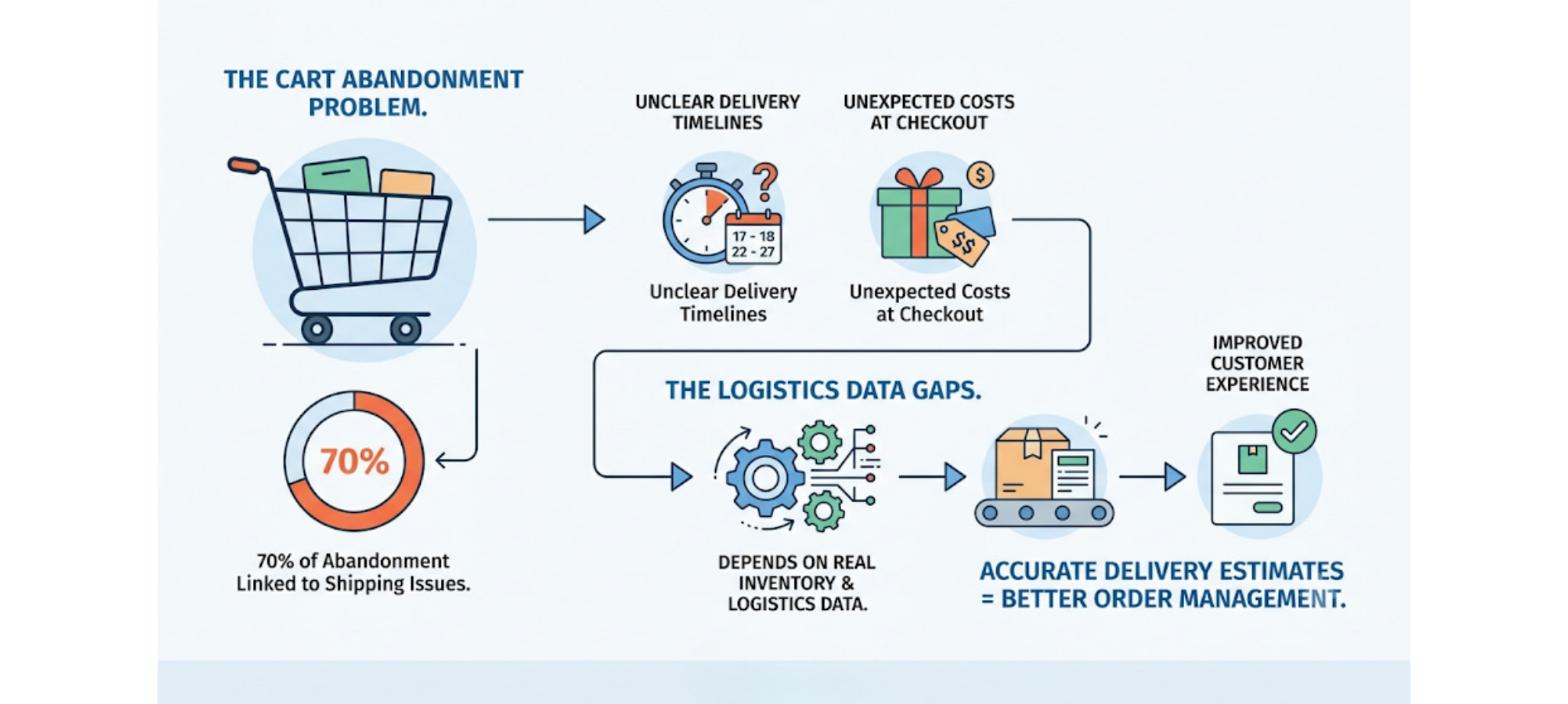
Roughly 70% of cart abandonment is linked to shipping issues, such as unclear delivery timelines or unexpected costs at checkout. This sits upstream of fulfillment but is closely tied to order management challenges in ecommerce, since accurate delivery estimates depend on real inventory and logistics data.
How to Solve It
Surface accurate, real-time delivery estimates at checkout based on actual warehouse stock and courier serviceability, rather than a generic delivery window.
Challenge 8: Handling Festive Season Order Spikes

Big Billion Days and similar festive events generate an estimated 150-200 million shipments in their combined active period. Scaling to meet this without slowdowns is one of the most visible order management challenges in ecommerce, since a slowdown during this exact window carries the highest revenue cost of the entire year.
How to Solve It
Use infrastructure that scales elastically with order volume, absorbing festive-season spikes without manual server provisioning or emergency staffing decisions made under pressure.
Challenge 9: Returns and Reverse Logistics Complexity

Processing a single return can cost 20-65% of the item’s original value once forward shipping, reverse pickup, inspection, and restocking are factored in. This makes reverse logistics one of the costlier order management challenges in ecommerce to get wrong.
How to Solve It
Automate return authorization, refund triggers, and restocking so returned items become sellable inventory again faster, instead of sitting unprocessed in a holding area. Feeding return data into demand forecasting also prevents the same high-return SKUs from being reordered at the same volume indefinitely.
Challenge 10: Fragmented Customer Communication and WISMO Calls
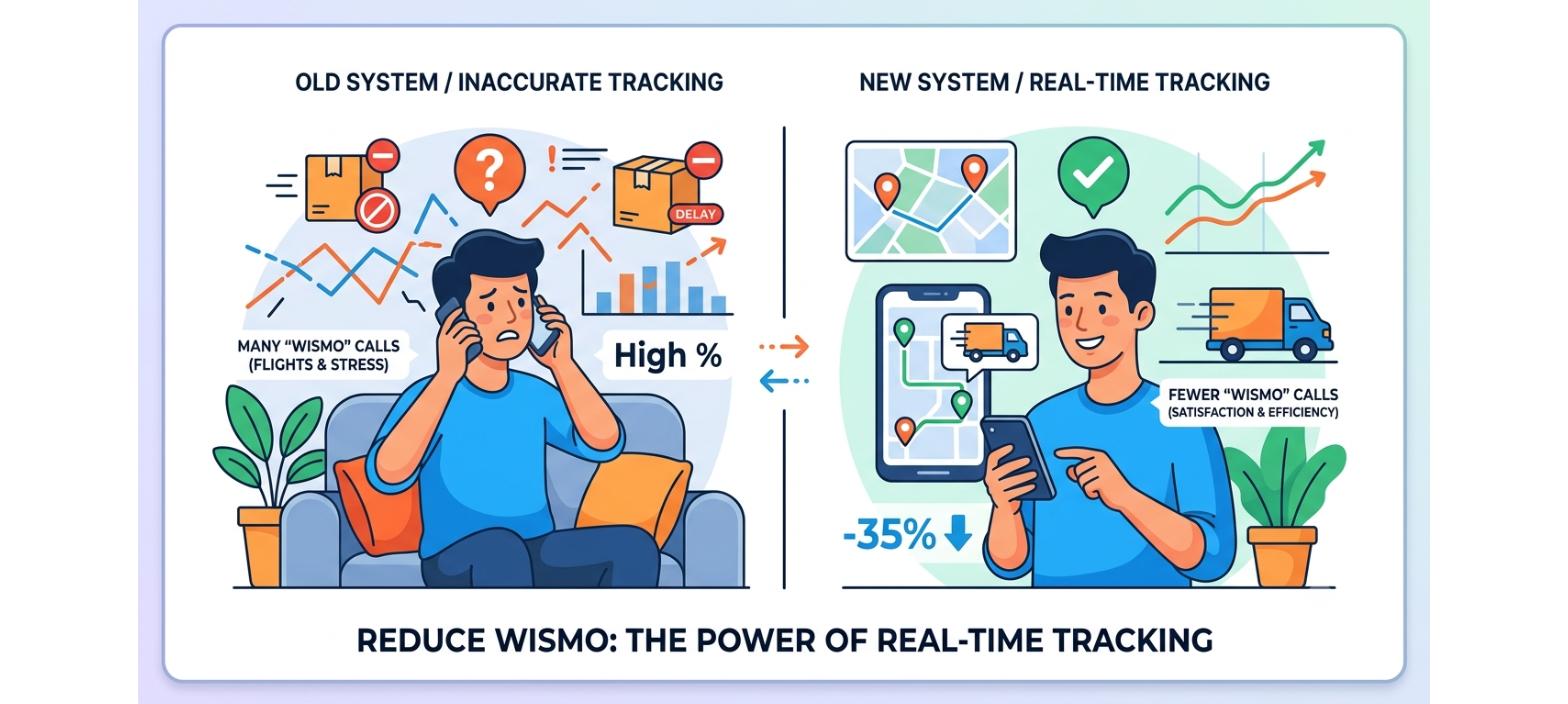
“Where is my order?” queries flood customer support when tracking data is inaccurate or delayed. Businesses with proper real-time tracking reduce WISMO calls by 35%, which makes this one of the more measurable order management challenges in ecommerce to fix.
How to Solve It
Feed live order and dispatch status directly to customer-facing tracking pages and support teams, so both customers and agents see the same real-time picture without a manual lookup.
Challenge 11: SAP, ERP, and WMS Integration Gaps
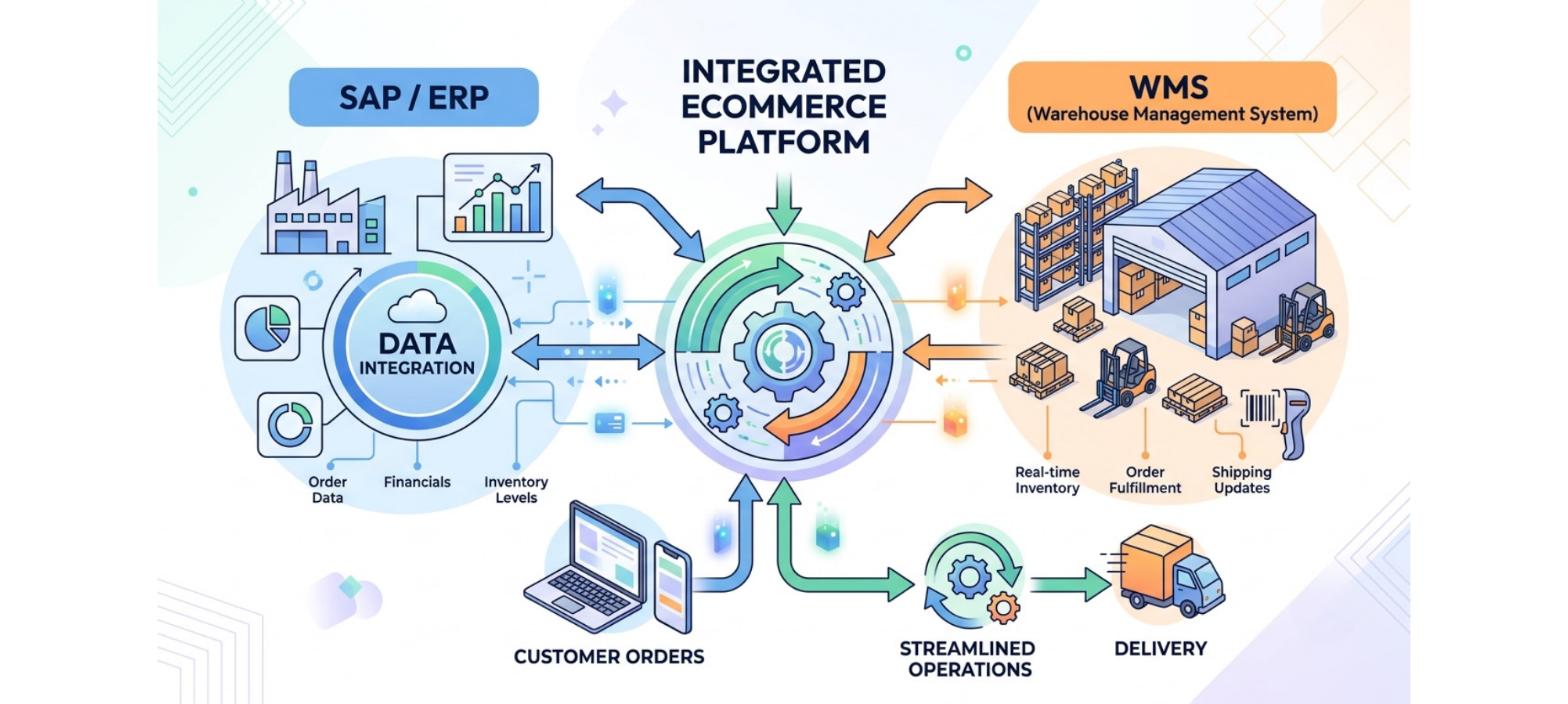
Order data that is not natively integrated with SAP or a WMS requires manual reconciliation, introducing delay and error risk. This is one of the more technical order management challenges in ecommerce, particularly for FMCG and pharma distribution.
How to Solve It
Connect order execution natively with SAP SD/WM workflows and distributor ERPs, avoiding custom middleware that needs constant maintenance every time a system is patched. This is especially important for pharma and FMCG distributors where a broken connector can stall an entire regional order pipeline.
Challenge 12: Address and Pincode Validation Errors
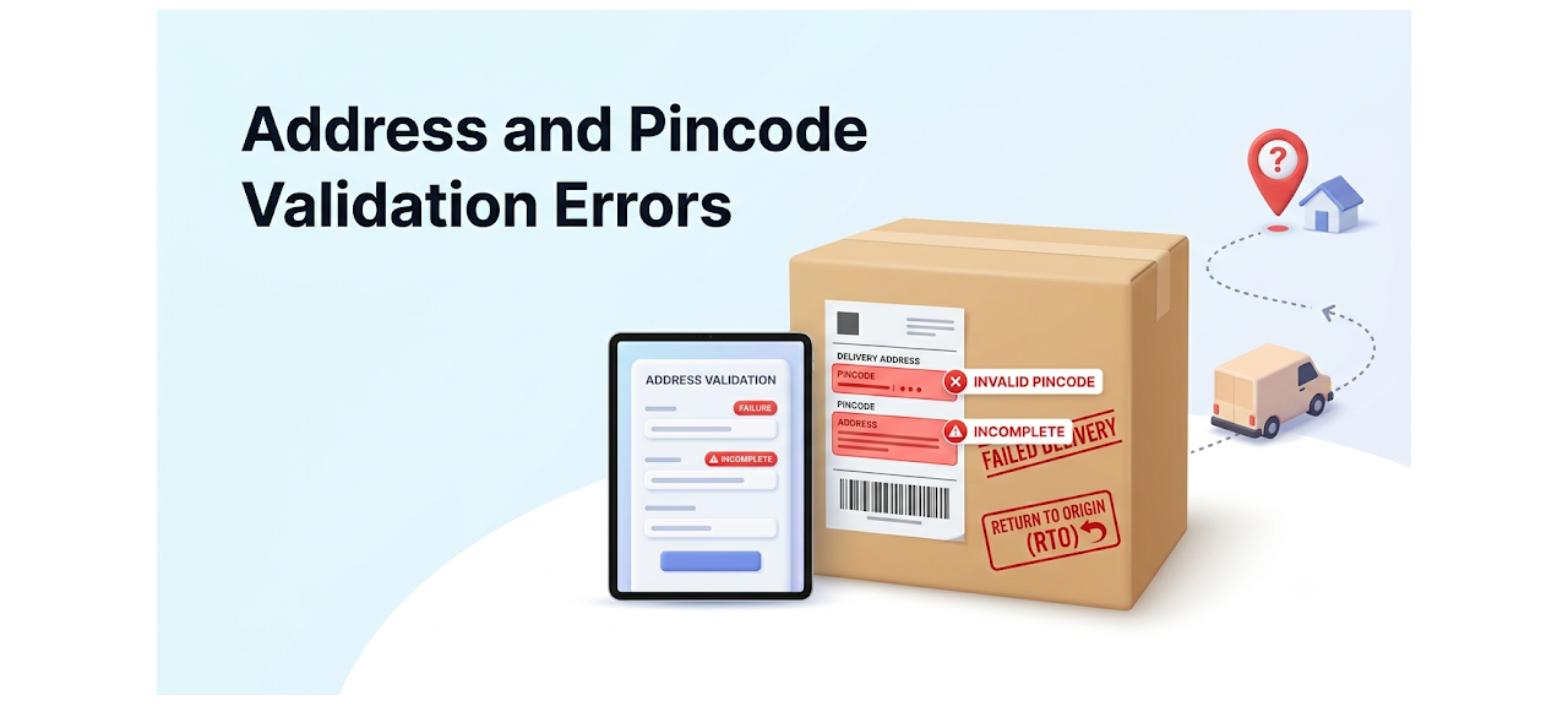
Incorrect or incomplete addresses cause failed deliveries, which directly feed into RTO rates. This is one of the order management challenges in ecommerce that seems minor per order but adds up significantly at scale.
How to Solve It
Validate addresses and pincodes automatically at the point of order capture, catching mismatches before an order reaches the warehouse floor.
Challenge 13: Multi-Warehouse Order Routing
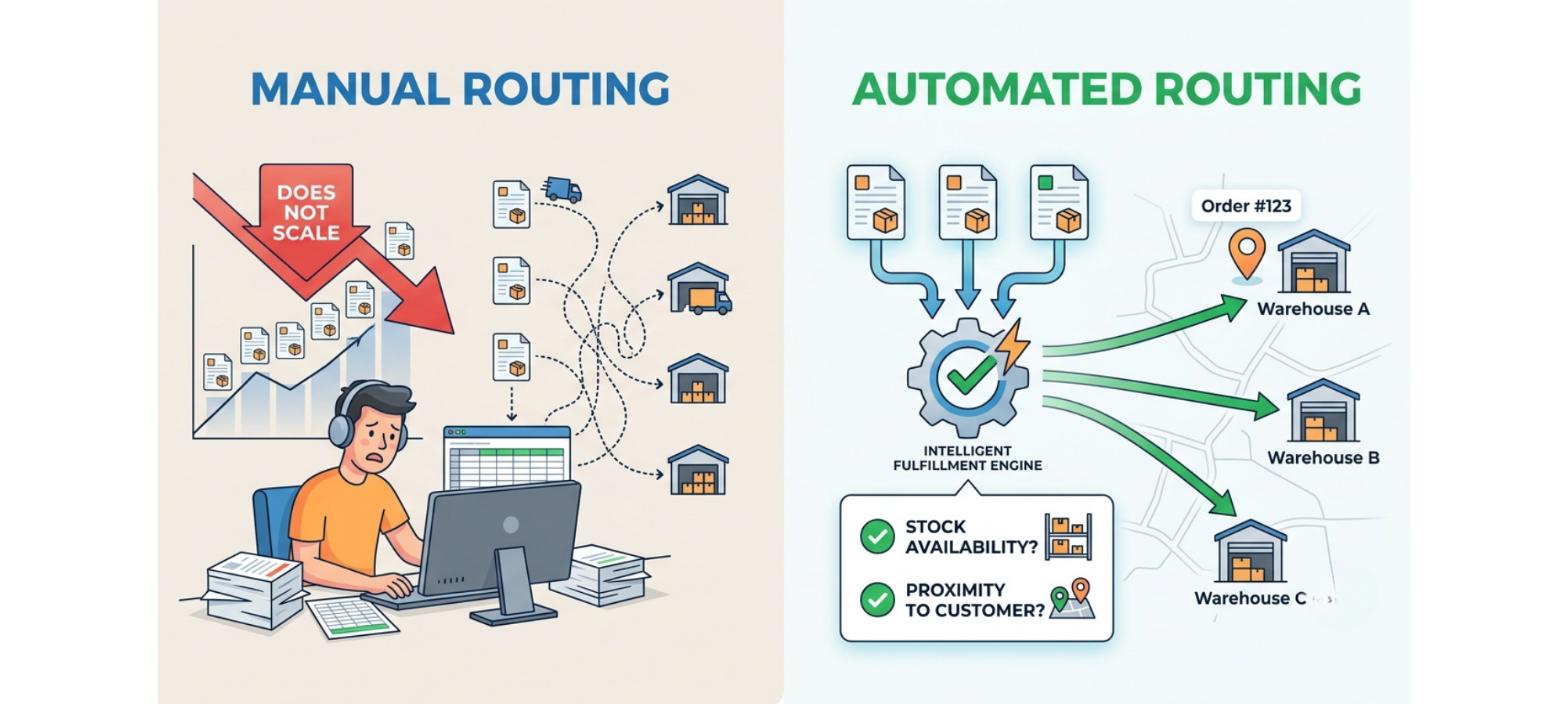
Deciding which warehouse should fulfill a given order, based on stock availability and proximity, becomes one of the trickier order management challenges in ecommerce as a business adds locations. Manual routing decisions do not scale past a certain order volume.
How to Solve It
Automate fulfillment routing based on live stock levels, warehouse proximity, and courier serviceability, so the optimal location is chosen for every order without manual intervention.
Challenge 14: Payment and COD Reconciliation Issues
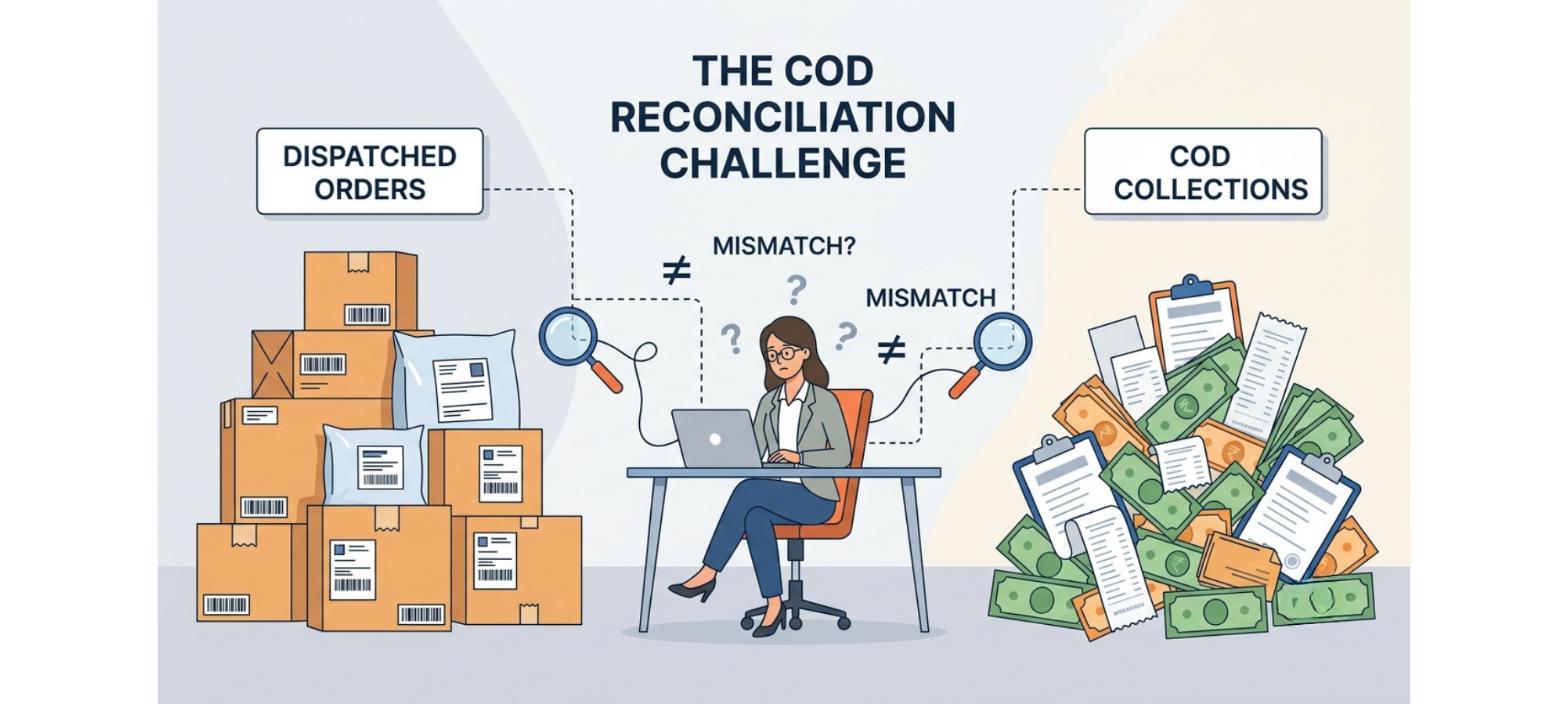
Reconciling COD collections against dispatched orders is a persistent operational drag, especially at scale. This is one of the order management challenges in ecommerce that finance teams feel directly, since COD still accounts for around 25-30% of Indian ecommerce orders by volume.
How to Solve It
Link payment status directly to order and dispatch records in one system, so COD reconciliation happens automatically rather than through a manual monthly exercise.
Challenge 15: Duplicate Orders and Order Cancellations

Duplicate order processing, often caused by system retries or checkout glitches, wastes warehouse capacity and confuses inventory counts. This is a subtler but real order management challenge in ecommerce, particularly during high-traffic sale events.
How to Solve It
Implement order deduplication logic at the point of capture, flagging likely duplicates before they reach the fulfillment queue rather than after dispatch.
Challenge 16: Inaccurate Demand Forecasting
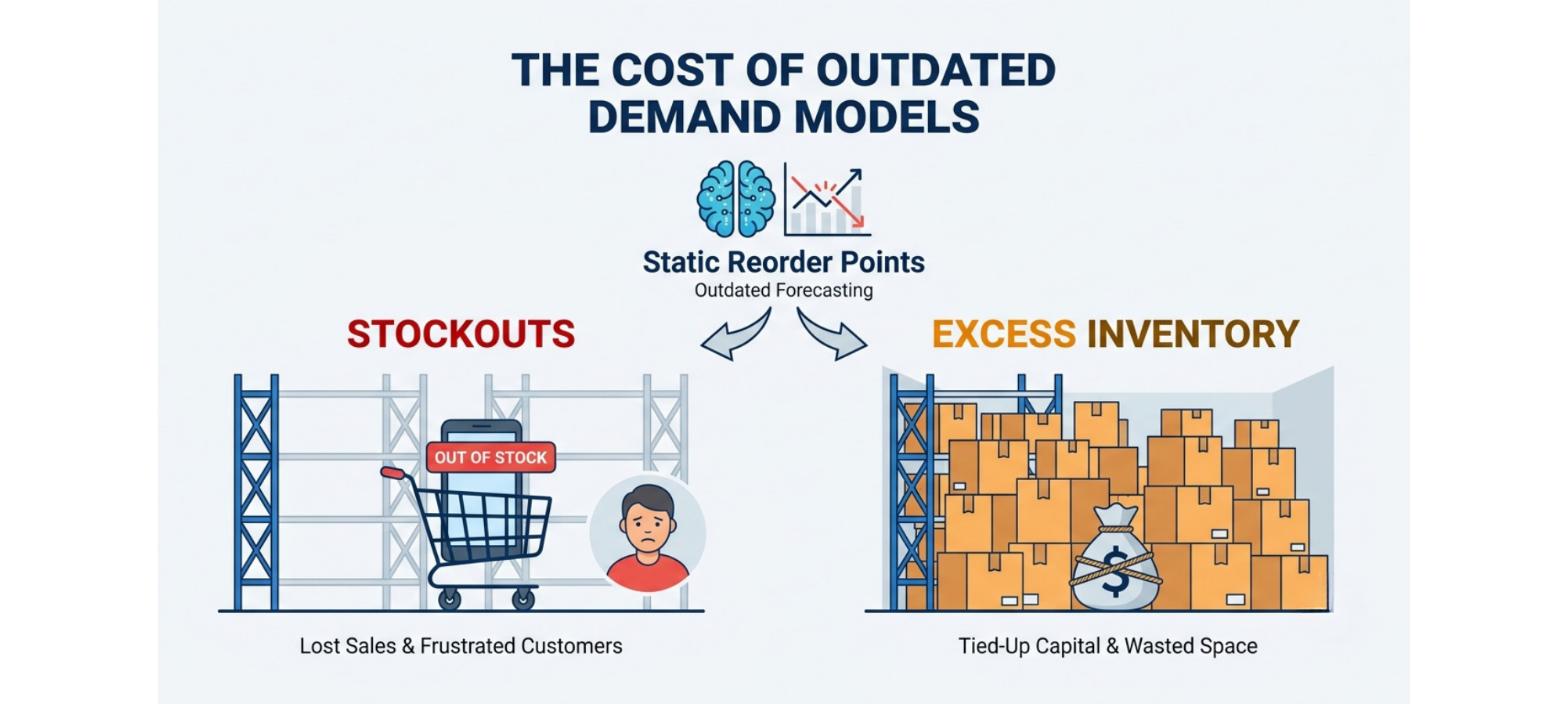
Static reorder points and outdated demand models are among the order management challenges in ecommerce that quietly cause both stockouts and excess inventory. Forecasting errors directly affect fill rate and working capital.
How to Solve It
Forecast reorder points per SKU per warehouse using live order velocity rather than static monthly averages, adjusting continuously as demand shifts.
Challenge 17: Exception Handling and Manual Escalations
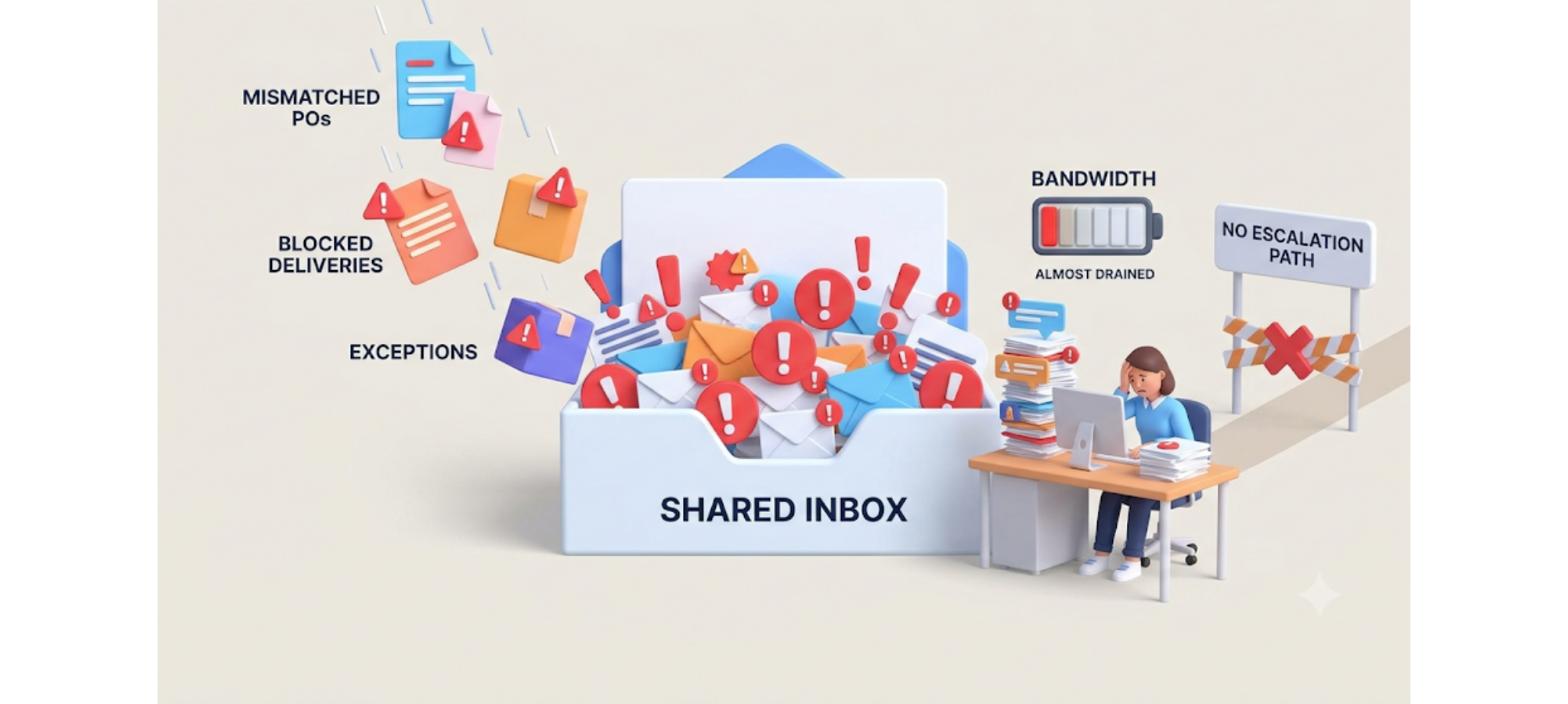
Mismatched purchase orders, blocked deliveries, and other exceptions typically land in a shared inbox with no structured escalation path. This is one of the order management challenges in ecommerce that quietly drains operations team bandwidth.
How to Solve It
Automatically categorize and route exceptions to a structured error taxonomy the moment they occur, instead of relying on a human to notice and manually triage each case. This frees operations staff to focus on genuinely complex exceptions rather than routine ones a system could resolve on its own.
Challenge 18: Scaling Order Processing With Growth
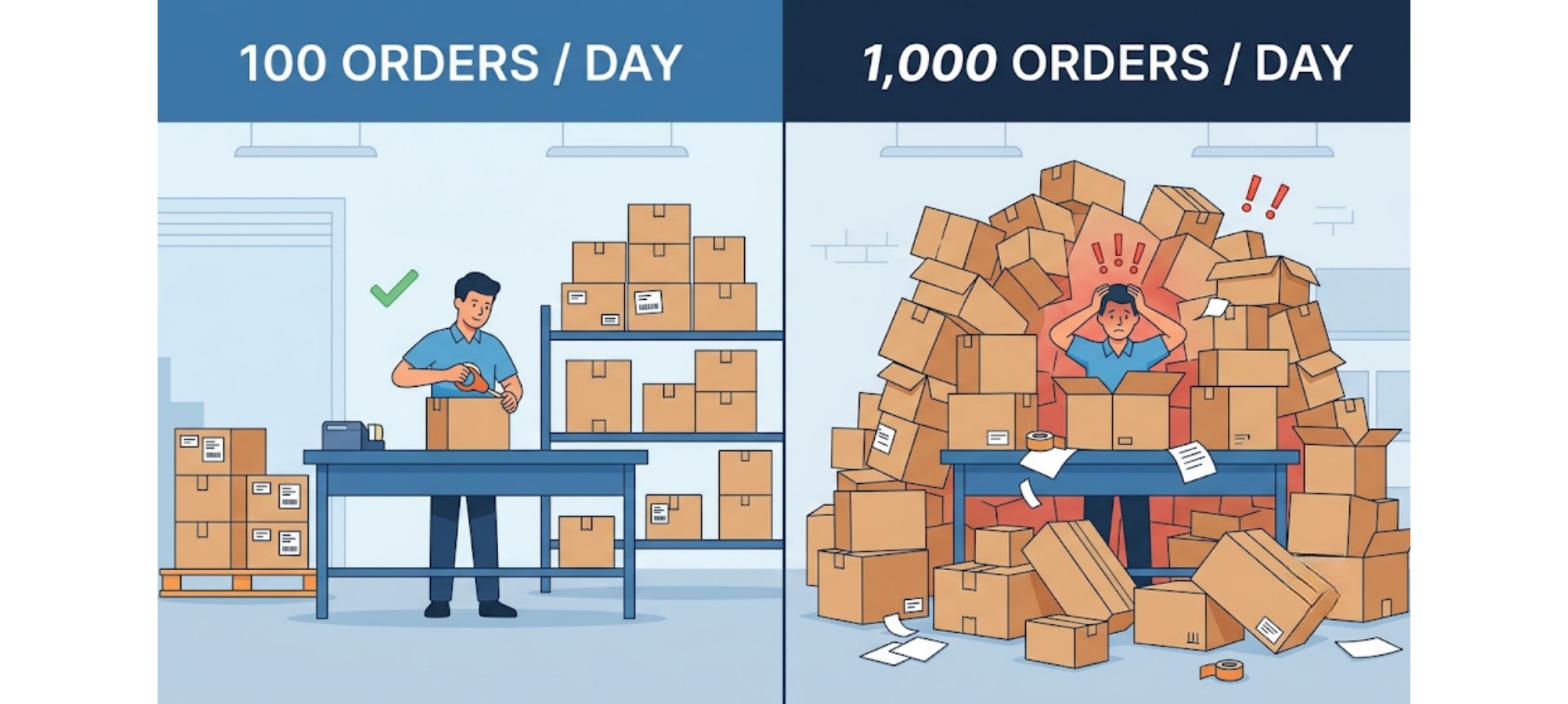
What works at 100 orders a day often breaks down at 1,000 orders a day, since manual processes do not scale linearly. This growth-related strain is one of the more predictable order management challenges in ecommerce, yet businesses routinely underestimate it.
How to Solve It
Adopt systems built for elastic scaling from the outset, so order processing capacity grows with volume rather than requiring a system replacement at each growth milestone. Businesses that plan for this early avoid the disruptive mid-growth migration that catches many fast-scaling sellers off guard.
Challenge 19: GST and Invoicing Compliance

Order management in India carries an added layer of complexity through GST, HSN, and SAC codes, and multi-state stock transfers. This compliance burden is one of the more India-specific order management challenges in ecommerce that global tools often handle poorly.
How to Solve It
Use a system with native GST handling and ledger integration, so invoicing and compliance reporting are generated automatically alongside order processing rather than reconciled separately.
Challenge 20: Lack of Data-Driven Decision Making
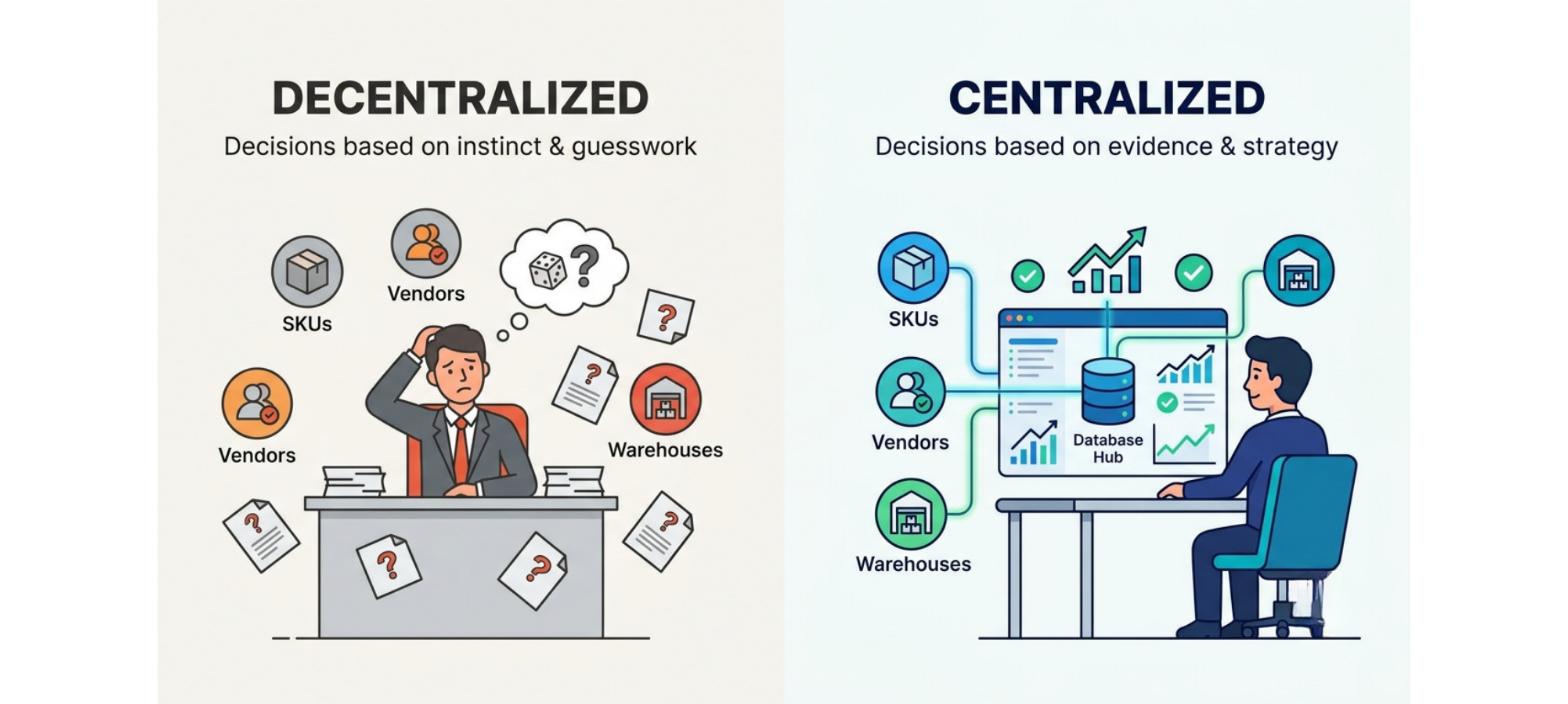
Without centralized order data, decisions about SKU profitability, warehouse allocation, and vendor performance end up based on instinct rather than evidence. This is arguably the most strategic of the order management challenges in ecommerce, since it affects every other decision on this list.
How to Solve It
Centralize order, inventory, and fulfillment data into one real-time system, and build KPI tracking directly into daily operations rather than compiling reports manually at month-end.
The Compounding Cost of Ignoring These Challenges
Sellers who delay addressing order management challenges in ecommerce rarely stay flat while they wait. Order volume grows, channel count expands, and the same manual processes that were merely inconvenient at a smaller scale start actively costing revenue every month.
Fashion and apparel return rates alone run 25-40%, and each return carries a real processing cost of 20-65% of the item’s value once forward shipping, reverse pickup, inspection, and restocking are accounted for. For a mid-sized seller, that gap between a well-managed and poorly managed return process can represent a meaningful share of total operating margin, not a rounding error.
The businesses that treat order management challenges in ecommerce as an ongoing operational discipline, rather than a one-time fix, are the ones that keep improving quarter over quarter. The ones that treat it as solved after the first round of changes often see the same issues resurface within a year, once order volume grows past what the original fix was designed to handle.
Why These Challenges Rarely Show Up Alone
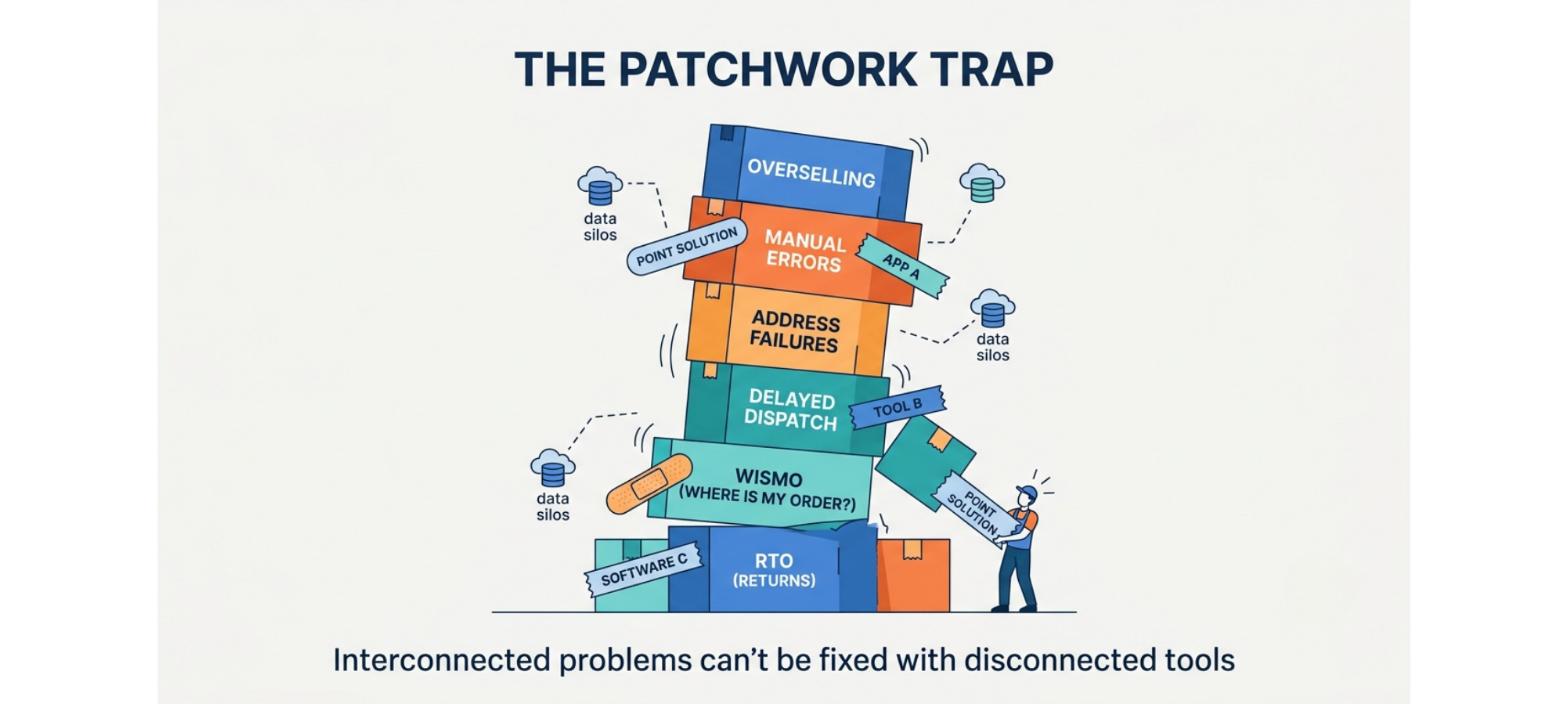
Most sellers experience several of these order management challenges in ecommerce at the same time, since they are rarely independent problems. Overselling across channels feeds directly into RTO, since an oversold order often gets cancelled or arrives incorrectly. Manual order entry errors feed into address validation failures, which feed into delayed dispatch and rising WISMO calls.
This compounding effect is exactly why fixing order management challenges in ecommerce one at a time, with a different point solution for each, rarely produces the improvement a seller expects. A patchwork of disconnected tools recreates the same data silos that caused the original problem, just with more software involved.
How Base.com Addresses These Challenges Together
Rather than solving each of these order management challenges in ecommerce in isolation, Base.com connects order execution, inventory sync, SAP and ERP integration, and return-risk scoring into one real-time system. This means a fix for overselling also strengthens demand forecasting, and a fix for RTO also improves customer communication, since all of it runs on the same underlying data rather than separate patches bolted onto disconnected tools.
For FMCG and pharma clients specifically, this connected approach matters because so many of the twenty challenges above trace back to the same root cause: data that lives in separate systems and never fully reconciles. Solving that root cause once tends to resolve several downstream order management challenges in ecommerce simultaneously, rather than requiring a separate tool for each one.