
Every Indian D2C founder knows the marketplace trap.
You launch on Amazon and Flipkart. Orders come in. Growth is fast. Then you look at your P&L. It turns out 30-50% of your revenue is going to marketplace commissions, platform fees, and fulfilment charges. You do not own the customer data, and you cannot control the brand experience after checkout. A policy change on one platform can cut your revenue by 40% overnight. Every competitor you have is visible on the same page you are. Often, they show a lower price, with Amazon’s own label right below yours.
The brands that figured out how to manage lakhs of orders without marketplace dependency did not abandon marketplaces. They built operations sophisticated enough to fulfil direct orders at the same speed, accuracy, and scale that marketplaces provide. At the same time, they retained the customer data, the margin, and the brand experience that marketplaces take away.
Mamaearth, boAt, and mCaffeine are the three most studied examples of this in Indian D2C. Each of them operates at lakh-plus monthly order volumes. Each of them uses marketplace channels strategically while building their own direct channel as the primary growth engine. And each of them has a specific operational story. It reveals exactly what it takes to manage that volume without being dependent on platforms you do not control.
Why Marketplace Dependency Is a Structural Risk, Not Just a Commercial One
Before covering the three brands, it is worth establishing why this matters so much. Managing lakhs of orders without marketplace dependency is existential, not just a margin question.
Selling direct eliminates 30-50% retailer margins and provides first-party customer data that wholesale brands never access. This data advantage compounds over time as D2C brands understand their customers better than any retail intermediary.
That data advantage is the real prize. Every order on the brand’s own website creates a customer record: name, address, and purchase history. It also captures browsing behaviour and repeat purchase frequency. This data belongs to the brand and can be used to reduce CAC, improve retention, and inform product decisions.
Every order placed on Amazon or Flipkart generates the same data, and gives none of it to the brand. The customer relationship belongs to the marketplace. The brand shipped the product and collected a payment minus the platform fee. That is the transaction. There is no relationship to the compound.
boAt’s strategy challenges the conventional D2C binary of “own website vs. retail.” The brand built genuine D2C capabilities: consumer data, brand community, and pricing control. At the same time, it routed the majority of volume through third-party marketplaces. This hybrid model traded some margin and data ownership for scale and customer acquisition efficiency.
The hybrid model is the correct framing. Asking how to manage lakhs of orders without marketplace dependency does not mean managing zero marketplace orders. It means building the operational capability to handle direct orders at scale. This way, the brand is never in a position where a single platform decision can destroy its revenue.
Mamaearth: How India’s Largest D2C Personal Care Brand Manages 3 Million+ Monthly Dispatches Directly
The Scale
Honasa Consumer, Mamaearth’s parent company, also owns The Derma Co. and Aqualogica. Together they maintain a live inventory count of 8.7 million+ units. Honasa processes over 3 million dispatches per month, with a fulfillment rate of 99.99%+.
Managing 3 million monthly dispatches across three brand entities, nine warehouses, and six sales channels simultaneously is no small feat. This is the operational definition of how to manage lakhs of orders without marketplace dependency at enterprise scale.
The Problem That Forced the Build
Mamaearth’s journey to this scale is not a straight line. The brand hit a wall when it tried to expand from two channels to six simultaneously.
As the brand observed the rapid hike in demand, the solution they were using started to break. This caused data inconsistencies and operational hassles. It pushed them to search for a new platform. They needed one that could manage orders and inventory across channels and segregate orders by regional location.
The “data inconsistencies” referenced here are the operational symptoms of a brand that has outgrown its tools. Inventory numbers that differ between platforms. Orders that arrive from one channel while stock is committed to another.
Regional allocation logic does not exist, so every warehouse ships everywhere regardless of proximity. These are not technical problems. They are the natural consequence of manual multi-channel management at a volume where manual processes can no longer maintain accuracy.
The Operations Decision
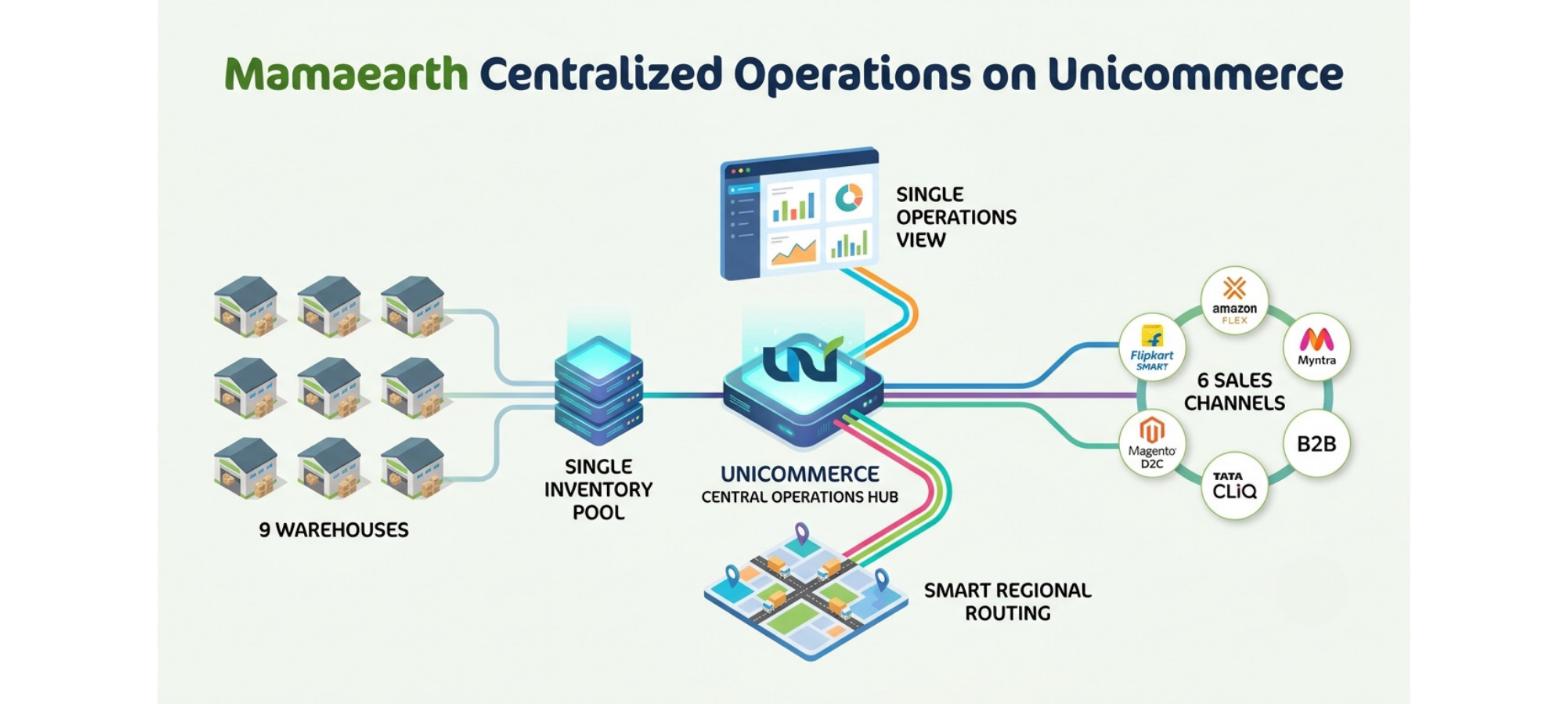
Mamaearth centralised its entire warehouse, inventory, and order operations onto Unicommerce across all nine warehouses. This spanned all six selling channels. These included Amazon Flex, Flipkart Smart, Magento 2 for its D2C website, Tata CliQ, Myntra, and a custom B2B channel.
The centralisation did three things simultaneously.
First, it created a single inventory pool that all channels drew from in real time. This eliminated the oversell window between platforms.
Second, it allowed order routing to be configured by regional logic. A Hyderabad customer, for example, received their order from the nearest warehouse, not a central hub elsewhere.
Third, it gave the brand’s operations team a single view of all orders across all channels. As a result, the team managed D2C website orders with the same accuracy and speed as marketplace orders.
The Result
This centralisation of warehouse, inventory, and order operations paid off. Order growth reached 144% in just 8 months.
The 144% order growth in 8 months is not a marketing outcome. It is an operational outcome. The brand’s direct channel could absorb demand that previously could not be fulfilled without marketplace infrastructure.
When D2C orders are processed with Amazon Prime-level fulfillment accuracy, the direct channel’s brand experience matches the marketplace experience. Customers then have no operational reason to prefer the marketplace over buying directly.
What Growing Brands Can Learn
The Mamaearth story answers a central question: how to manage lakhs of orders without marketplace dependency. The answer comes down to one operational principle: centralise before you scale.
The brand did not build its multi-channel operations infrastructure after reaching 3 million monthly dispatches. It built it at the inflection point where its existing tools broke. That early infrastructure investment is what enabled the 144% growth that followed.
boAt: How India’s Largest Audio D2C Brand Built a Hybrid Channel Model That Limits Platform Risk
The Scale
boAt is India’s most recognised consumer electronics D2C brand. It sells earphones, speakers, smartwatches, and accessories across all major Indian marketplaces and its own website simultaneously. The brand has established leading market positions, by volume and value, in categories such as audio and smartwatches.
The brand’s challenge in managing lakhs of orders without marketplace dependency is categorically different from Mamaearth’s. Electronics orders are higher value, higher variant complexity, and carry significantly higher RTO and fraud risk than personal care.
A wrong-variant electronics shipment, wrong colour, wrong storage size, wrong model, is not just an inconvenience. It is a ₹3,000-₹8,000 reverse logistics event that the brand pays for twice.
The Marketplace Paradox is Solved
The brand built genuine D2C capabilities: consumer data, brand community, and pricing control. At the same time, it routed the majority of volume through third-party marketplaces.
This is the most strategically honest description of how large Indian D2C brands actually think about channel mix. boAt did not try to eliminate marketplace volume in the pursuit of a pure D2C model.
It built its own channel strong enough to reduce marketplace dependency structurally. This did not mean refusing marketplace orders. It meant ensuring the direct channel could handle significant volume independently.
How to manage lakhs of orders without marketplace dependency, as boAt demonstrates, is not about refusing marketplaces. It means building the direct channel to a volume where marketplace disruption cannot threaten the business.
The Operations Stack That Made It Possible
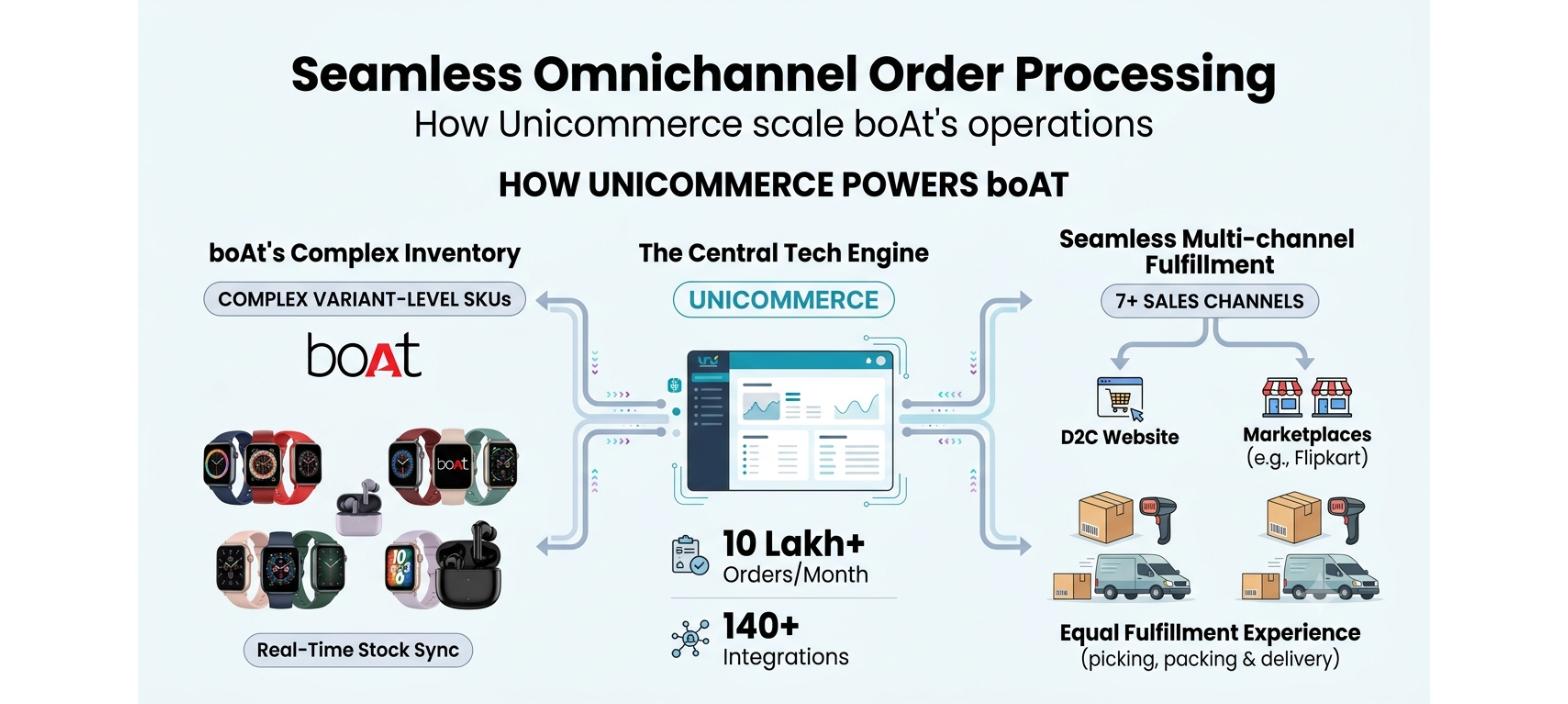
boAt is among the brands trusted by Unicommerce. The platform can handle 10 lakh+ orders per month, with 140+ marketplace integrations, bulk order processing, and automated routing.
A brand launching SKUs every quarter, across multiple product lines with colour and storage variants, faces a hard requirement. Variant-level inventory accuracy is non-negotiable. A smartwatch that comes in eight colours and three strap options is 24 unique SKUs from one product launch.
Managing 24 SKUs across seven channels simultaneously requires a system that tracks variant-level inventory in real time. A spreadsheet updated once per day will not cut it.
boAt’s direct channel benefits from the same operational infrastructure as its marketplace channel. When a customer buys directly from boAt’s website, the order goes through the same pick-and-pack process as a Flipkart order. It gets the same carrier selection logic and tracking notification too. That experience parity makes the direct channel a viable preference for repeat customers, not just a theoretical alternative.
The Domestic Manufacturing Dimension
According to the updated DRHP filed in October 2025, 75.83% of units were manufactured in India in Q1 FY2026. That is up sharply from 39.65% in FY2023. The company had produced over 75 million units domestically by then.
The shift to domestic manufacturing is not just a cost or geopolitical decision. It is an inventory management decision. Domestically manufactured products have shorter lead times, more predictable delivery schedules, and lower minimum order quantities than imported goods.
Shorter lead times matter a great deal for any brand trying to manage lakhs of orders without marketplace dependency. They translate directly into tighter inventory turns, meaning less capital locked in stock and a faster response to demand signals.
What Growing Brands Can Learn
boAt’s model demonstrates how to manage lakhs of orders without marketplace dependency is not about channel exclusivity.
The brand built a direct channel capable of handling significant order volume with marketplace-grade operational accuracy. That capability reduced platform dependency structurally, without requiring the brand to walk away from the customer acquisition efficiency that marketplaces provide.
mCaffeine: How India’s Most Profitable Personal Care D2C Brand Built Direct Channel Discipline
The Scale
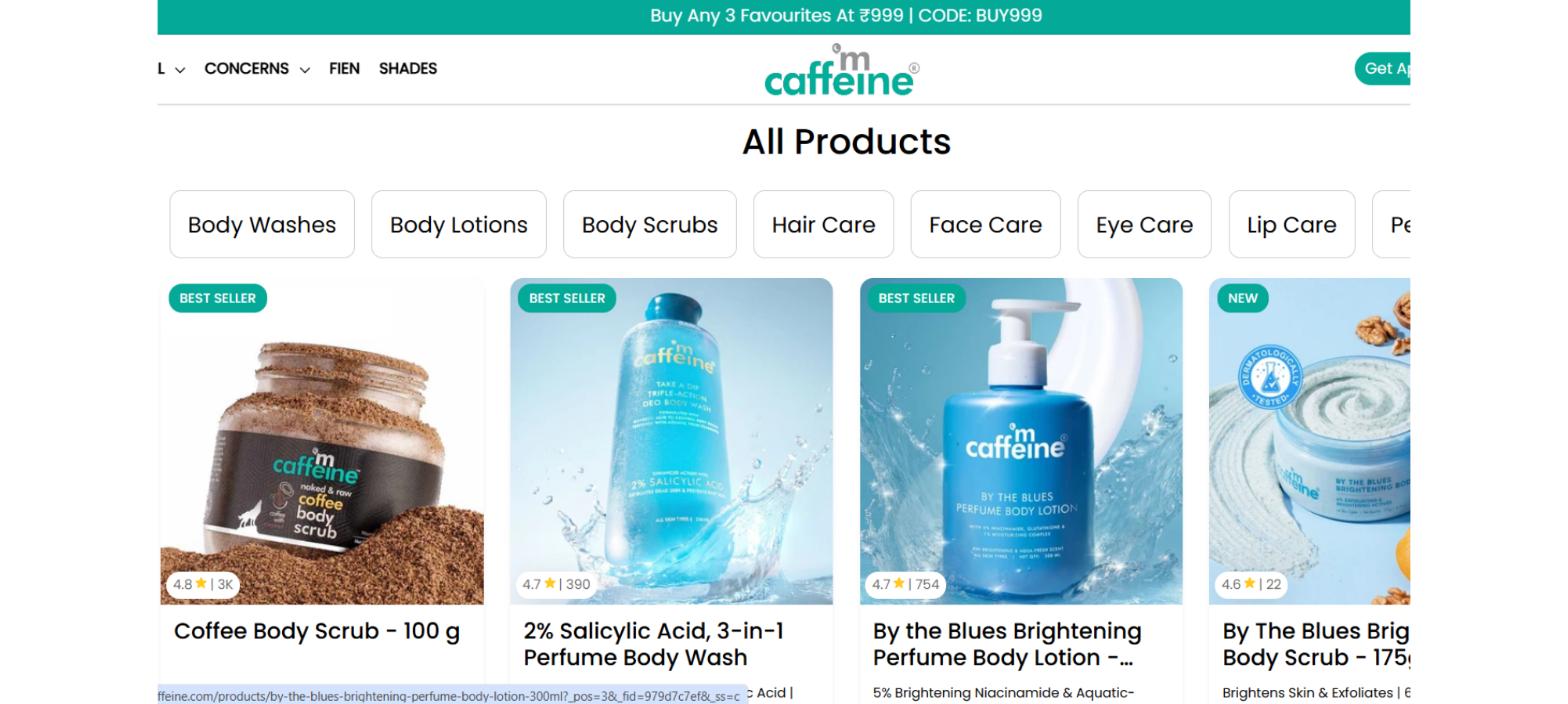
mCaffeine has sold over 10 million products and reached profitability earlier than most funded Indian D2C brands. It expanded from a single hero SKU to 55+ products across body care, hair care, and skincare. Throughout, it maintained the working capital discipline that most high-growth brands sacrifice for top-line scale.
Launched in 2016, mCaffeine quickly gained traction among young, digital-first consumers. Hero products such as the coffee body scrub and under-eye range emerged as category favourites. They helped the brand establish strong recall and credibility.
The Direct Channel Priority
Understanding how to manage lakhs of orders without marketplace dependency is fundamentally a question of margin discipline for mCaffeine. 90% of mCaffeine’s sales come from digital marketplaces and its website, with offline stores contributing the rest.
Within that 90%, the brand’s deliberate investment in its own website as a primary channel, not just a secondary one, reflects an understanding that marketplace commissions at scale erode the profitability that the brand built its reputation on.
The specific challenge for mCaffeine in building direct channel volume at lakh-plus order scales is the COD management problem. COD still accounts for 45% of Indian D2C orders in 2026. A brand that has built profitability discipline from its earliest days treats COD not as a customer convenience but as a working capital and RTO risk management challenge.
Every COD order on the direct channel that generates an RTO costs the brand forward shipping, reverse shipping, and the ₹500 CAC that acquired the customer in the first place.
The GoKwik Partnership and What It Solved
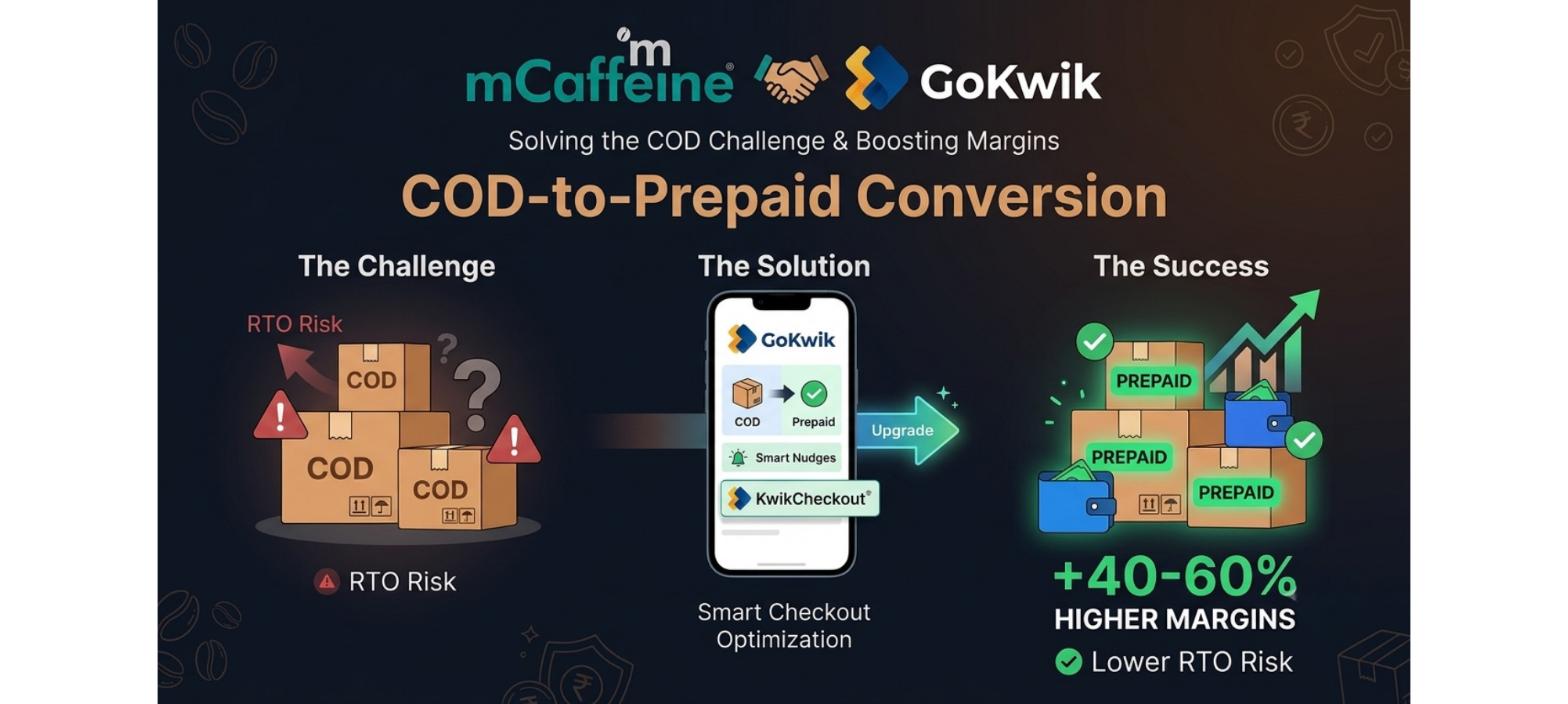
mCaffeine partnered with GoKwik specifically to address the COD conversion challenge on its direct website. mCaffeine joined forces with GoKwik to bolster its online offering.
GoKwik’s checkout optimization and COD-to-prepaid conversion tools directly address the most expensive operational problem in managing lakhs of direct orders, converting COD buyers to prepaid at checkout before the RTO risk is created.
For a brand that treats profitability as a founding principle, the math of how to manage lakhs of orders without marketplace dependency is straightforward: every direct order that converts from COD to prepaid generates a contribution margin that is 40-60% higher than the equivalent COD order.
At lakh-plus monthly order volumes, even a 10-percentage-point improvement in prepaid conversion rate, from 55% to 65% prepaid, produces a contribution margin improvement worth crores annually.
The Inventory Discipline That Protected Profitability
mCaffeine’s profitability at scale, unusual for Indian D2C brands that typically prioritise growth over margins, is directly connected to inventory management discipline that most fast-growing brands sacrifice.
Many Indian D2C brands operate at just 2 to 3 inventory turns per year, meaning inventory sits for 120 to 180 days. During that time, warehousing costs add up, and cash remains blocked in unsold stock.
mCaffeine’s operational model avoided this trap by using real-time sell-through data per SKU and per channel to drive purchasing decisions. When the data showed a specific SKU selling faster on Nykaa than on Amazon, the allocation shifted. When a new product launch underperformed velocity expectations in week two, the purchasing plan for that SKU was adjusted before the inventory overcommitment became a write-off.
This data-driven purchasing discipline is a prerequisite to answering how to manage lakhs of orders without marketplace dependency at mCaffeine’s profitability standard.
Brands that overbuy inventory to ensure availability are buying insurance against stockouts at the cost of working capital, and working capital that is locked in slow-moving inventory cannot fund the marketing and operations investment required to build a direct channel at scale.
What Growing Brands Can Learn
mCaffeine demonstrates that the operational answer to how to manage lakhs of orders without marketplace dependency is partly a COD problem, partly an inventory turns problem, and partly a channel contribution margin problem.
All three are addressable with the right combination of checkout tooling, OMS-level sell-through analytics, and purchasing discipline, and all three compound together to produce the profitability standard that mCaffeine maintained even as it scaled past 10 million units sold.
The Operational Framework: What All Three Brands Did That Growing D2C Brands Must Replicate
The Mamaearth, boAt, and mCaffeine stories are different in category, scale, and specific operational challenges, but the operational decisions that enabled each of them to manage lakhs of orders without marketplace dependency share a common framework.
Step 1: Build a Single Inventory Pool Before Adding Channels
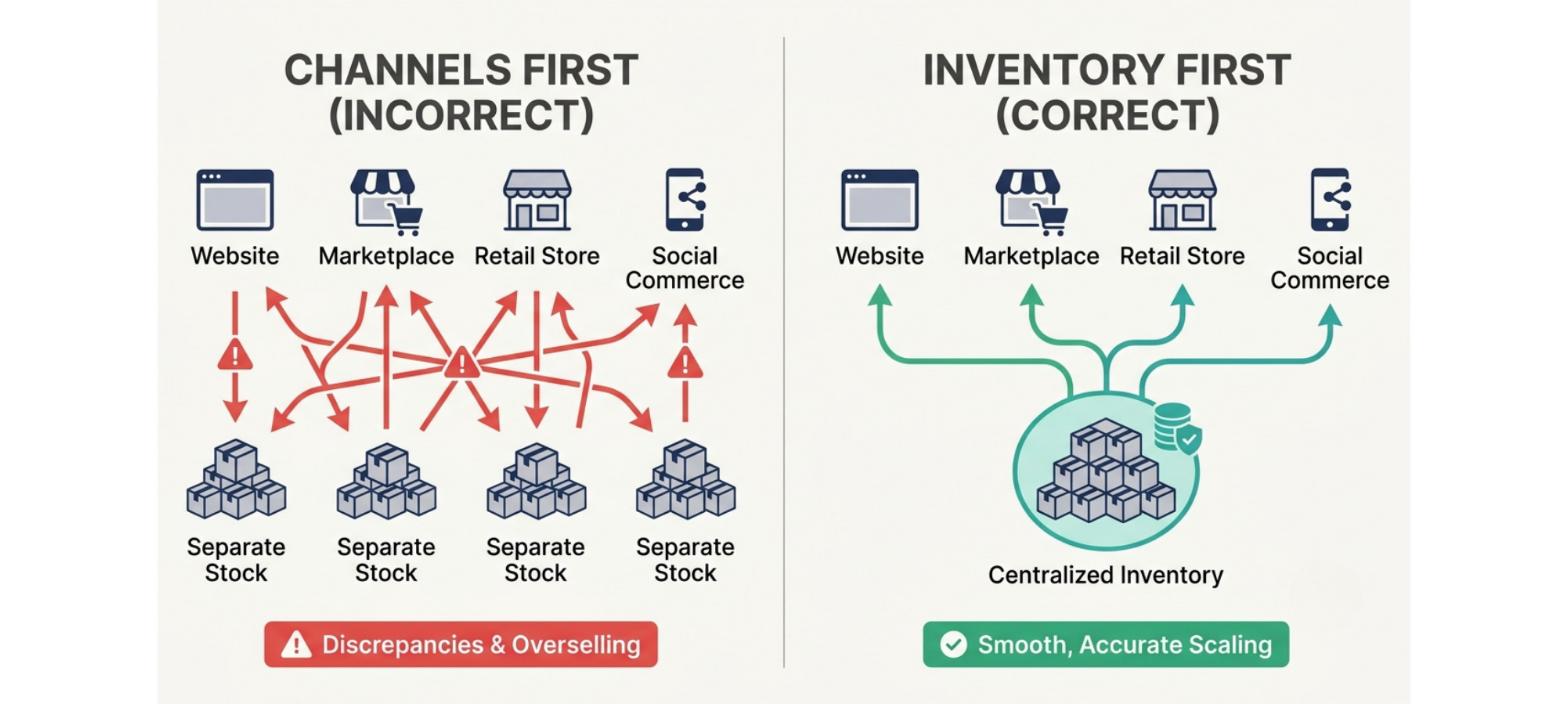
All three brands centralised inventory management before scaling channel count. This is counterintuitive; most brands add channels first and try to unify inventory later. The correct sequence is the reverse.
A unified inventory pool prevents oversells, enables regional routing, and gives operations teams accurate data across all channels simultaneously. Without it, every new channel added is a new source of inventory discrepancy.
Step 2: Achieve Marketplace-Grade Fulfillment Accuracy on the Direct Channel
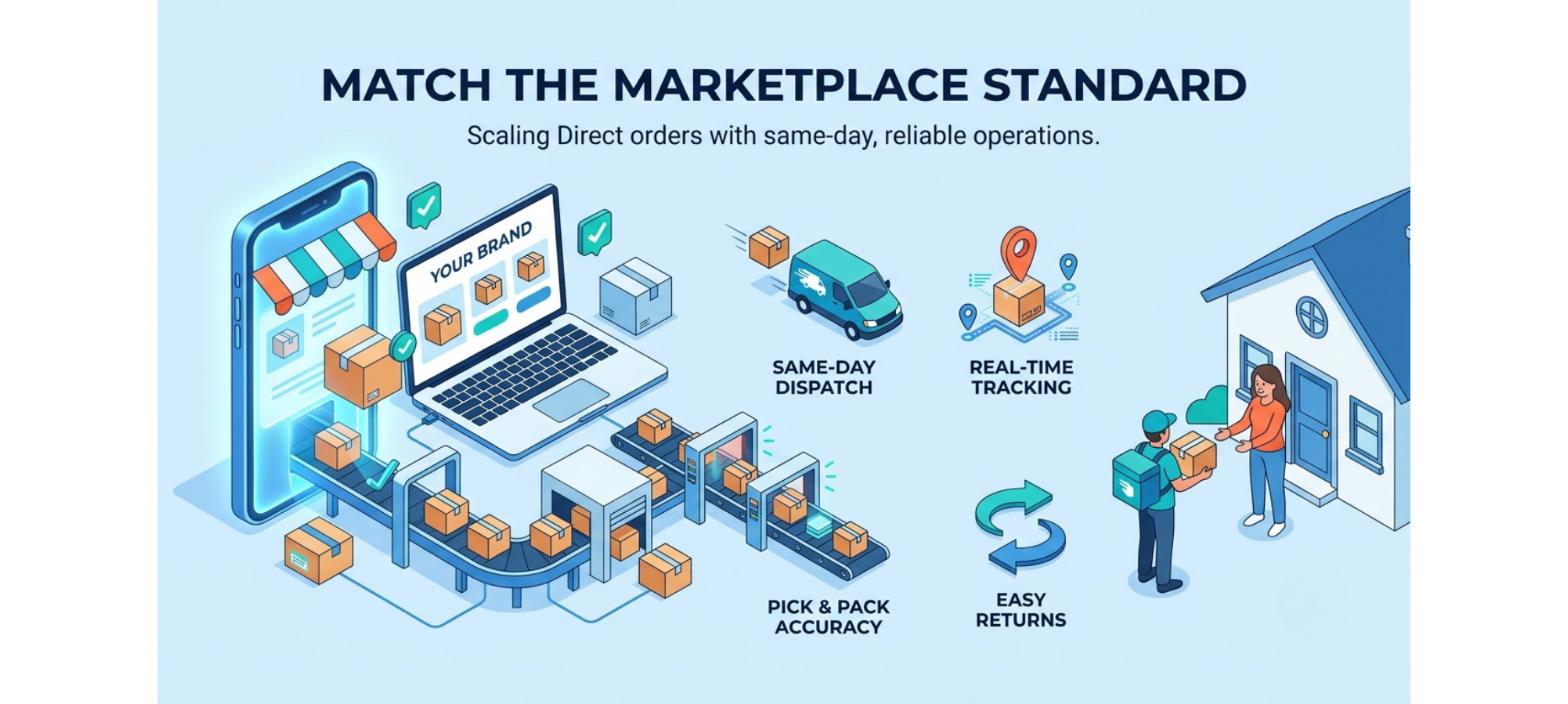
The reason customers default to marketplace orders over direct website orders is not loyalty; it is reliability. Amazon Prime’s same-day or next-day delivery with accurate tracking is a baseline expectation that most brand websites do not match. Brands that want to manage direct orders at lakh-plus volumes must match that experience.
Pick-and-pack accuracy, same-day dispatch SLAs, real-time tracking updates, and automated returns processing are the operational minimum for a direct channel that customers prefer. How to manage lakhs of orders without marketplace dependency requires meeting the marketplace’s operational standard on your own infrastructure.
Step 3: Solve COD at the Source, Not After Dispatch
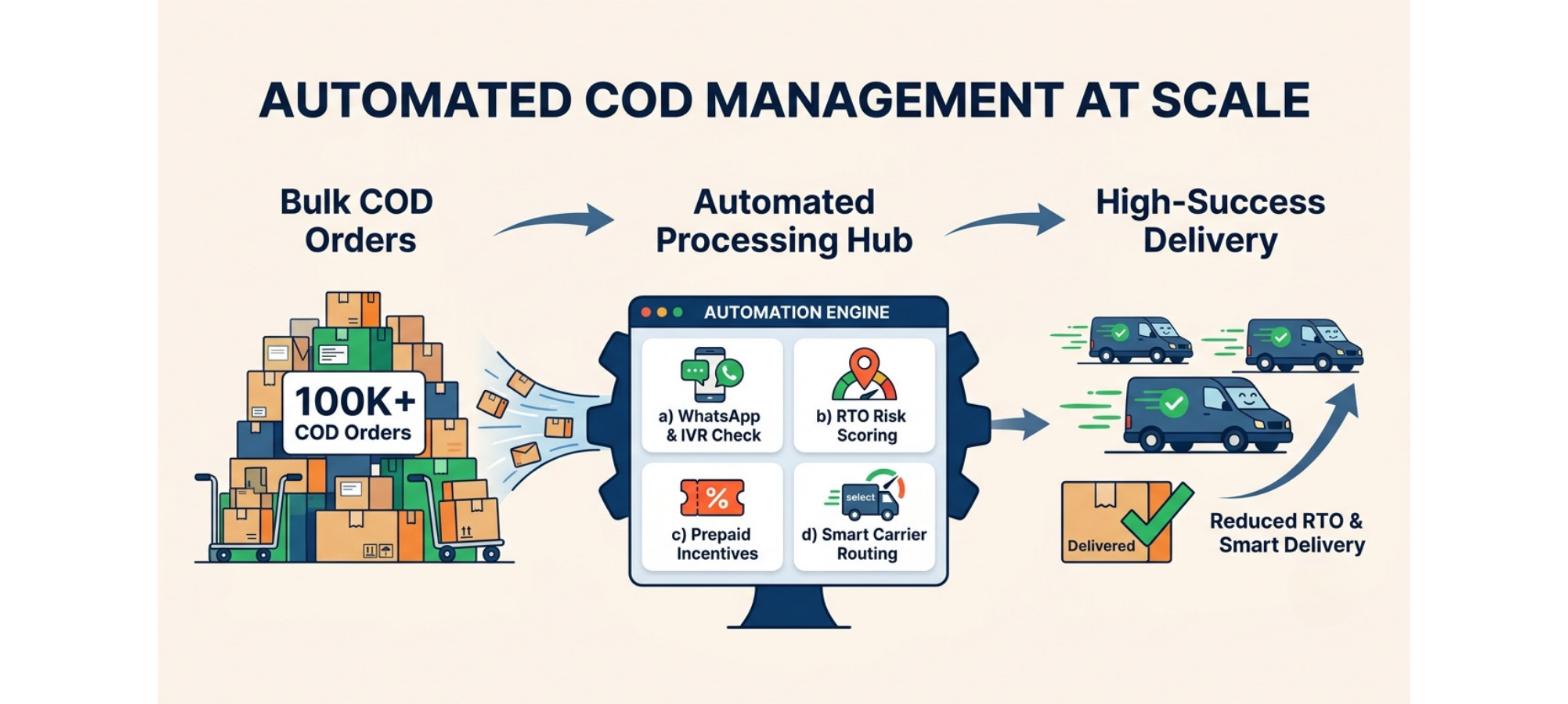
All three brands operate in COD-heavy market segments. Managing lakh-plus COD orders manually, verifying addresses, confirming orders, managing NDR workflows, and reconciling remittances is not possible at scale.
COD management must be automated: pre-dispatch verification through IVR or WhatsApp, checkout-level prepaid conversion incentives, pin-code-level RTO risk scoring, and carrier selection based on historical delivery success rates.
Step 4: Use Channel-Level Sell-Through Data to Drive Purchasing
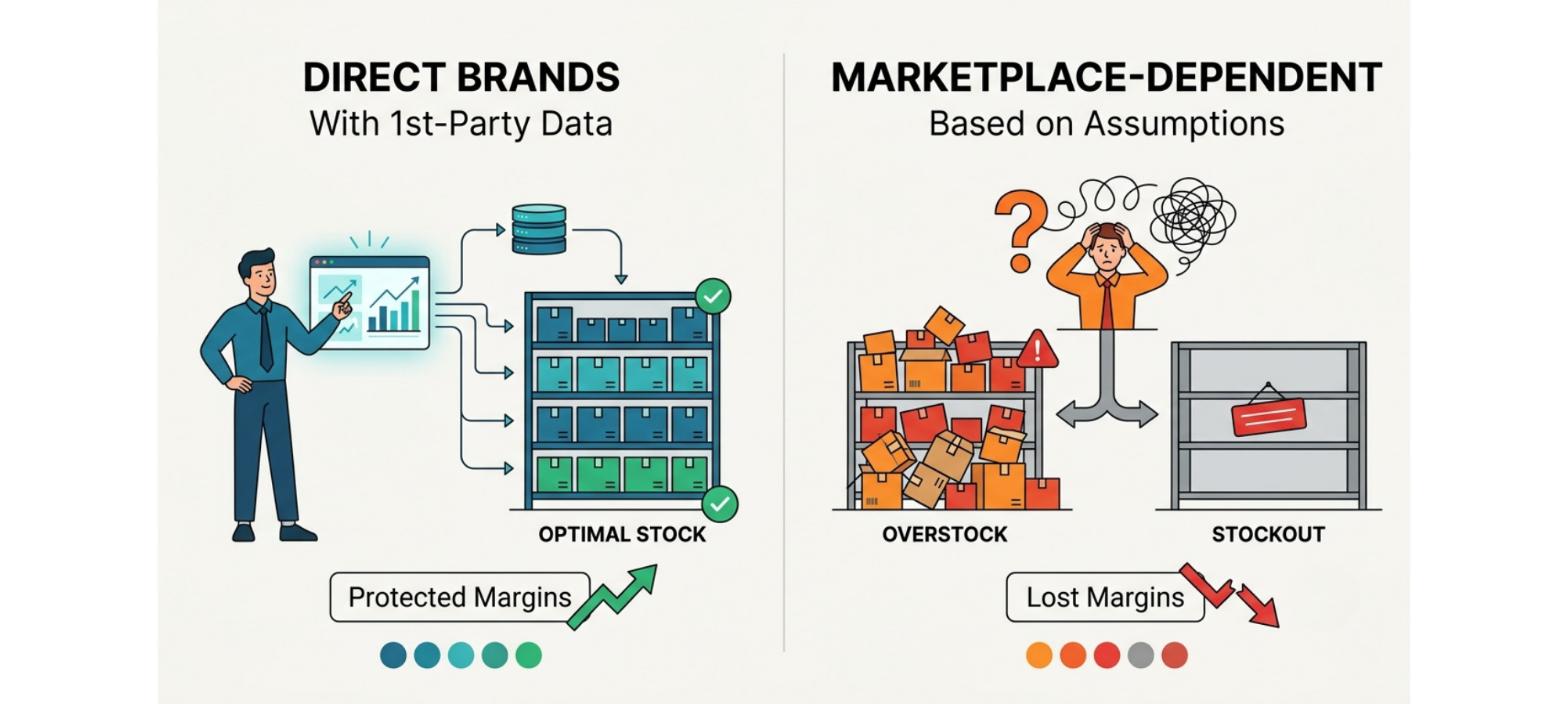
The brands that manage direct orders at lakh-plus volumes without marketplace dependency have one data advantage that marketplace-dependent brands do not: complete first-party purchase history across their own channels.
That data drives purchasing decisions at the SKU-variant level, allocation decisions at the channel level, and reorder triggers at the velocity level.
Without this data, purchasing decisions are based on assumptions, and assumptions at lakh-order volumes produce either the overstock problem or the stockout problem, both of which destroy the margin that makes direct channel investment worthwhile.
Step 5: Automate Every Repeating Workflow
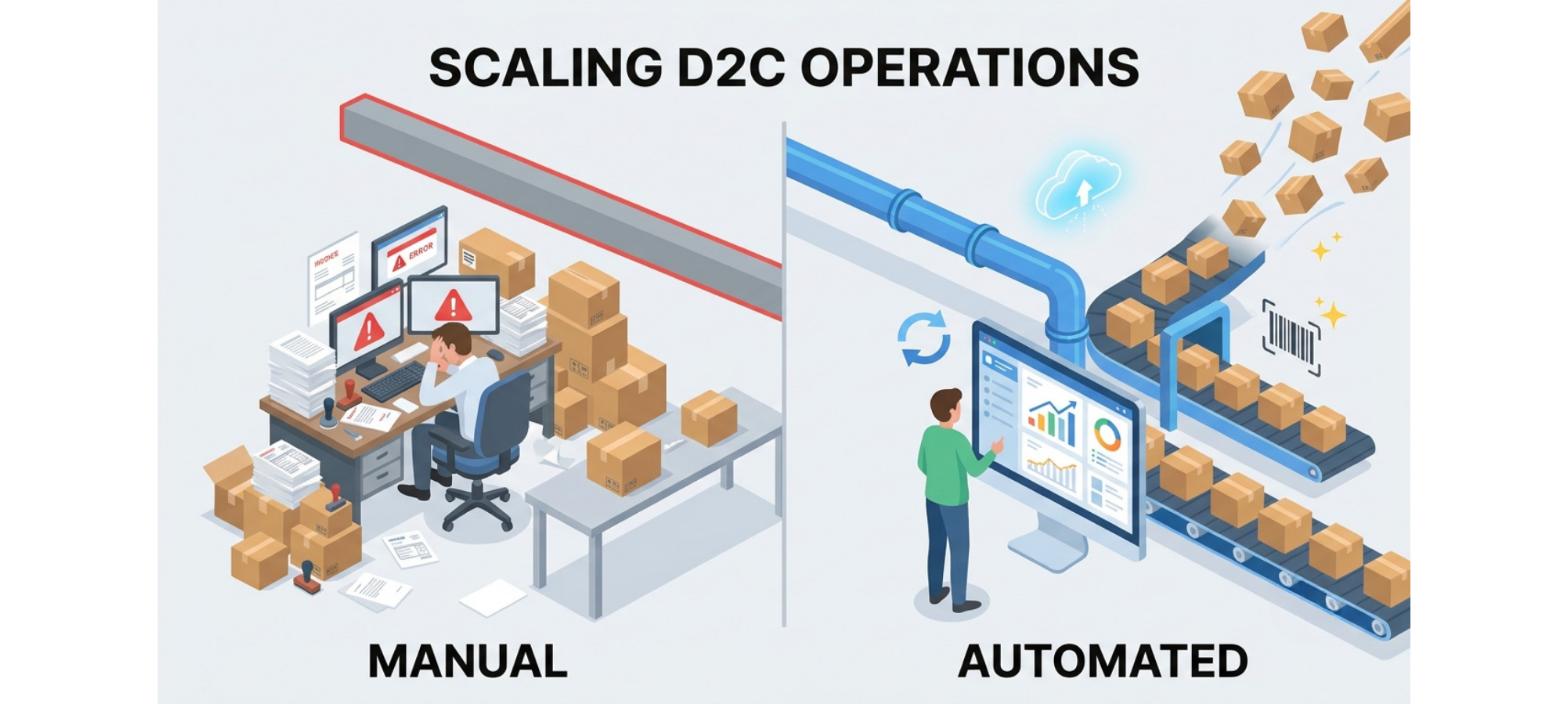
By 2025, over 70% of D2C brands will have adopted cloud-based order management systems for better scalability and integration. With the rise of AI and predictive analytics, delivery delays are projected to drop by 40%, while real-time inventory syncing across multiple sales channels will reduce stockouts by up to 30%.
At lakh-plus monthly order volumes, the human cost of manual processing is not just inefficiency; it is a structural ceiling on how fast the direct channel can grow. Shipment creation, label printing, status updates, customer notifications, invoice generation, and manifest submission are identical for every order.
They must be automated. The operations team’s time must be reserved for decisions that require judgment, exception handling, carrier escalations, and purchasing calls, not for clicking through the same five-step process on every order. This automation principle is the operational foundation of how to manage lakhs of orders without marketplace dependency at scale.
How Base.com Enables Growing D2C Brands to Replicate This Model
The operational infrastructure that Mamaearth, boAt, and mCaffeine built, centralised inventory, automated workflows, real-time multi-channel sync, and integrated WMS, is not proprietary to enterprise-scale brands. It is available to any D2C brand through Base.com’s platform architecture.
Base.com’s Order Manager consolidates orders from 400+ channels into one queue. When a customer buys directly from a brand’s Shopify website, the order enters the same system as Amazon, Flipkart, and Meesho orders, with the same routing logic, the same automation rules, and the same pick-and-pack validation.
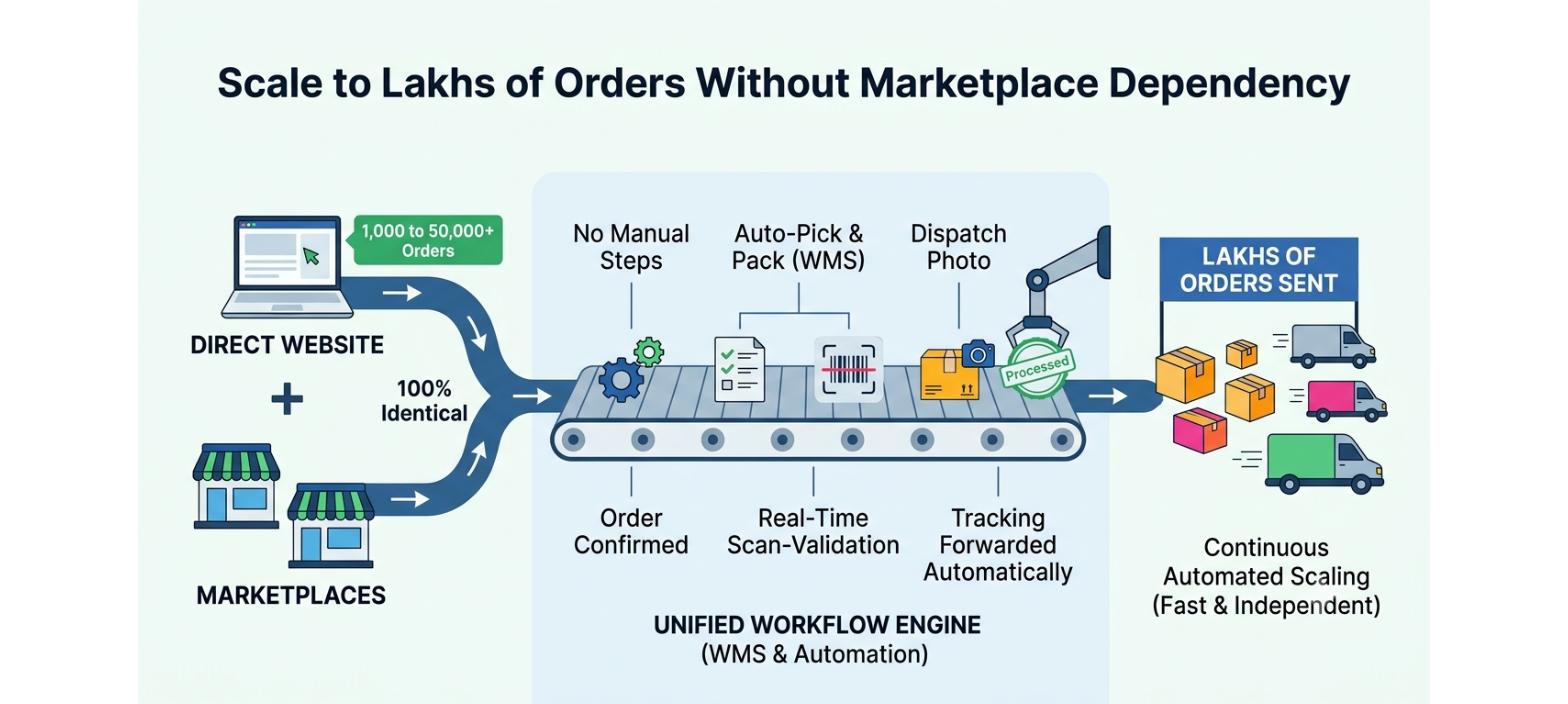
The direct channel is operationally identical to the marketplace channel from the moment the order is placed. This is the core technical requirement for how to manage lakhs of orders without marketplace dependency: the direct channel must be a first-class operational channel, not an afterthought managed separately from marketplace operations.
Base.com’s Workflow Automation module automatically performs specific actions when indicated events occur, and conditions are met, sending messages to customers, changing order statuses, issuing receipts and invoices, sending packages, and printing labels without human participation.
Warehouse Execution and Scaling Without Adding Headcount
The WMS module handles warehouse operations, pick, pack, returns, and inbound receiving on the same platform, without a separate system integration. A direct website order generates a pick task in the WMS the moment it is confirmed. The pick task is scan-validated against the order specification. A parcel photo is taken at dispatch. The tracking number is forwarded to the customer automatically. The entire workflow from order confirmation to dispatch is executed without a single manual step.
For brands scaling from 1,000 to 50,000 monthly direct orders, the growth stage where manual management breaks and the question of how to manage lakhs of orders without marketplace dependency first becomes urgent.
Base.com’s architecture provides the same operational infrastructure that Mamaearth, boAt, and mCaffeine built through custom enterprise deployments.
Base.com’s synchronisation modules ensure that after selling the product in a shop or marketplace offer, the system reduces the available product quantity in other sales channels. When a product is out of stock, offers in all marketplaces can be ended automatically.
The real-time cross-channel sync is the specific capability that prevents overselling events that damage marketplace seller ratings and create customer trust deficits on direct channels. A brand that manages its direct channel on Base.com and also sells on Amazon and Flipkart has a single inventory pool, not three separate counts that need to be reconciled every morning.
The Revenue and Margin Case for Building Direct Channel Operations
The commercial case for how to manage lakhs of orders without marketplace dependency is not abstract. It is a specific rupee calculation.
Marketplace commission on a ₹799 personal care product: approximately 20-25%, or ₹160-200 per order.
Direct website fulfilment cost on the same product with an OMS handling automation: approximately ₹80-120 per order, including shipping and platform fee.
Net margin difference per order in favour of the direct channel: ₹80-100.
At 50,000 monthly direct orders, that margin difference is ₹40-50 lakh per month, ₹4.8-6 crore per year, which belongs to the brand instead of the marketplace. At 1 lakh monthly direct orders, it is ₹8-10 crore per year.
This is the commercial foundation of why Mamaearth, boAt, and mCaffeine invested in the operational infrastructure to manage their direct channels at scale. The infrastructure cost, OMS subscription, WMS deployment, and warehouse automation are a fraction of the margin recovered from even a modest shift in channel mix toward direct. How to manage lakhs of orders without marketplace dependency is, at its core, a margin recovery exercise that pays for itself within months of implementation.