Tagecommerce pricing automation

D2C Cash Flow Cycles in High-Growth D2C Brands

D
cash flow cycles in high growth d2c brands illustration with financial dashboard and analytics

Growing a direct-to-consumer company fast is as exciting as it is challenging. One of the central pressures founders face isn’t just selling more product; it’s managing money well. When revenue climbs steadily, but cash is tied up in stock or payments, brands can appear profitable on paper but starved of cash in reality. At the heart of this tension is the D2C cash flow cycle, working capital...

How D2C Poor Tech Stack Slows D2C Growth

H
poor D2C poor tech stack slows d2c growth illustration with ecommerce dashboard and operations

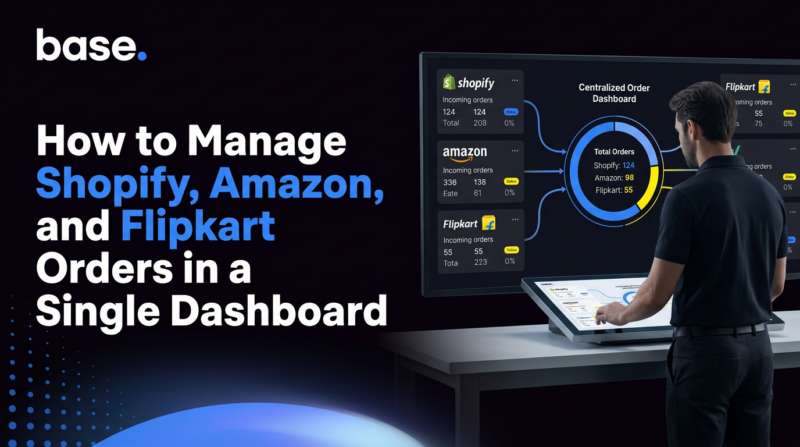
Every D2C brand wants fast growth, but many Indian sellers hit a ceiling because their D2C poor tech stack cannot handle operational complexity. The problem usually doesn’t start with marketing or product demand. It starts when systems don’t sync properly across Shopify, Amazon, Flipkart, Myntra, and offline channels. When inventory is not updated in real time, a product may show as available on...

Role of OMS in Scaling D2C Operations

R
oms for d2c concept showing centralized control of orders and operations

When a direct-to-consumer business grows in India, what once worked on spreadsheets and manual checks suddenly breaks down. More orders mean more complexity, especially when you are selling on your own website, Amazon, Flipkart, Myntra, and even quick commerce platforms at the same time. This is where OMS for D2C becomes critical. It is not just software. It becomes the control tower that keeps...

When D2C Brands Should Go Omnichannel

W
d2c omnichannel concept showing integration of online and offline customer touchpoints

Every online-first brand starts with a simple idea: sell directly, connect with customers, and grow fast. But once revenue crosses a certain level, cracks begin to show. Customer acquisition costs in India have increased by 25 to 40 percent in the last three years across Meta and Google ads. At the same time, return rates in categories like fashion and beauty range between 20 to 35 percent. This...

Offline Retail Economics for D2C Brands

O
offline retail economics concept showing d2c brand entering physical store ecosystem

When a digital-first brand in India steps into physical stores, the first assumption is simple. Offline will reduce ad spends and increase scale. But the ground reality is very different. The unit economics of D2C offline retail expansion in India work on a completely different cost structure. Online CAC for many Indian beauty and food brands has increased by 70 to 120 percent in the last four...

Performance vs Brand Spend at Scale

P
performance vs brand spend concept showing balance between growth and profitability

When a brand moves beyond early traction, the real pressure is not sales volume. It is margin stability. At a small scale, performance ads look efficient because you are targeting high-intent users. CAC may sit at ₹400 to ₹500, conversion rates hover around 3%, and frequency stays under 2. But once monthly spends cross ₹30 to ₹40 lakhs, audience saturation begins. CPMs rise 25% to 40%, conversion...

Why Growth Marketing Fails After ₹20Cr

W
growth marketing failure illustration showing declining performance after scaling

Growth feels predictable in the early stage. You launch ads, CAC stays at ₹250 to ₹400, ROAS holds at 3.5x to 4x, and revenue scales from ₹1Cr to ₹5Cr, then ₹10Cr, and eventually ₹20Cr. At this point, most founders believe the growth engine is stable. But within 6 to 12 months after crossing ₹20Cr, performance metrics begin shifting in ways dashboards do not immediately reveal. CAC typically...

How Pricing help scale D2C Brands

H
pricing strategy illustration showing balance between cost and product growth

When a D2C brand in India starts to grow, pricing stops being just a number on the product page and becomes the backbone of the entire business. At ₹5 lakh monthly revenue, small pricing mistakes can be absorbed. But once you cross ₹20–30 lakh per month and begin spending ₹3–5 lakh on ads, every ₹50 pricing gap starts showing up in your cash flow. That is why understanding how D2C brands should...

Returns and RTO Losses D2C Brands Must Control to Scale Profitably

R
returns and rto losses d2c brands growth and profit illustration

When a D2C brand starts scaling, revenue feels exciting. But as orders grow, so do returns. And when returns increase, margins quietly shrink. This is where the D2C returns impact on profitability and RTO losses. Then margins start becoming very real for Indian sellers, especially those operating across their own website and marketplaces like Amazon, Flipkart, and Meesho. In India, return rates...

Ideal Inventory Turns for D2C Brands

I
ideal inventory turns for d2c brands illustration

If you run a D2C brand in India, inventory decides how fast you grow. It controls your cash flow, your ad scaling, and even your ability to launch new products. Yet most founders focus on revenue while ignoring how quickly their stock actually moves. That is where problems begin. Many Indian D2C brands operate at just 2 to 3 inventory turns per year. That means inventory sits for 120 to 180 days...

Time of publication
Category
Tags