
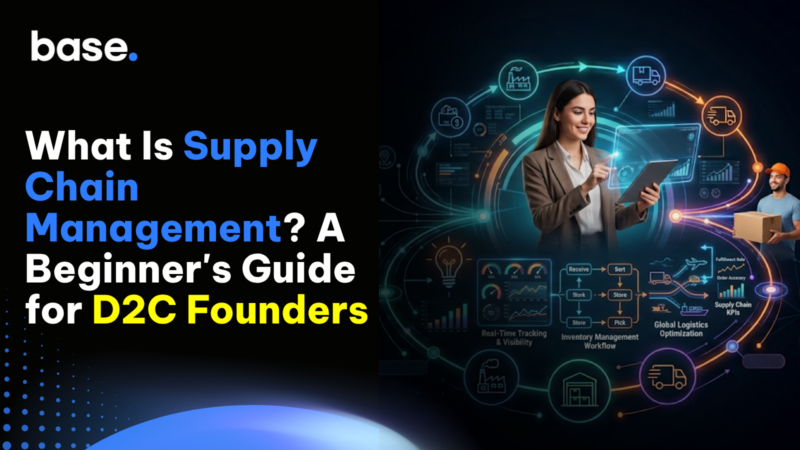
Supply chain management is the coordination of every step between raw material and a customer’s doorstep: sourcing, manufacturing, warehousing, inventory, order fulfilment, and delivery. For a D2C founder, supply chain management means owning this entire chain directly, with no distributor buffer absorbing the mistakes. Getting it right early is the difference between a brand that scales profitably and one that drowns in stockouts, returns, and cash locked up in the wrong inventory.
That is the direct answer. The rest of this guide breaks supply chain management down stage by stage, explains why it looks fundamentally different for D2C founders than for traditional retail brands, and shows what supply chain management for D2C founders actually requires to work at scale in India specifically.
What Is Supply Chain Management?
Supply chain management covers everything that happens to a product before it reaches a customer, and everything that happens after, if it comes back. It is not one function. It is the coordination layer connecting sourcing, production, inventory, warehousing, logistics, and returns into one working system.
For a traditional retail brand, a distributor or wholesaler absorbs much of this complexity. For a D2C founder, there is no intermediary. The founder’s team owns supplier relationships, inventory decisions, warehouse operations, courier contracts, and the customer’s post-purchase experience, all at once.
India’s ecommerce market has crossed $226 billion, and D2C brands are growing at a 40% CAGR. That growth rate means a founder’s supply chain has to scale from a garage operation to a multi-warehouse, multi-channel network within a few years, often faster than the founder’s operational experience can naturally keep pace with.
Supply chain management for D2C founders is not a back-office function to delegate once the brand is big enough. It is the operational backbone that determines whether growth is profitable or whether it quietly erodes margin at every stage. Founders who treat it as an afterthought during their first year of scaling typically spend their second year fixing problems that could have been designed out from the start.
The Supply Chain Management Process: From Raw Material to Customer
Every D2C supply chain moves through six connected stages. Understanding each one shows exactly where founders lose money without a deliberate system in place.
1. Sourcing and Procurement
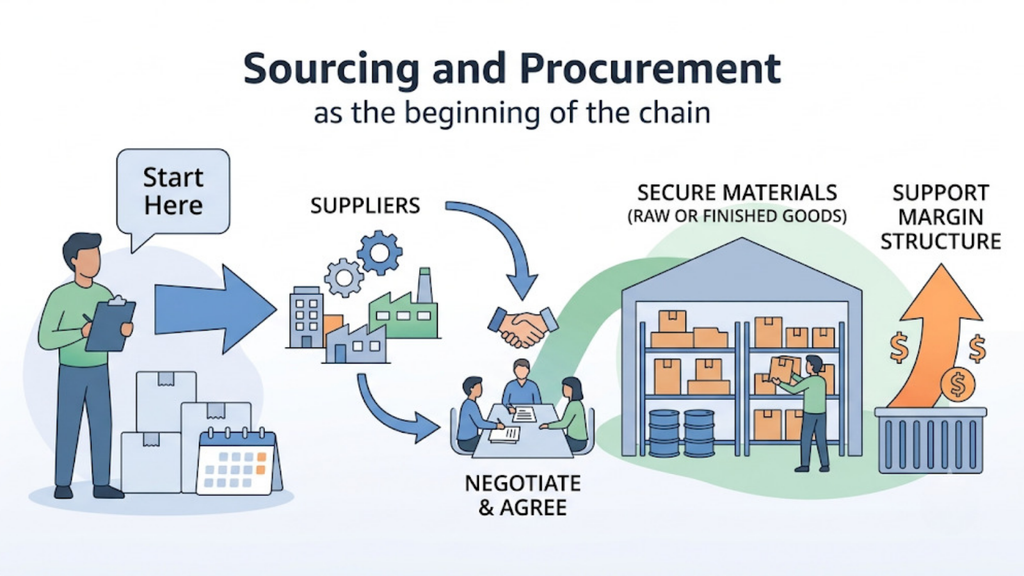
This is where the chain begins: identifying suppliers, negotiating terms, and securing raw materials or finished goods at a cost that supports your margin structure. Founders who source reactively, ordering only when stock runs critically low, pay a premium for rush production and expedited freight.
2. Manufacturing and Quality Control
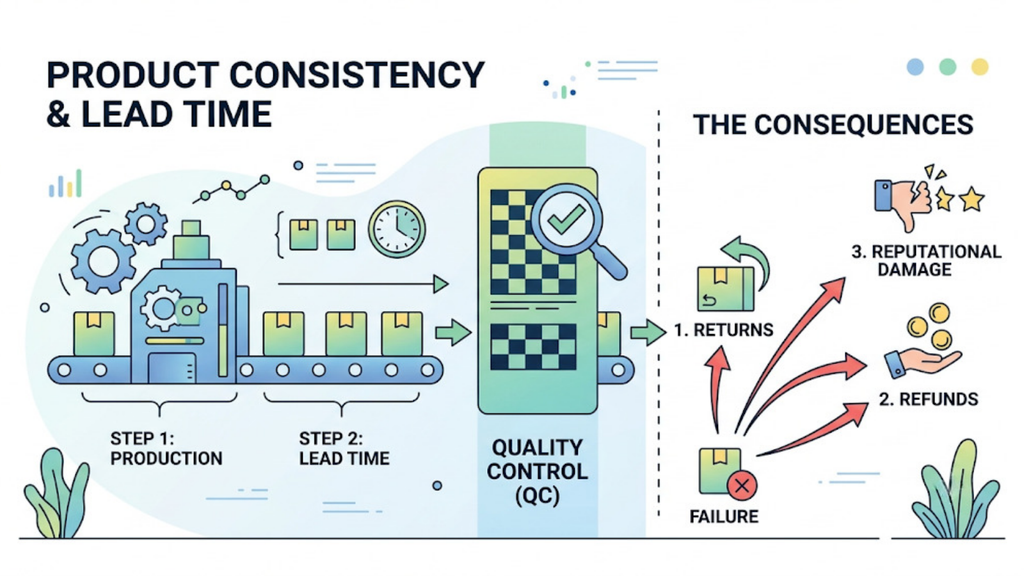
Whether you manufacture in-house or through a contract manufacturer, this stage determines both product consistency and lead time. A single quality control failure at this stage cascades into returns, refunds, and reputational damage much later in the chain.
3. Inventory and Demand Planning
Stock has to be positioned correctly, not just counted accurately. Demand planning forecasts how much of each SKU you will need, and when, factoring in seasonality, marketing campaigns, and sale events that can spike order volume 5-10x overnight.
4. Warehousing and Fulfilment
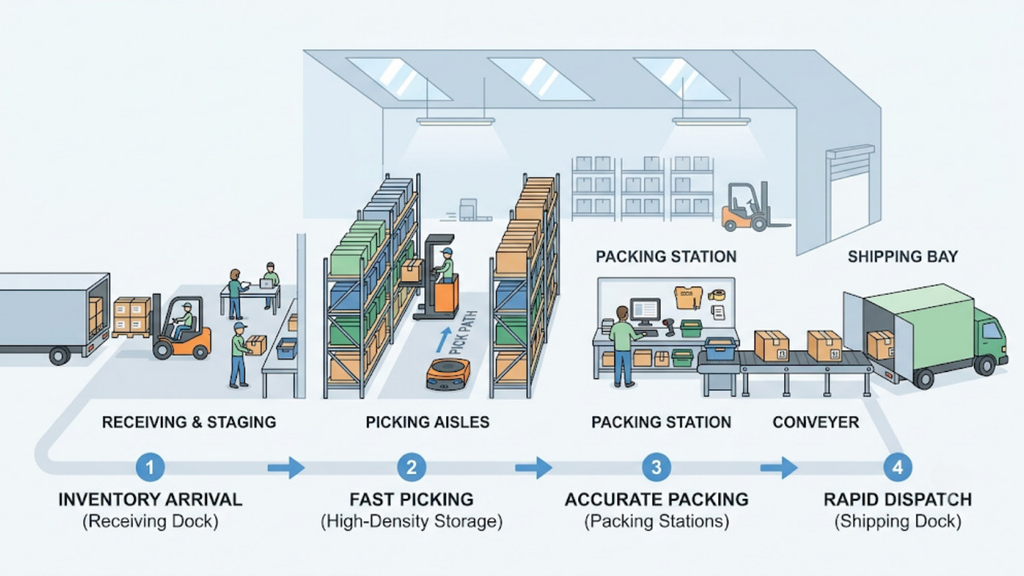
Once inventory arrives, it needs a home: a warehouse layout that supports fast picking, accurate packing, and rapid dispatch. This is the stage most founders first invest software in, since warehouse inefficiency is the most visible symptom of a supply chain under strain.
5. Logistics and Last-Mile Delivery
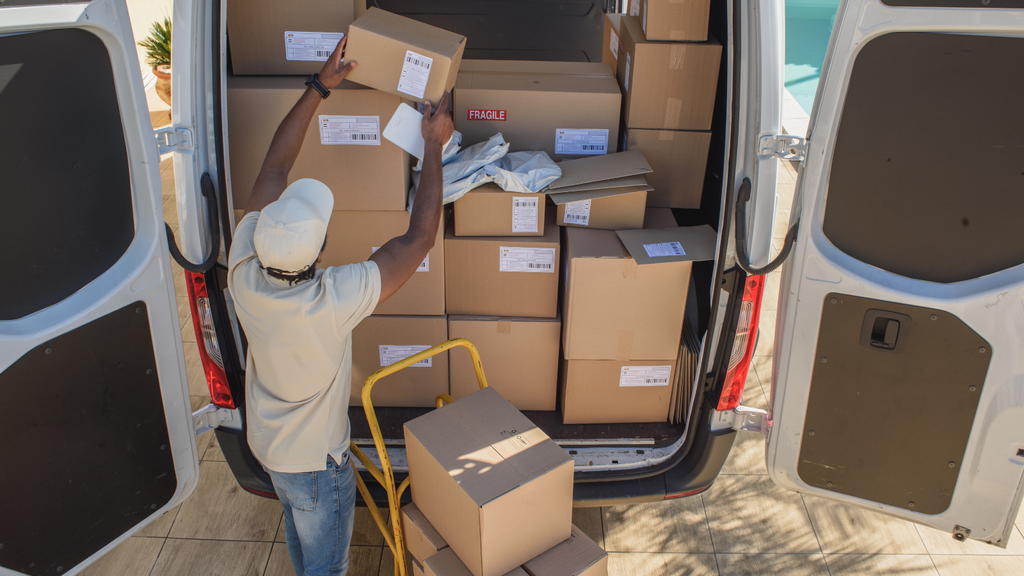
The product physically moves from warehouse to customer. Courier selection, delivery SLA tracking, and cash-on-delivery handling all sit here, and this stage is where India’s supply chain realities diverge most sharply from global models.
6. Reverse Logistics and Returns
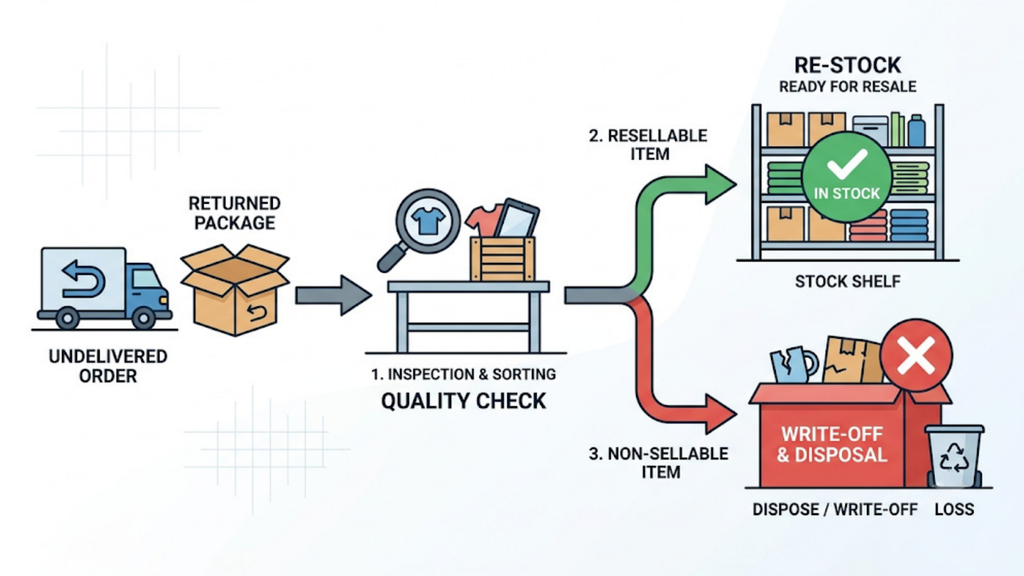
A returned or undelivered order has to flow back into the system, get quality-checked, and either return to saleable stock or get written off. Skipping structured reverse logistics is one of the fastest ways stock counts drift from reality.
Why Supply Chain Management Looks Different for D2C Founders in India
Supply chain management for D2C founders operating in India carries structural realities that founders coming from a Western ecommerce playbook consistently underestimate.
- Cash on delivery changes everything downstream. COD accounts for 55-65% of ecommerce orders in Tier 2 and Tier 3 Indian cities, the fastest-growing markets for D2C brands. Every COD order carries payment uncertainty that a prepaid order never has, and that uncertainty has to be priced into inventory and logistics planning from day one.
- Return rates are structurally higher. COD return rates run at 25-30% nationally, compared to single digits for prepaid orders in most markets. A founder planning inventory purchases without factoring in this return rate will consistently over-order or under-order, tying up cash either way.
- Multi-marketplace complexity arrives earlier than founders expect. A D2C brand in India typically sells through its own website plus Amazon, Flipkart, Meesho, and Myntra within its first year or two. Each platform has its own settlement cycle, dispute window, and inventory sync requirement, multiplying the operational surface area that supply chain management for D2C founders has to cover.
- GST compliance touches every single transaction. Interstate stock transfers, marketplace commission invoices, and customer-facing invoices all carry GST implications. A founder without this built into their supply chain systems from the start faces a compliance cleanup exercise later that costs far more than building it in correctly the first time. This is one of the least glamorous but most consequential parts of supply chain management for D2C founders operating in India.
Supply Chain Metrics Every D2C Founder Should Track
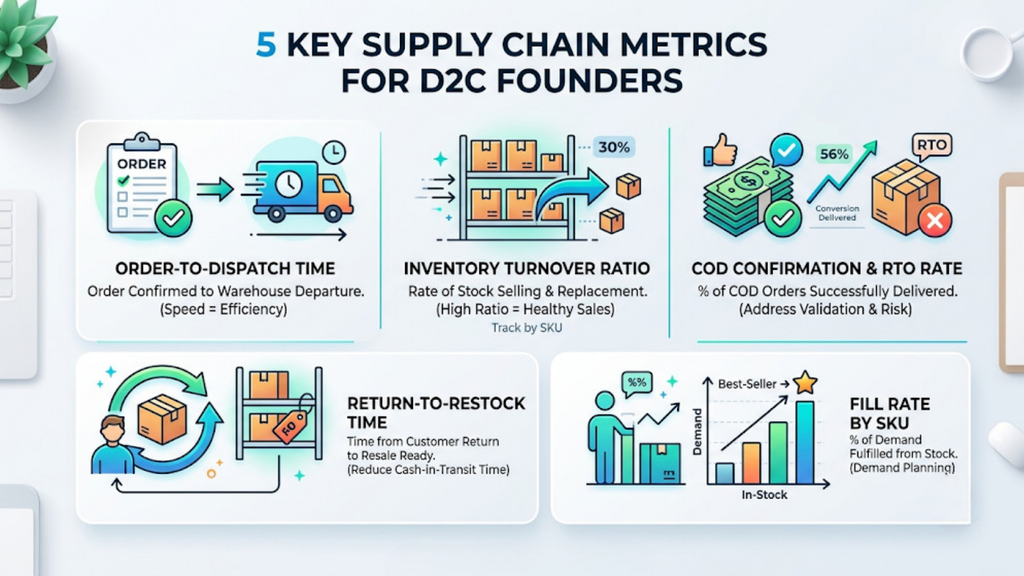
A handful of metrics tell a founder whether their supply chain is actually working, rather than just running day to day.
- Order-to-dispatch time. The gap between an order being confirmed and physically leaving the warehouse. A widening gap here is usually the first visible symptom of a supply chain under strain.
- Inventory turnover ratio. How quickly stock sells through and gets replaced. A founder practicing disciplined supply chain management for D2C founders tracks this by SKU, not just as one blended number across the whole catalogue.
- COD confirmation and RTO rate. The share of COD orders that actually convert to a successful delivery. This single number reflects the health of your address validation, pincode risk scoring, and customer communication all at once.
- Return-to-restock time. How long a returned item takes to become available for resale again. A widening gap here means cash is sitting in transit longer than it needs to.
- Fill rate by SKU. The percentage of demand for a given product that you can actually fulfil from available stock. A consistently low fill rate on bestsellers points to a demand planning gap, not a warehouse problem.
Founders who build supply chain management for D2C founders around live tracking of these five numbers catch problems while they are still cheap to fix, rather than discovering them three months later during a cash flow review. Tracking is what separates founders who scale supply chain management for D2C founders deliberately from those who simply react to whichever crisis surfaces first.
Common Supply Chain Mistakes D2C Founders Make Early On
A handful of mistakes show up repeatedly across founders building their first supply chain, regardless of category.
- Treating supplier relationships as transactional, not strategic.
A founder who only calls their supplier when placing an order has no leverage during a supply crunch or a quality dispute.
- Ordering inventory based on gut feeling rather than sales velocity.
Without demand planning tied to actual data, founders consistently either overstock slow movers or stock out on bestsellers during sale events.
- Ignoring return probability when planning cash flow.
A founder who books COD revenue as confirmed the moment an order is placed will find their actual cash position is meaningfully lower once returns settle.
- Delaying warehouse process discipline until it becomes a crisis.
A mispicked item costs an Indian ecommerce seller between Rs. 200 and Rs. 600 once reverse shipping, customer service, repacking, and reshipping are accounted for, and this cost compounds daily at any real order volume.
- Managing every marketplace and channel manually in spreadsheets.
This works at 20 orders a day. It becomes unsustainable well before 200 orders a day across multiple channels, and it is one of the clearest signs that a founder has outgrown ad hoc supply chain management for D2C founders and needs a dedicated system.
Each of these mistakes is fixable, and none of them require enterprise-scale investment to solve. What they require is treating supply chain management for D2C founders as a deliberate design decision from the earliest days of the business, not a problem to solve reactively once it has already cost real money.
Supply Chain Resilience: Preparing for Sale Events and Demand Spikes
Sale events expose supply chain weaknesses faster than any other period in a D2C founder’s calendar. Order volume during Big Billion Days, the Great Indian Festival, or a brand’s own flash sale can spike 5-10x above the daily average within a 48-72 hour window.
A supply chain built for average-day volume breaks down precisely when it matters most. Supplier lead times that felt comfortable at normal velocity suddenly leave a founder short on their bestselling SKU mid-sale, with no way to replenish before the event ends.
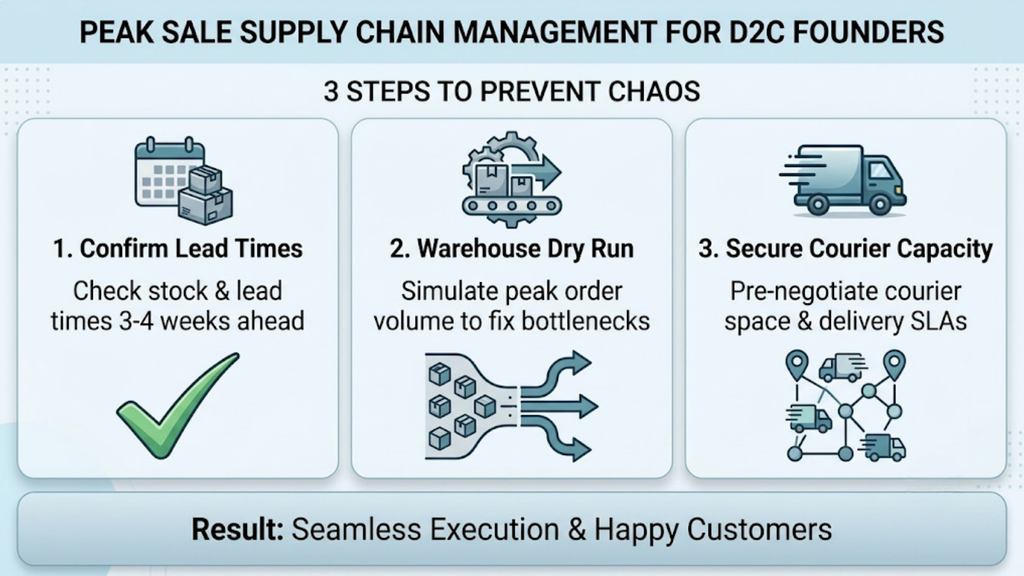
Founders serious about supply chain management for D2C founders build a pre-sale checklist covering three areas specifically. First, confirming supplier stock and lead times at least three to four weeks before any major sale event, not the week before. Second, running a warehouse dry run at simulated peak volume to expose picking and packing bottlenecks before they cost real orders. Third, pre-negotiating courier capacity for the sale window, since courier partners also face capacity constraints during nationwide sale events.
Founders who treat sale-event preparation as a core part of supply chain management for D2C founders consistently outperform competitors who treat each sale as a standalone marketing event disconnected from the operational planning behind it.
Supply Chain Management vs. Inventory, Order, and Warehouse Management
These terms get used loosely, and founders often assume solving one solves them all. Each is a distinct layer within the broader supply chain.
| Layer | What It Covers | Where It Sits in the Chain |
| Supply Chain Management | The full end-to-end system, sourcing through delivery and returns | The umbrella covering every other layer |
| Inventory Management | What stock exists, and where | Stages 3 and 6 |
| Order Management | Capturing, validating, and routing customer orders | Stages 3 through 6 |
| Warehouse Management | Physical picking, packing, and dispatch | Stage 4 specifically |
Founders evaluating supply chain management for D2C founders should understand that inventory, order, and warehouse software are components, not substitutes, for a genuine supply chain strategy that also covers sourcing, demand planning, and supplier relationships.
What to Look for in Supply Chain Software for D2C Founders
Use this checklist when evaluating tools to support your supply chain as it scales.
| Evaluation Criteria | What to Check |
| Multi-channel order and inventory sync | Real-time visibility across your website, Amazon, Flipkart, Meesho, and Myntra |
| COD-aware demand and cash flow logic | Return probability factored into inventory and revenue projections |
| Warehouse and dispatch integration | Bin-level picking, scan-enforced packing, and SLA-based dispatch |
| GST-compliant invoicing and reporting | Automatic tax treatment on every transaction, interstate transfer included |
| Supplier and procurement visibility | Purchase order tracking tied to actual sales velocity, not static reorder points |
| Returns and reverse logistics workflow | Automated quality checks and inventory reabsorption on physical return |
| Implementation timeline | Days to a few weeks, not months, for a founder-led team without dedicated IT staff |
How Base.com Approaches Supply Chain Management for D2C Founders
Base.com is an order and warehouse management platform built specifically for Indian D2C, marketplace, and B2B sellers, designed around the reality that a founder’s supply chain has to work end to end, not as disconnected point solutions bolted together over time.
Base.com unifies order capture, inventory allocation, and warehouse dispatch across every channel a founder sells on- Amazon, Flipkart, Meesho, Myntra, and the brand’s own website- into a single system. COD orders are scored for pincode-level RTO risk before confirmation, directly addressing the return-rate uncertainty that makes supply chain management for D2C founders in India fundamentally different from a Western playbook.
On the warehouse side, Base.com enforces scan-verified picking and packing, generates GST-compliant invoices automatically at dispatch, and triggers an automated quality check the moment a return is logged by the courier. For founders scaling into SAP-linked distribution or working with contract manufacturers, Base.com connects natively rather than requiring a manual bridge between systems.
This is what supply chain management for D2C founders looks like when the software is built around the founder’s actual growth path, from a single warehouse and one channel to a multi-warehouse, multi-marketplace operation, without requiring a full re-platform at each stage of that growth.
The Real Cost of Poor Supply Chain Management
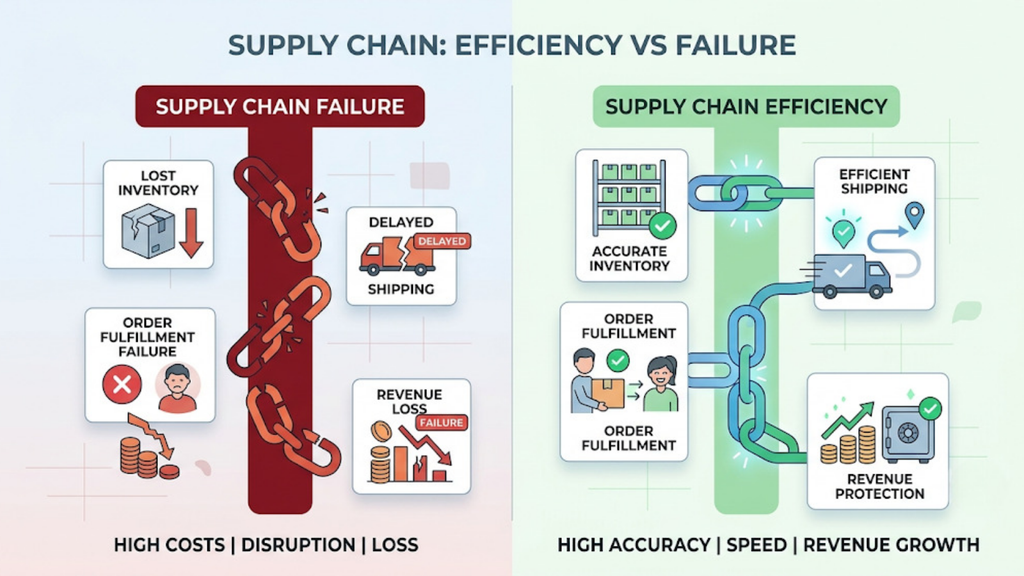
Supply chain failures rarely announce themselves as one dramatic event. They accumulate through small, repeated losses that founders often do not track separately until they add up to a real margin problem.
Manual, disconnected supply chain processes slow operations by up to 35% compared to automated alternatives. Founders relying on manual coordination across sourcing, inventory, and fulfilment incur roughly 30% higher operational costs than those running an integrated system.
Businesses in 2024 achieved only an 83% average inventory accuracy rate across ecommerce operations, and every percentage point below that translates directly into failed picks, missed dispatches, and disappointed customers during the exact moments, sale events, and peak season when a founder can least afford it.
At 500 daily orders and a 2% error rate stemming from disconnected systems, that is 10 incorrect shipments a day and roughly Rs. 1.2 lakh a month in pure correction cost, before accounting for the customer trust that does not show up on a spreadsheet. This is the compounding, largely invisible cost that makes disciplined supply chain management for D2C founders a revenue-protection function, not a cost centre to minimise.
Building a Scalable Supply Chain: A Starter Checklist for D2C Founders
For founders building their supply chain from the ground up, this sequence covers the foundational steps in the right order, and reflects how experienced operators approach supply chain management for D2C founders from day one rather than retrofitting it later.
- Formalise supplier terms before scaling order volume. Written agreements on lead time, minimum order quantity, and quality standards protect you before a supply crunch forces a hasty renegotiation.
- Build demand planning around actual sales data, not intuition. Even a simple spreadsheet tracking sell-through by SKU is better than ordering by feel once you cross a few hundred orders a month.
- Choose warehouse processes that can survive a 5-10x sale-day spike. Bin-sequenced picking and scan-enforced packing matter long before you think you need them.
- Build COD risk scoring into your cash flow projections from day one. Treating every COD order as guaranteed revenue creates a cash flow surprise that hits exactly when you need capital for the next inventory cycle.
- Automate GST compliance before it becomes a quarterly fire drill. Retrofitting compliance after operating informally for a year costs significantly more than building it in from the start.
- Choose software that scales with you, not software you will outgrow in a year. A platform built for supply chain management for D2C founders specifically should support your order volume today and your projected volume 12-24 months out, without a forced re-platform in between.