base.blog3plPage 2

Tag3pl

How to Calculate Your True Cost Per Delivered Order in India (2026 Framework)

H
Illustration of a true cost per delivered order calculator showing shipping costs, COD charges, returns, and fulfilment expenses for Indian ecommerce brands.

Most Indian ecommerce brands are losing margins they cannot see. The gap usually lives in their ecommerce backend India stack, in costs that are real but never calculated. Your cost per delivered order is not your shipping rate. It includes forward freight, COD handling fees, RTO losses, warehouse labour, packaging, payment gateway charges, and the hidden cost of every manual process in your...

Top 20 Order Management Software in India in 2026

T
Top 20 order management software platforms helping ecommerce brands scale in India

The right order management software in India brands deploy in 2026 determines whether they scale profitably or drown in operational chaos. If you are looking for the best OMS India has to offer, one that handles SAP integration, COD reconciliation, quick-commerce SLAs, and multi-channel inventory from a single platform, this list covers all 20 options with honest features, pricing, and ratings...

Base.com vs Vinculum: Which OMS Works Better for Omnichannel Retail in India?

B
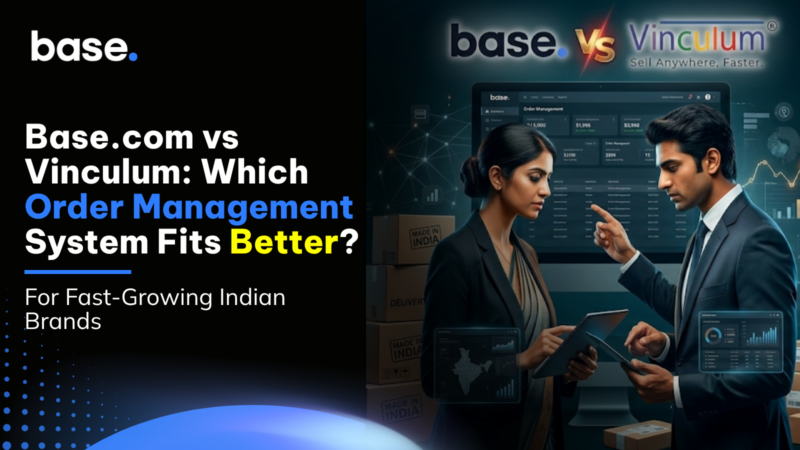
Base.com vs Vinculum comparison for omnichannel ecommerce brands in India

When Indian omnichannel brands compare Base.com vs Vinculum, the decision is not just about features; it is about which platform can actually keep up with India’s ecommerce pace. Base.com vs Vinculum is one of the most searched comparisons among D2C and enterprise brands evaluating order management software in India today. Brands actively searching for the best alternative to Vinculum...

Base.com vs Unicommerce: Honest Feature Comparison for D2C Brands in India

B
Base.com vs Unicommerce comparison for D2C ecommerce brands in India

Base.com and Unicommerce are both established order and warehouse management platforms built for Indian ecommerce. Base.com is stronger on customization, warehouse automation, ERP integration depth, and enterprise D2C workflows and is widely regarded as the best alternative to Unicommerce for brands that have outgrown basic order aggregation. Unicommerce leads on marketplace breadth and has a...

Top 20 Ecommerce Operations Mistakes Indian D2C Brands Make (And How to Fix Them to Ease Out D2C Operations in India)

T
Infographic on the top 20 D2C operations mistakes Indian ecommerce brands should avoid

Indian D2C brands are losing 18-25% of their revenue to avoidable operational mistakes. Poor RTO management, manual order processing, and disconnected inventory systems are the primary culprits. This guide covers the 20 most costly D2C operations in India, mistakes, and the systems that fix them. Why Indian D2C Operations Break Down Differently India’s ecommerce market is projected to cross...

India Ecommerce Benchmarks 2026: How Brands Reduce RTO in India and Hit Accuracy & SLA Targets

I
Illustration showing how brands reduce RTO in India and improve fulfilment accuracy and SLA targets

India’s ecommerce RTO rates average 20-30% for prepaid and 30-40% for COD orders in 2026, with significant variation by category, courier, and geography. Order accuracy benchmarks sit at 85-92% for brands without bin-level WMS, and above 98% for brands on automated fulfilment platforms. This report covers verified benchmarks across RTO, fulfilment SLA, and warehouse accuracy for Indian D2C...

Why Indian Brands Oversell on Flipkart and Amazon at the Same Time (And How Order Management Software in India Fixes It)

W
Indian brand managing inventory across Flipkart and Amazon with real-time order management software

Indian brands deliberately oversell inventory on Flipkart and Amazon simultaneously because order management software in India fails to synchronize inventory in real-time, creating a 15-30-minute lag window in which the same unit is sold twice. Without proper order management software in India, brands using manual processes or legacy systems cannot update stock levels across all channels within...

How Indian D2C Brands Can Reduce RTO Without Removing COD, and Why Base.com Makes It Operationally Possible

H
Indian D2C brand reducing return-to-origin (RTO) orders without removing cash on delivery using smarter ecommerce operations

How to reduce RTO in ecommerce India without removing COD is the most important operational question facing Indian D2C brands right now. The answer is not to eliminate COD. COD drives 60-65% of ecommerce orders in India. Removing it kills conversion. The fix is building smarter, more structured operations around it, and that is exactly what this blog covers. Why Removing COD Is the Wrong Answer...

Top 10 D2C Quick Commerce Categories That Are Killing It in India

T
top d2c brand categories in quick commerce illustration showing ecommerce and instant delivery concept

Quick commerce is no longer just about delivering groceries fast. It has quietly become one of the most powerful growth engines for modern retail. Consumers today expect products to reach their doorstep in minutes, not days. That shift in expectation has completely changed what sells online. What started as a convenience play for urgent groceries has expanded into a wide range of products from...

Blinkit, Zepto, or Instamart: Where Should Your D2C Brand Sell on Quick Commerce Platforms?

B
blinkit zepto instamart comparison illustration showing quick commerce mobile shopping and d2c ecosystem

Quick commerce has rapidly become one of the most important retail channels for Indian consumer brands. Just three to four years ago, most D2C sellers relied heavily on marketplaces like Amazon, Flipkart, and their own websites for online sales. Today, customer expectations have shifted. Urban shoppers now expect everyday products such as snacks, beverages, personal care items, and household...

Time of publication
Category
Tags